
IPB University researchers develop mutton rendang with a three-year shelf life
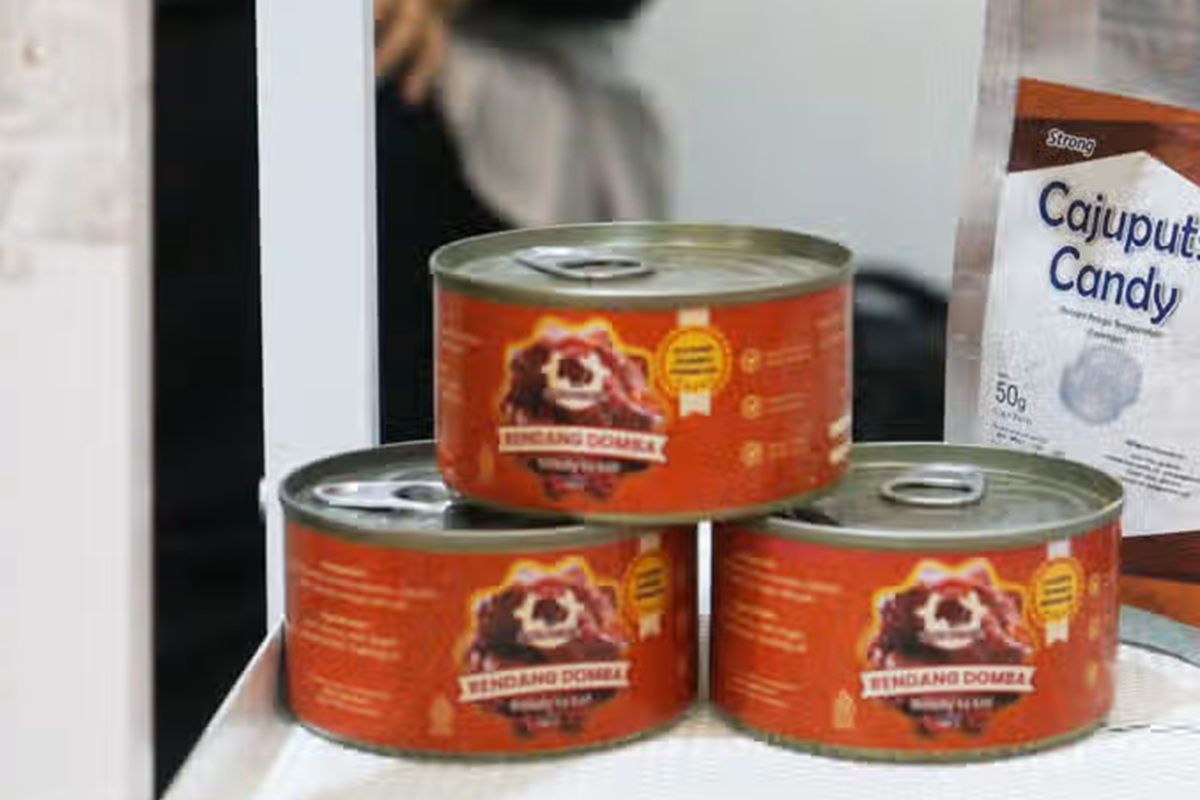
Bogor (ANTARA) – A team from IPB University’s Faculty of Animal Science has developed premium mutton rendang using “SheepLight” technology, with a shelf life of up to three years.
IPB University researcher and innovator of the premium mutton rendang, Professor Asep Gunawan, said in a statement in Bogor on Friday that the innovation began with research by a team from the faculty in 2016 and has since been continuously developed and refined.
The premium mutton rendang was developed in response to challenges associated with mutton consumption. Consumers often complain that the meat has a strong aroma, is tough, and contains high levels of fat and cholesterol.
“To address these challenges, the team uses SheepLight technology, based on loop-mediated isothermal amplification (LAMP), to detect genetic markers in the selection of premium sheep,” Asep said.
The aim is to produce meat that is more tender, has a milder characteristic aroma and offers a better fatty-acid profile.
Rendang was chosen as the downstream product because it is known internationally and has a strong identity. This approach creates a distinctive quality that gives the finished product a competitive advantage.
The development of premium sheep involves farming groups and stakeholders in seven provinces: West Java, Central Java, East Java, North Sumatra, Jambi, Central Sulawesi and East Nusa Tenggara. The collaboration covers breeding, livestock selection, cultivation support and improved animal husbandry management.
The next challenge is controlling the processing. Asep explained that canning is combined with thermal sterilisation to ensure the product keeps for a long time.
The process includes selecting the raw materials, preparing the meat, cooking it with rendang spices, filling the cans and hermetically sealing the packaging. The product is then sterilised in a retort machine using an appropriate combination of temperature and time.
As a result, the product can be safely stored at room temperature without refrigeration, creating distribution opportunities in areas with limited access to cold-storage facilities. This could also enable wider distribution to such areas.
“Through premium mutton rendang, we want to show that livestock-breeding research can generate economic value, open up new market opportunities, improve farmers’ livelihoods and introduce an innovative Indonesian food product to the world,” Asep said.
The team is exploring potential markets through Indonesian diaspora communities and Asian food consumers, particularly in Southeast Asia and the Middle East. This could help premium mutton rendang reach a wider market while increasing the value of local livestock products.
“For us, the success of an innovation is measured not only by scientific publications or the technology produced, but also by how much it benefits society. Through this research, we can generate economic value, open up new market opportunities, improve farmers’ livelihoods and introduce an innovative Indonesian food product to the world,” he said.