
IPB University Researcher Uses WhatsApp Groups to Reduce Stunting Prevalence in East Lombok
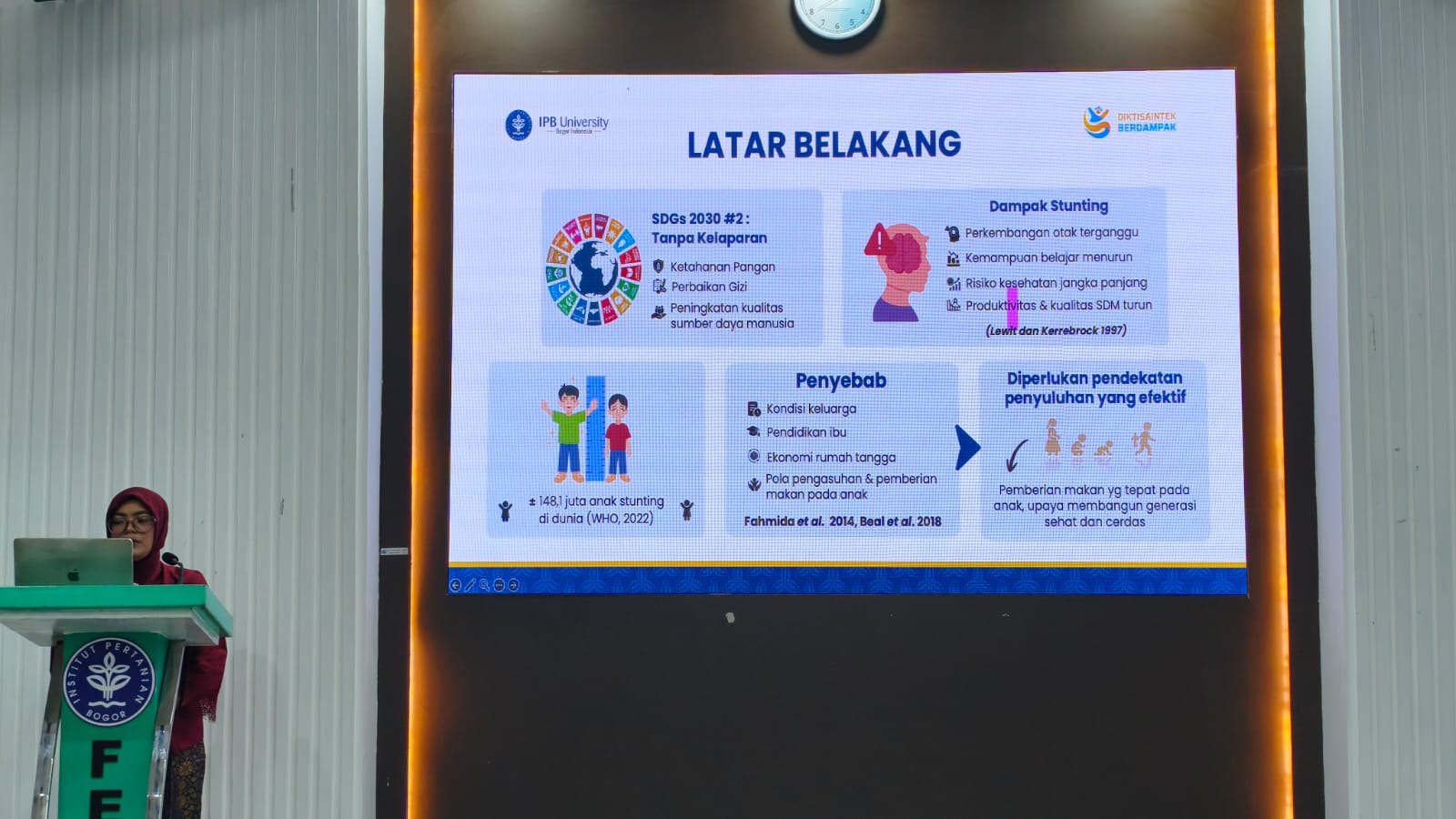
Indonesia continues to grapple with stunting, with a national prevalence of 21.5 per cent among children under five, far from the government’s target. East Lombok Regency in West Nusa Tenggara is a particular hotspot, recording a stunting rate of 27.6 per cent, well above the national average. To address this, IPB University doctoral candidate Indriani has researched innovative solutions, presenting her findings in a dissertation titled ‘Model of Feeding Practices Counselling for Early Childhood Through WhatsApp Group’.
The study, conducted from July to October 2025, involved 128 respondents from six early childhood education centres. It employed a quasi-experimental design to analyse the impact of digital counselling on feeding practices. While both the intervention and control groups received brochures on balanced nutrition, the intervention group additionally received eight educational videos via a WhatsApp Group. The research integrated the Theory of Planned Behavior and the Technology Acceptance Model to understand the mechanisms driving behavioural change.
Using Structural Equation Modeling–Partial Least Squares (SEM-PLS) analysis, the study found that environmental support and message characteristics significantly shaped perceptions of ease in feeding and the usefulness of WhatsApp as a communication channel. The endline results showed that these perceptions positively and significantly influenced actual feeding practices. The ten-week video intervention proved statistically effective in improving attitudes and practices compared to the control group, although the increase in knowledge was not statistically significant.
A key finding was that digital exposure alone did not directly change behaviour; rather, it worked by strengthening perceived behavioural control and acceptance of the counselling medium. The Multi-Group Analysis revealed that the intervention activated the role of the social environment in shaping perceptions of WhatsApp Group’s benefits, a pathway absent in the control group. The research culminated in a model named SEMETON, which positions social environment support as a critical reinforcing factor in promoting appropriate child feeding practices to combat stunting.