
IPB University develops economically viable forage feed in Garut
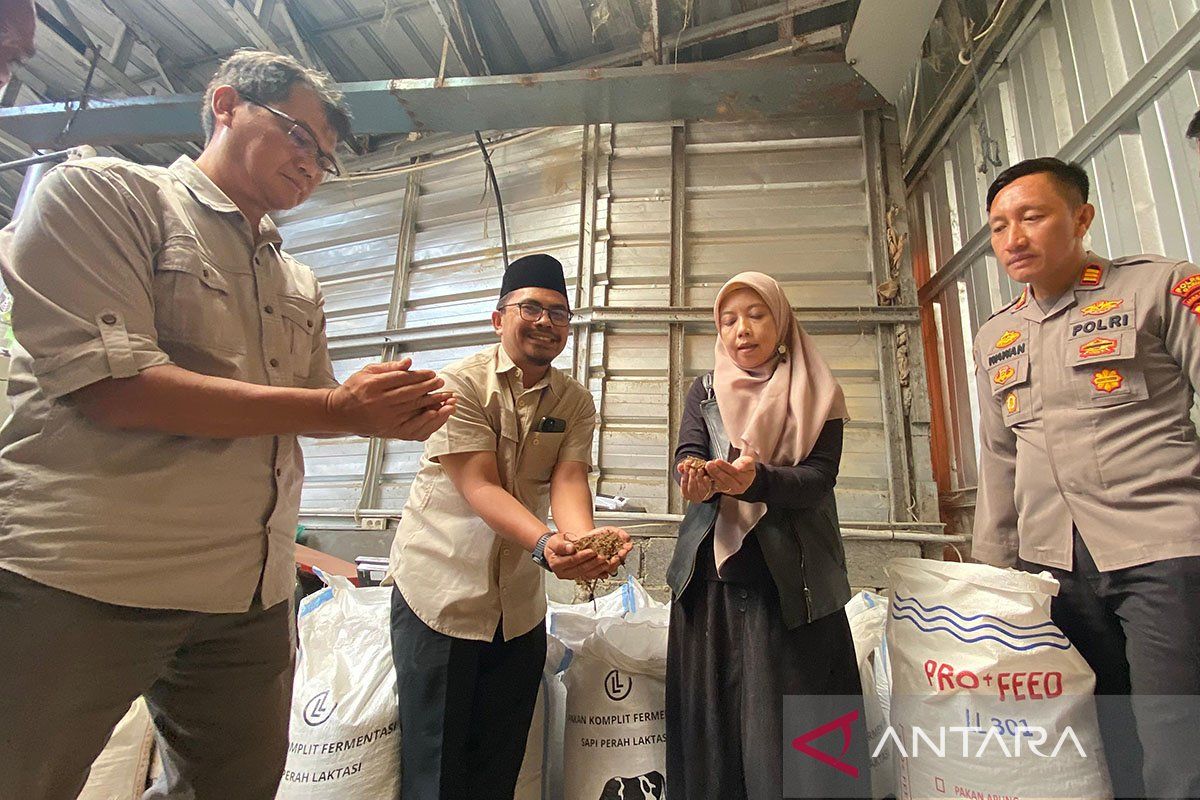
A research team from IPB University is conducting community service research by developing economically valuable forage livestock feed in Leles District, Garut Regency, West Java, by utilising raw materials that are easily accessible in the local environment.
“The results of this research are now being developed by utilising biomass or materials that were previously overlooked or discarded, turning them into complete feed containing both fibre and protein,” said Luki Abdullah, a Professor at the IPB Faculty of Animal Science, during a product introduction event at the Leles Lestari Independent Feed Unit in Garut on Friday.
He explained that the IPB research team is involving local livestock farmers and feed industry players, while the local government is taking innovative steps to produce alternative livestock feed that is cheaper, easier to use, and remains high quality.
He noted that the livestock business sector has frequently faced challenges regarding the availability of high-quality forage, which is often limited. Therefore, innovation is required to provide forage feed using raw materials from the surrounding environment.
He stated that since 2019, the research team has been searching for alternative fibre sources that do not depend on grass as the primary ingredient. This includes utilising raw materials that are 80 per cent sourced from local resources, such as rice bran, oilseed cake, and supplements produced from regional materials.
“We are introducing other fibre sources that do not necessarily have to be produced through grass. We match the nutritional sources available, such as fibre; that is what we are continuously developing to ensure consistent production,” said Luki.
Fibre from corn plants, he noted, has a better digestibility level compared to grass or rice straw. This assessment was proven after undergoing research and development stages and can now be used and tested by farmers in Garut.
“It has been produced, used, utilised, and tested,” he added.
Yosep Purnama, the founder of the Leles Lestari Independent Feed Unit, said the livestock feed innovation currently being developed prioritises three main principles: affordability, practicality, and quality.
With this innovation, he said, farmers will no longer struggle to obtain feed because they can utilise raw materials from their surroundings, which can cut feed costs and produce better livestock due to fulfilled nutritional and protein requirements.
“This can help farmers increase business efficiency without compromising the nutritional quality of the livestock,” he said.
The Head of the Garut Regency Fisheries and Livestock Office, Dyah Savitri, expressed support for the innovation as it will assist farmers in meeting the forage requirements for their livestock, particularly for the sheep commodity.
“We continue to support academics and the farming community. We hope this research can proceed smoothly and provide a positive impact on the advancement of the Garut sheep commodity,” she said.