
IPB University and WUR Discuss Preparations for Peatland Circularity Consortium
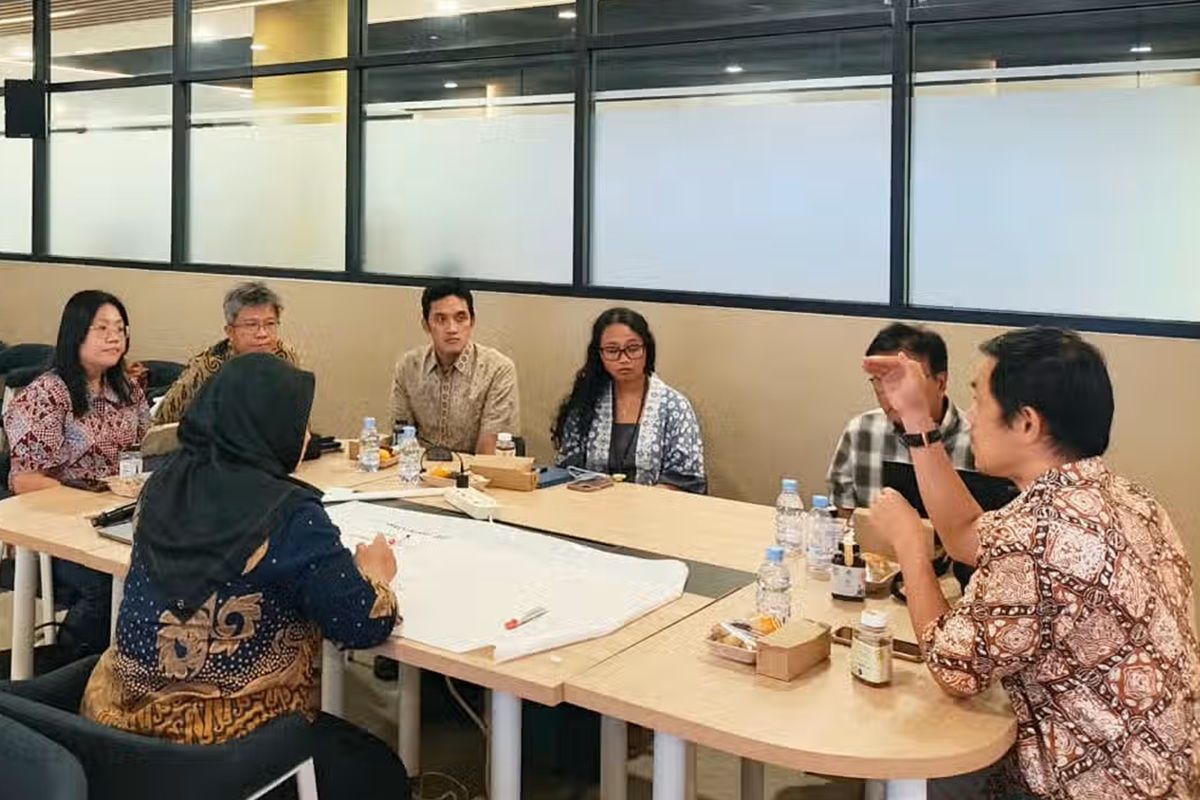
Bogor, West Java (ANTARA) – The Centre for Sustainability Science and Transdisciplinary Studies (CTSS) and the Department of Silviculture at IPB University’s Faculty of Forestry and Environment have discussed the Peatland Circularity Consortium (PCC) with Wageningen University & Research (WUR) in the Netherlands.
“Peatlands are often discussed in a negative light because of forest fires, but they can in fact bring benefits through the circular economy,” said CTSS head Professor Husin Alatas in Bogor, West Java, on Friday.
The discussion took place in a hybrid dialogue at IPB’s Dramaga Campus in Bogor Regency, West Java. It was part of the Diaspora Berdampak programme, which brought Indonesian diaspora scholar Dr Aritta Suwarno of WUR to the campus.
The Department of Silviculture and CTSS also signed a letter of intent (LoI) with WUR.
“Through this dialogue, the parties are expected to formulate the PCC. It is not intended as a new entity; rather, it is positioned as a collaborative platform linking existing organisations and peatland initiatives,” Alatas said.
The consortium is expected to connect universities and research institutions, government, non-governmental organisations, businesses and communities to promote circular and regenerative peatland landscapes that create added value for local communities.
CTSS Chief Fellow Professor Damayanti Buchori noted that while a substantial body of peatland research already exists, its practical application remains limited.
“The PCC is expected to implement existing research and also act as a catalyst to accelerate restoration, regeneration and related processes,” she said.
She said a transdisciplinary approach was essential given the complexity of peatland issues. She also highlighted the need for alternative funding, clear business models for industry and the decolonisation of knowledge through the integration of local knowledge.
Several speakers emphasised that water management is fundamental. University of Palangka Raya CIMTROP chair Professor Adi Jaya said that although peatland characteristics vary by location, hydrological management principles apply across regions.
Efforts to develop circular economic models on peatland must begin with water-management plans tailored to the characteristics of the ecosystem and local conditions.
“With hydrology as the foundation, a range of economic uses can be developed without neglecting peatlands’ ecological functions,” he said.
IPB University peatland expert Professor Suria Tarigan highlighted the links between hydrology, peat characteristics and the choice of commodities. Selecting commodities suited to peatland hydrology could reduce the need for excessive drainage.
“In this context, [the commodity] is relevant because of its tolerance of wetland and waterlogged conditions,” he said.
From the industry’s perspective, PT Bangka Asindo Agri president director Fidrianto shared the company’s experience developing a circular, zero-waste sago industry.
He said sago had the potential to link economic use with more sustainable management of peatland landscapes.
Meanwhile, Dr Aritta Suwarno of WUR stressed that peatland valorisation should create long-term economic value while strengthening ecological functions.
Source: jawawa.id (https://jawawa.id/newsitem/ipb-university-and-wur-discuss-preparations-for-peatland-circularity-consortium-1791514394)
Originally published by Antara (Indonesian) (https://www.antaranews.com/berita/5777961/ctss-ipb-university-wur-bahas-persiapan-konsorsium-sirkularitas-gambut), translated from Indonesian