
IPB Researcher Warns of Impending Disaster at Lake Toba as Water Levels Plummet
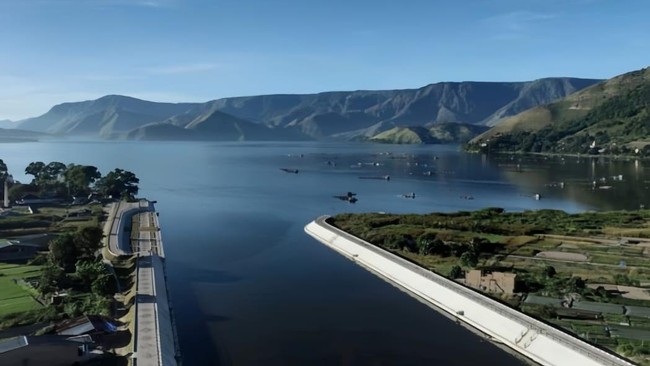
The water level of Lake Toba is reportedly continuing to shrink, a phenomenon that poses a serious threat to the aquaculture sector in the region, particularly for floating net cage (KJA) farmers. Based on satellite altimetry data, the surface level of Lake Toba has been observed to decline steadily, reaching approximately 1.6 metres over the period from June 2025 to March 2026. Jonson Lumban Gaol, a satellite remote sensing expert from the Bogor Agricultural Institute (IPB), revealed that this decline could potentially breach the two-metre mark if the dry season persists. This situation is considered a threat to various activities around Lake Toba, not least the fisheries sector.
The hydrological conditions risk worsening further following predictions from the Meteorology, Climatology, and Geophysics Agency (BMKG). The BMKG forecasts the potential for an El Niño phenomenon and a positive phase Indian Ocean Dipole (IOD) occurring simultaneously in 2026. "This combination could trigger a prolonged dry season in Indonesia, including the Lake Toba region, which will ultimately accelerate the shrinkage of the lake’s water volume and could cause mass fish deaths in the KJA," Jonson explained. He detailed that the trend of declining lake water levels often correlates directly with incidents of mass fish mortality in the KJA. History records that thousands of tonnes of KJA fish died en masse when the water level receded by up to two metres back in 2016. Similar events on a smaller scale also recurred in 2018, 2020, and 2023 when water conditions were at relatively low levels.
The IPB University Professor from the Faculty of Fisheries and Marine Science further explained that the receding lake water is not actually the direct cause of fish death, but rather a triggering factor for water mass mixing during extreme weather and strong winds. When the waters become shallow, gusts of strong wind easily stir up organic waste sediment settled on the lakebed. The fine sediment lifted to the surface then risks clogging the fish’s gills. "At the same time, water from the oxygen-poor bottom layer rises to the top, causing a drastic decrease in dissolved oxygen levels so that the fish in the KJA die," Jonson clarified. This condition is exacerbated by the accumulation of organic and household waste at the bottom of the lake. Under normal circumstances, this waste is decomposed by bacteria with the help of oxygen. However, when the oxygen supply runs out, the decomposition process shifts anaerobically and produces toxic gases such as hydrogen sulphide and methane. Hydrogen sulphide gas is known to fatally damage the respiratory system of fish, whilst methane worsens water quality. The domino effect of minimal oxygen, high levels of toxic gas, and increased water turbidity is the root cause of mass fish kills.
Responding to this potential threat, Jonson urged fishermen in the Lake Toba area to increase their vigilance. If signs of extreme weather appear, such as strong winds and water beginning to turn turbid, farmers are advised to immediately move their KJA to deeper waters or conduct an early harvest. He also called on local government policy to not remain idle. "Local governments and stakeholders need to move more proactively, not just with appeals, but also with a system capable of providing accurate and rapid early warnings," Jonson concluded.
Source: jawawa.id (https://jawawa.id/newsitem/ipb-researcher-warns-of-impending-disaster-at-lake-toba-as-water-levels-plummet-1782399096)
Originally published by CNBC Indonesia (https://www.cnbcindonesia.com/tech/20260625173958-37-745780/tanda-petaka-muncul-di-danau-toba-peneliti-ipb-ungkap-faktanya), translated from Indonesian