
IPB Professor Warns Industry to Prepare for Palm Oil Export Governance
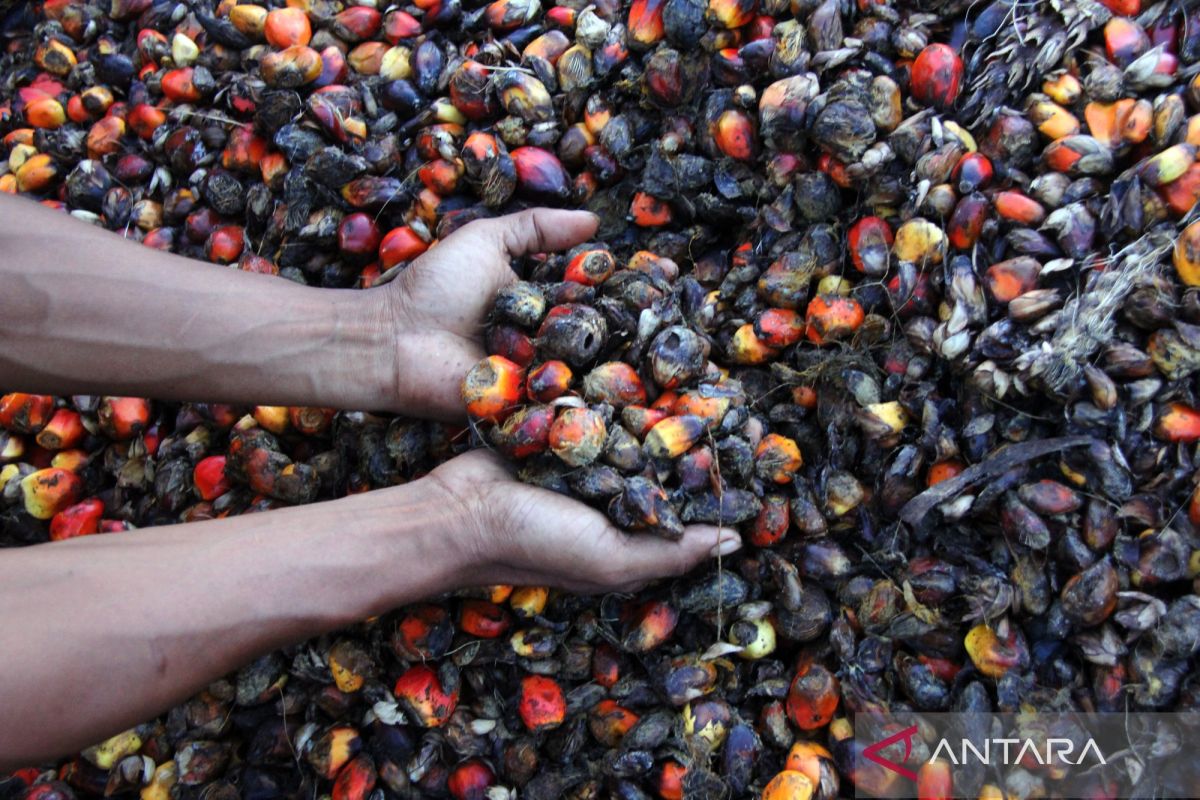
Jakarta — Professor Sudarsono Soedomo of the Faculty of Forestry and Environment at Bogor Agricultural University (IPB) has warned of the importance of industry preparedness in implementing the Regulation on the Governance of Export of Natural Resource Commodity (SDA), including palm oil.
The regulation was announced by President Prabowo Subianto during a Plenary Session of the House of Representatives (DPR RI) at the Nusantara Building, MPR, DPR, DPD RI complex in Jakarta on Wednesday, 20 May.
“Such a major change will require the integration of information technology, synchronisation of regulators, readiness of ports and banking, legal certainty, and thorough trade simulations,” Sudarsono said in a statement in Jakarta on Thursday.
He cautioned that the policy should not be implemented hastily, as this could create market uncertainty, disrupt the investment climate and undermine Indonesia’s competitiveness in global markets if governance is not fully ready.
“If implementation is pushed too quickly, the market may enter a wait-and-see phase. In global trade, uncertainty is often more dangerous than strict regulation itself,” he added.
Furthermore, Sudarsono acknowledged government aims to strengthen export surveillance, increase control of foreign exchange earnings, and prevent practices such as under invoicing and transfer pricing.
“The state has, in fact, long been present very strongly through customs, taxation, the banking system, the obligation Devisa Hasil Ekspor (DHE), licensing, and various other supervisory instruments,” he said.
He urged the government to strengthen governance gradually through data transparency, DHE integration, enhanced audits, and digital surveillance before moving toward concentration of trade within a single large entity.
He argued that national strength is not measured by how much it controls trade, but by the market’s trust in the consistency of rule enforcement.
“A strong state is not one that controls the most trade, but the one most trusted to enforce rules consistently,” he said.
As recommendations, Sudarsono urged the government to prioritise full digitisation of export data and cross-agency integration, use of international reference prices to detect transaction anomalies, transparency of the beneficial ownership of trading companies, strengthening DHE supervision, real-time, data-based audits, and consistent rule of law.
He also warned against the formation of trade monopolies that could create new economic rents.
“Ultimately, Indonesia’s trade power is determined not only by its natural resource wealth but also by the credibility of institutions, certainty of rules, system efficiency, and international market trust,” he said.