
IPB Professor Explains How Weather Modification Technology Actually Works
Professor Yonny Koesmaryono from IPB University clarified the public perception regarding weather modification technology. He stressed that the technology is not an effort to miraculously create rain from a clear sky with no cloud potential.
According to Prof Yonny, weather modification works by intervening in the physical processes already occurring in the atmosphere. ‘Weather modification is about making changes to something that already exists. So, it is not creating rain or water from scratch, but modifying the processes happening in the atmosphere,’ he said during the IPB Pedia programme broadcast on IPB TV’s YouTube channel.
Naturally, rain forms through the hydrological cycle when water from various sources on Earth evaporates into the atmosphere, cools, and forms clouds. However, Prof Yonny explained that not all clouds that form will eventually fall as rain.
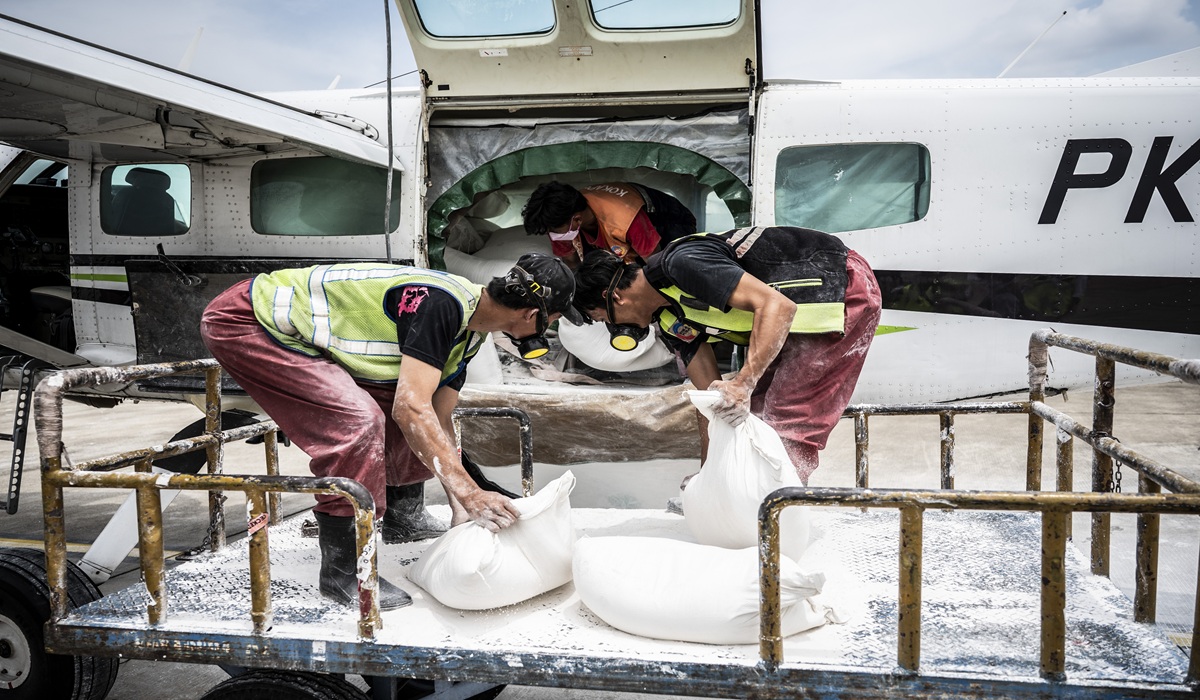
This is where weather modification technology plays a role. Intervention is carried out on clouds that have potential, such as cumulus clouds. A team of experts will add hygroscopic materials or aerosols that serve as condensation nuclei. The goal is to accelerate or optimise the growth of these clouds so that they fall as rain in the desired location.
‘What we do is intervene in the physical processes within the cloud so that its growth can be managed, not creating rain from nothing,’ he stated.
The success of weather modification operations is highly dependent on atmospheric conditions. Prof Yonny noted that an unstable atmosphere is actually a key supporting factor because evaporation processes are active and clouds grow more quickly. Conversely, if the atmospheric conditions are stable, the intervention often becomes ineffective because the clouds struggle to develop. Therefore, in-depth measurements using instruments such as weather balloons are mandatory before any operation begins.
Beyond triggering rain, this technology is also used to mitigate the impacts of extreme weather. However, Prof Yonny admitted that intervention becomes much more difficult if a storm has already developed into a powerful system. He concluded by emphasising that weather modification technology is an important tool for human interests, whether for managing water availability during the dry season or reducing the potential for disasters during the rainy season.