
IPB Expert Offers Three Solutions to Strengthen Forest Management Units to Tackle Deforestation
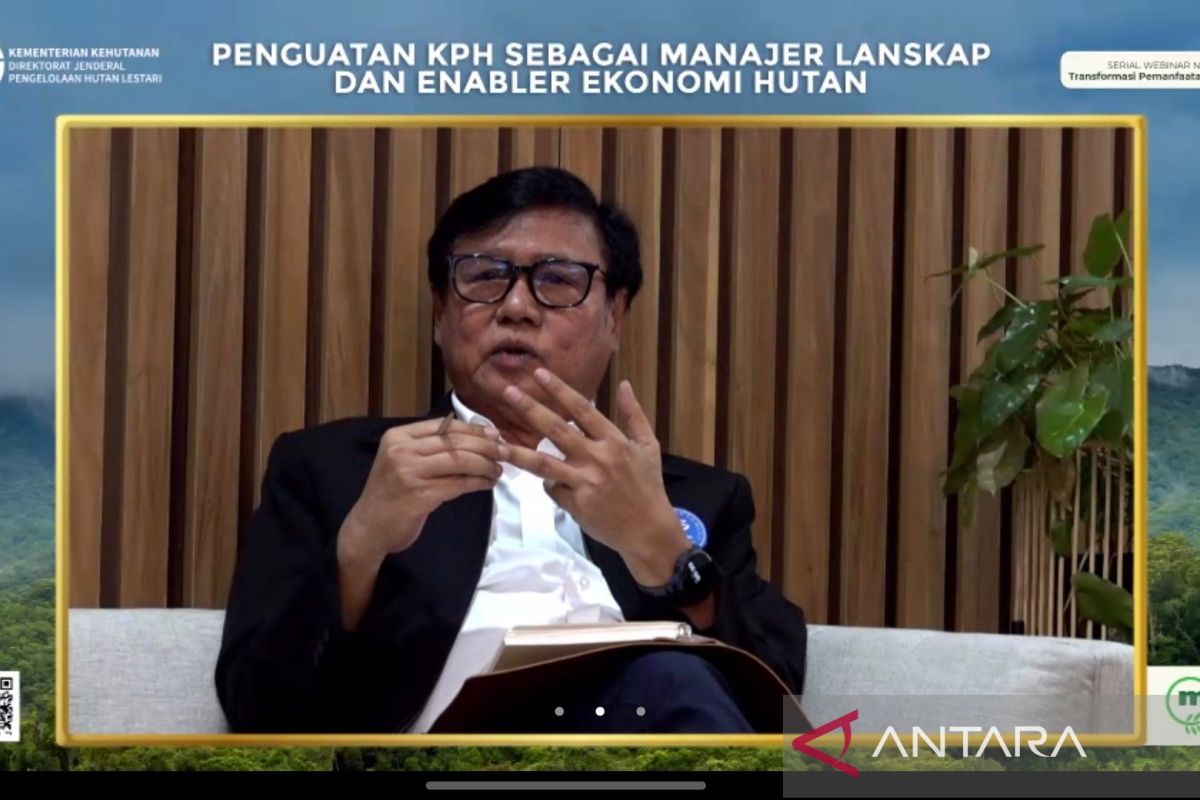
A forestry expert has highlighted that state forest areas are particularly vulnerable to illegal logging because they are common pool resources, unlike privately owned forests which are actively defended by their owners. “In community forests, it is easy to exclude potential exploiters. When someone wants to access it for illegal logging, the owner will oppose it. But in state forests, there is no one to oppose it, which is why illegal logging cases always occur there,” said Bramasto Nugroho, a Professor at the Faculty of Forestry and Environment at IPB University, during a webinar in Jakarta on Thursday.
He noted that the performance of Forest Management Units (KPH) has experienced ups and downs, leading to demotivation due to regulatory dynamics. Responding to the Ministry of Forestry’s intention to revise Minister of Environment and Forestry Regulation Number 8 of 2021, he offered three strategic solutions.
The first solution is to strengthen the authority of KPHs so they have full control and room for manoeuvre over business actors in their areas. He stated that the operational plans of permit holders within the KPH area must be under the KPH’s control, eliminating the practice of permit holders ignoring the KPH.
The second solution involves building social legitimacy. He stressed that the existence of KPHs should not rely solely on formal legality on paper but must be genuinely recognised by the community.
The third solution is fulfilling the needs for human resources, infrastructure, and funding. Regarding financing, he proposed alternative schemes ranging from full public financing governance based on Minimum Service Standards, private financing through Non-Tax State Revenue, to granting KPHs the authority to generate their own income. He expressed hope that the ongoing regulatory revision by the Ministry of Forestry would open the widest possible space for the financial independence of KPHs, which was previously restricted, allowing the creativity of these site-level management bodies to revive and become optimal.