
IPB Expert: Low Real Economic Value of Forests is Main Challenge for Utilisation
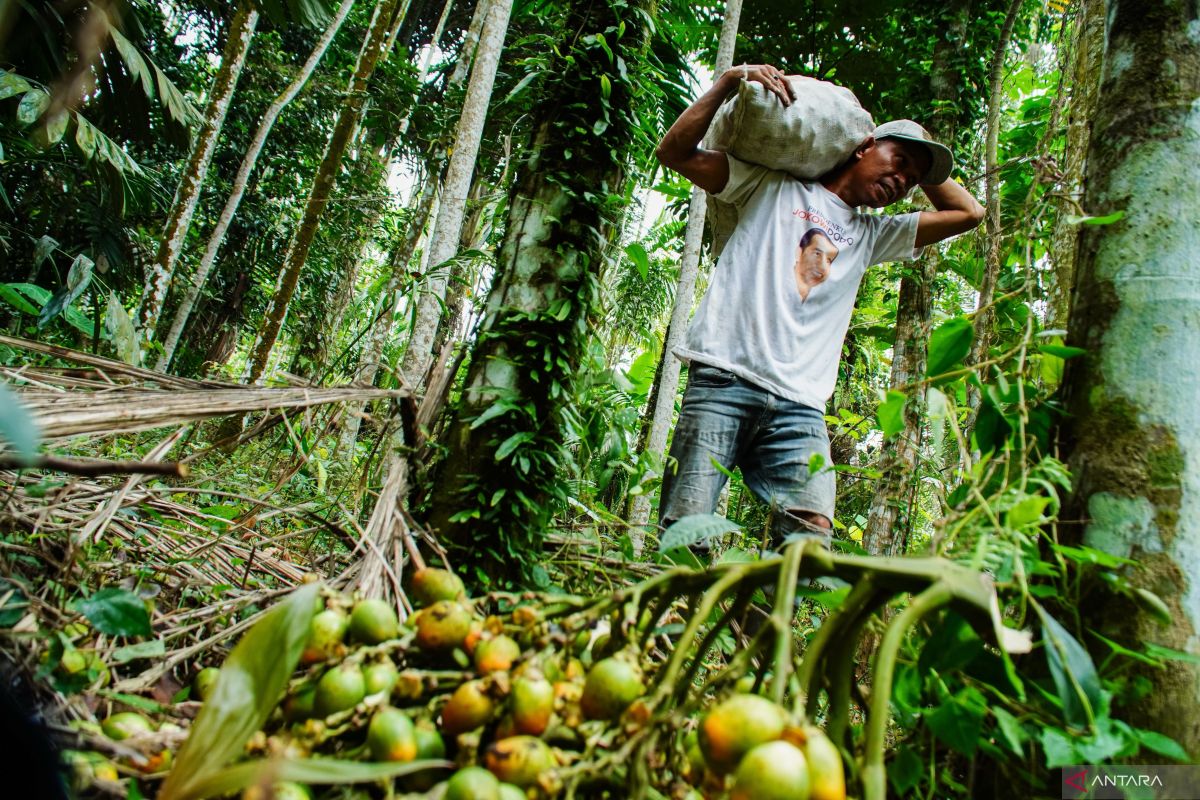
Jakarta (ANTARA) - The Dean of the Faculty of Forestry and Environment at IPB University, Prof. Dodik Ridho Nurochmat, has underscored that the main challenge in forest utilisation is the very low real economic value of forests. “Currently, the direct economic value of forests is only around Rp4 million per hectare per year, far below that of palm oil plantations, which reach approximately Rp40 million per hectare per year, or ten times higher,” Dodik said in a statement from the Ministry of Forestry in Jakarta on Monday. “This condition causes some parties to tend to want to convert forests to other, more profitable uses,” he added. Dodik further assessed the importance of changing the mindset regarding Non-Tax State Revenue (PNBP) in forestry, which has so far been commodity-based, to an area-based approach (forest utilisation package). He said this is expected to encourage small-scale economic growth and reduce the administrative burden. Meanwhile, the Secretary General of the Indonesian Forest Entrepreneurs Association (APHI), Purwadi Soeprihanto, highlighted the Minister of Environment and Forestry Regulation Number 8 of 2021 concerning Forest Governance and the Preparation of Forest Management Plans, as well as Forest Utilisation in Protected Forests and Production Forests (P.8). He assessed that the spirit of P.8 is multi-business forestry (MUK) as the most significant change from the previous timber-based regulation. He stated that the spirit of MUK is in line with the dynamics of global consumer demands, which are moving towards regenerative products. MUK must encompass timber, non-timber, and environmental services, placed on considerations of economic scale, benefits for the community and the environment, and the principles of the Sustainable Development Goals (SDGs). “However, the implementation of regenerative MUK at the site level is still carried out partially and in a fragmented manner. The utilisation of non-timber forest products by permit holders and communities is still small-scale, so it is not yet economically viable,” said Purwadi. “Distribution and logistics are also problematic because products are fragmented across a wide spatial area, resulting in high economic costs and uncompetitive products in the market,” he added. Purwadi proposed a landscape approach as a solution. Within one landscape, there can be several Forest Utilisation Business Permit holders, social forestry groups, village forests, small industries, vendors, and others that must be integrated. “The landscape approach is expected to produce aggregated products that are attractive for financing and easy to downstream, thereby accelerating the implementation of multi-business forestry,” he said. The area of production forest in Indonesia currently reaches 72 million hectares, or about 57 per cent of the total national forest area. The majority of natural production forests are concentrated on Kalimantan Island, while plantation production forests are mostly found on Sumatra and Java Islands.