
IPB Expedition Team Develops Alternative Feed and Catfish Floss in Salor
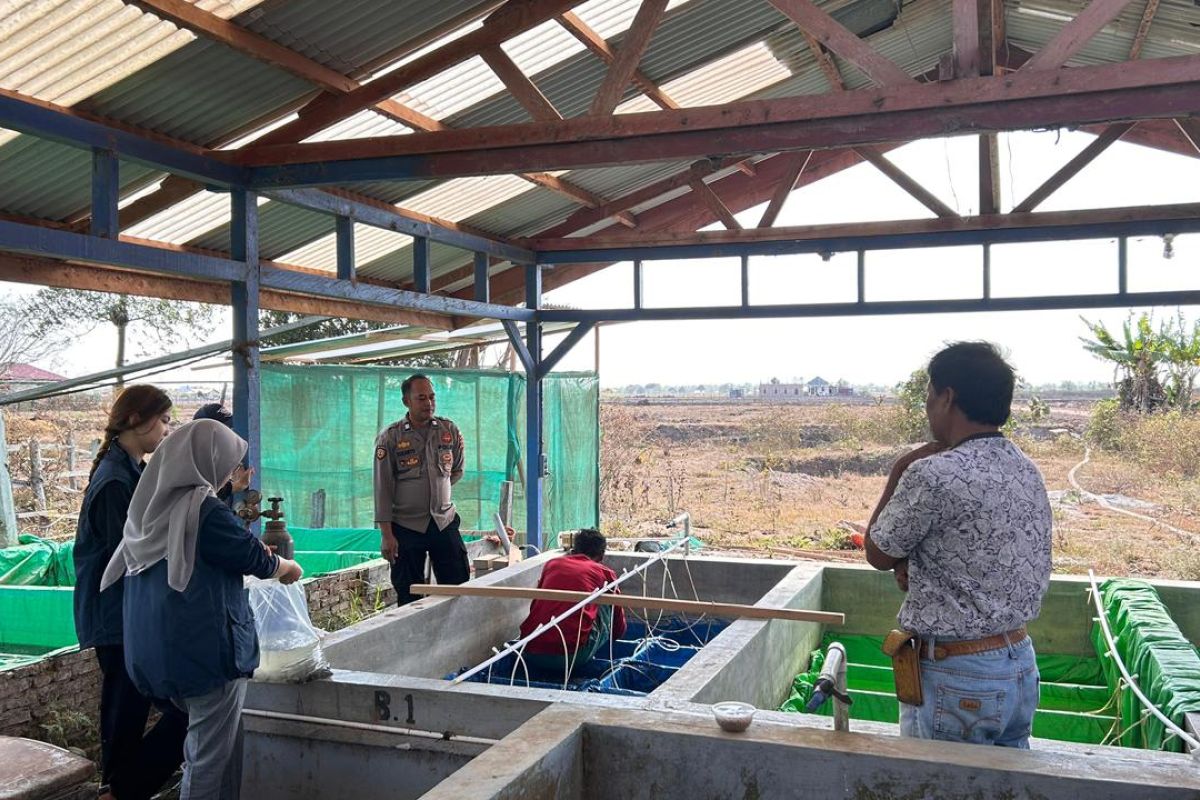
The Patriot Expedition Team (TEP) from IPB University is developing Black Soldier Fly (BSF) maggot cultivation as an alternative feed, alongside the processing of catfish into ‘abon’ (meat floss), in the Salor Transmigration Area, Merauke, South Papua. The initiative aims to suppress aquaculture costs and increase the added value of fishery products.
The development involves approximately 40 transmigrants and Indigenous Papuans (OAP) organised into three farmer group unions (gapoktan). Training includes catfish cultivation and BSF maggot breeding.
“This floss programme stems from the high cost of catfish feed in this area. Therefore, we have brought innovation through the use of maggots as an alternative feed,” said Noval, a member of the IPB University TEP, in an official statement received in Jakarta.
According to Noval, the development of alternative feed is being carried out alongside the processing of catfish into floss so that cultivation results can be transformed into value-added products. To ensure the availability of raw materials for maggot cultivation, the team is collaborating with several restaurants around Salor to provide organic waste collection bins. This organic waste is then utilised as a food source for the maggot larvae. Each farmer group union coordinates through their respective group leaders to maintain the sustainability of the cultivation process.
The cultivated maggots are used as alternative feed for catfish. The team also plans to market them to farmers around Salor, which has the potential to serve as an additional source of income for the community. In addition to developing alternative feed, TEP IPSB is assisting in shortening the catfish distribution chain so that breeders can access sales without relying on middlemen.
The team is also assisting micro, small, and medium enterprises (MSMEs) involved in floss processing through the halal certification process, while the marketing of catfish floss products is planned to be expanded through digital channels and a dedicated website.
The Ministry of Transmigration stated that the programme’s benefits are being directly felt by the residents. Indah Katharina Wona, head of the MSME ‘Warung Ola Indah’, said the training provides options for the community to process fish into products with higher selling prices.
“This training is very beneficial for us because we do not just consume or cook ‘gastor’ (snakehead) fish; we can also innovate by making snakehead and catfish floss to increase the selling value of the fish and improve family income,” said Indah.
The Merauke Regency Central Bureau of Statistics (BPS) recorded that fish production for local consumption in Merauke Regency in 2024 reached 798,256 kilograms (kg). Of that total, inland fishery production reached 55,953 kg, including 8,334 kg of catfish and 5,408 kg of snakehead fish.
Nationally, the Ministry of Marine Affairs and Fisheries (KKP) estimates that aquaculture production in the first quarter of 2025 will reach 4.17 million tonnes, an increase of 2.61 per cent compared to the same period the previous year. The production value of aquaculture during this period reached approximately Rp71.15 trillion.
In July 2026, the Ministry of Transmigration assigned 1,476 TEP participants, organised into 246 teams, to be deployed across 53 transmigration areas throughout Indonesia. Twelve of these assignment areas are located in the Papua region. These 53 locations are part of 154 priority transmigration areas previously visited and mapped through TEP 2025.
In 2026, the programme is directed not only towards research and mapping but also towards technical work, assistance, and the development of innovations based on regional needs. The Ministry of Transmigration has designated Merauke, including the Salor Transmigration Area, as one of the development regions for transmigration transformation based on economic potential.
The Minister of Transmigration, Muhammad Iftitah Sulaiman Suryanagara, stated that economic development in the region will be expanded to various areas in Papua. “In the future, it will not just be Merauke; we want to reach all of Papua. There must be economic growth in all Papua provinces, all Papua regencies, and all Papua villages,” said Iftitah.
The Ministry hopes that the development of alternative feed, fishery product processing, and business assistance will strengthen the economic activities of the community in transmigration areas.