
IPB and Unpad Students Showcase Innovative Solutions for Gunung Padang Preservation
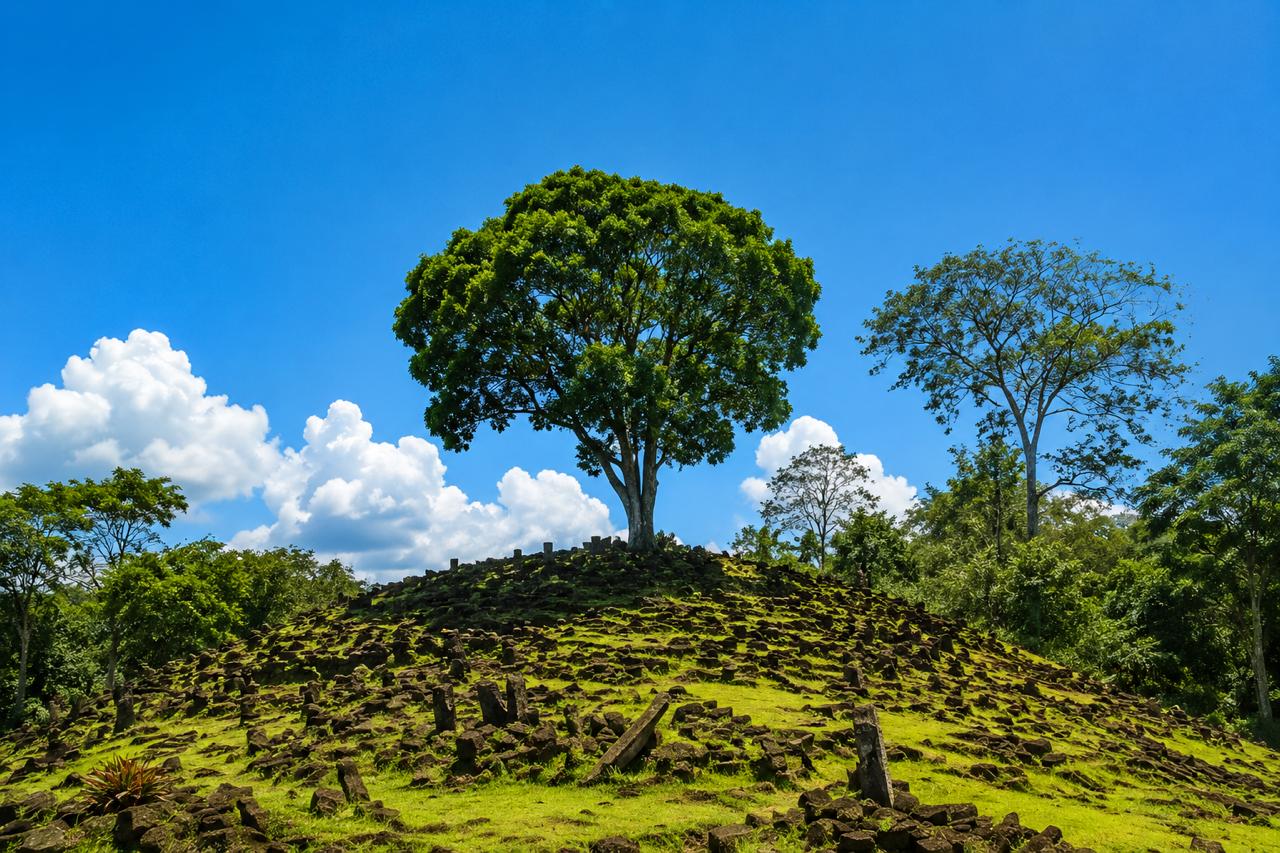
Gunung Padang Village in Cianjur, West Java, is not only known as one of Southeast Asia’s largest megalithic sites but is also grappling with social, health, and environmental challenges amid growing tourism activity. The village, which ranked among the top 50 in the 2022 Indonesian Tourism Village Award (ADWI), is now the site of the Genera-Z Berbakti 2026 programme, bringing together students from IPB University and Universitas Padjadjaran (Unpad) to develop innovative solutions for the local community.
The Gunung Padang site, recognised as Southeast Asia’s largest prehistoric stepped pyramid and believed to represent human civilisation dating back approximately 3,000 years, features a landscape of hills, plantations, and natural areas preserved through community cooperation and harmonious living with nature.
Alongside agriculture and tourism, the village has begun developing creative economies and SME products as tourist numbers rise. However, despite its historical and tourism potential, the community faces issues such as high acute respiratory infection (ARI) cases, infant pneumonia, suboptimal waste management, and open defecation in rivers due to inadequate sanitation facilities. Additional challenges include poor tourism waste management, lack of village libraries, need for SME marketing training, and limited facilities for learning traditional instruments like karinding, kacapi suling, and gendang penca among the youth.
Under the Genera-Z Berbakti 2026 programme, both IPB and Unpad student teams have prioritised waste management in their proposals but with different approaches. IPB’s ‘Sabilulungan Lestari’ team proposed community education-based solutions, including Simponik for waste segregation education, a shredder machine installation, and ‘waste to wallet’ concepts. They also introduced the Kembara programme for family herbal medicine (Toga) education, agroforestry, and energy bar production training. Additionally, their Sianjur initiative includes air quality and weather monitoring stations and the Sadulur Rahayu health check-up service.
Meanwhile, Unpad’s ‘Mega Lestari’ team introduced a circular economy concept, converting waste into economically valuable products. Their proposals include revitalising 10 bioseptic tank toilets through eco-sanitisation, processing organic waste into animal feed, and transforming inorganic waste into Gunung Padang-themed souvenirs. Unpad’s team also launched a programme to empower 40 local youth as eco-tour guides and cultural activity organisers to support local culture preservation and sustainable tourism.
Hera F Haryn, EVP of Corporate Communication & Social Responsibility at BCA, stated that Genera-Z Berbakti is designed not just as an idea competition but as a bridge for collaboration between students and village communities. ‘Through community service at BCA’s designated villages, the innovations from the finalists can deliver tangible impacts that align cultural heritage preservation with improved local welfare,’ she said.
Both teams will present and test their ideas in the final round of Genera-Z Berbakti 2026, broadcast from mid-June via BCA’s official YouTube channel and programme partners. The public can also support their favourite team through Fan Favourite Team voting on BCA’s official Instagram account until 5 July 2026.