
IPA 2026 Judges to Focus on Relevance, Viability, Availability, Quality, and Sustainability
The 12th edition of the PropertyGuru Indonesia Property Awards (IPA) was officially launched at The Westin Jakarta on Thursday, 23 April 2026. New categories have been introduced for IPA 2026 to align with current property market developments. These include ‘Best First Home Development’ within the Residential awards, as well as ‘Best Condo Developer’ and ‘Best Housing Developer’ in the Developer Awards. The Commercial category now features ‘Best Green Township Development’, ‘Best Wellness Hospitality Development’, ‘Best Transit Hotel Development’, and ‘Best Factory/Warehouse Development’.
This annual awards programme is held to recognise the best developers, architects, and property projects in Indonesia, covering various categories from interior design to residential developments and luxury apartments.
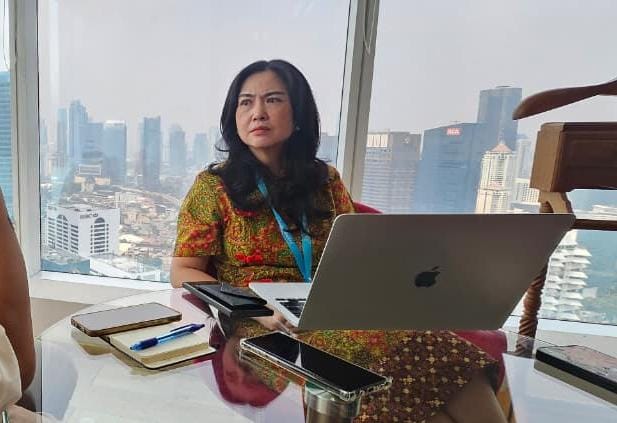
Ahead of the property assessments in the second week of September 2026, Media Indonesia interviewed Sari Dewi, a member of the judging panel and CEO of Loan Market Indonesia. Sari, who also serves as COO of Ray White, discussed the specific criteria she expects from participants in the PropertyGuru IPA 2026.
“I look for design that is attractive, certainly. However, in my view, a superior project is not just about attractive design, but its ability to meet market needs. Furthermore, discussing long-term sustainability is also essential,” Sari told Media Indonesia on Friday (4/9).
According to Sari, there are three key pillars in the IPA 2026 judging process: relevance to consumer needs, commercial viability and availability, and the quality of execution and sustainability.
Regarding relevance, Sari believes a property must address the needs and aspirations of its target market. In terms of viability and availability, a project must be able to be absorbed by the market. “It is also very important for us to see the partnerships with banks and the available financing methods,” Sari added.
Thirdly, judges will evaluate the quality of design, its integration with the environment, and its overall value.
First Homes
For the first-home market, IPA 2026 has introduced a new category: ‘Best First Home Development’. This category is specifically designed to appreciate residential projects—both landed houses and apartments—that target first-time homebuyers.
“Although the first semester has been quite challenging—meaning there hasn’t been a massive surge in product launches or sales—first-home development is currently extremely important,” Sari explained.
Sari noted that the government strongly supports first-time homebuyers, notably through the VAT Borne by the Government (PPN DTP) incentive for residential properties valued up to Rp2 billion. “This support is crucial, especially for young people. Without such assistance schemes, first-time homebuyers would face significant difficulties in owning a home.”
Accessibility and Public Transport
For young people and first-time buyers, affordable housing is often located far from activity centres or workplaces like Jakarta. “Therefore, affordability is not just about low house prices, but also about accessibility,” Sari stated.
Currently, the concept of Transit-Oriented Development (TOD) is expanding with the availability of LRT, MRT, and TransJakarta. Government plans for public transport development are highly beneficial, as buyers can be assured that their homes will be connected to public transport modes. This helps mitigate rising daily transport costs caused by increasing fuel prices.
Furthermore, societal lifestyles are shifting. Previously, a minimum land width of 6 metres was considered mandatory to provide a car garage; however, many young people now utilise ride-hailing services to reach TOD stations. “Private vehicle ownership is no longer the primary priority. Consequently, residential designs can now be more efficient—for example, using narrower plots that build upwards (vertical space)—so that expensive land costs can be suppressed without sacrificing comfort.”
Transit-Oriented Development (TOD) is an urban planning concept that integrates housing, commercial areas, and public spaces directly with mass transit access points. It is designed to be easily accessible via walking, cycling, or public transport, with the primary goal of reducing traffic congestion, lowering vehicle emissions, and increasing urban mobility efficiency.
Judging Criteria
For projects within the Development & Design Awards group, the judging panel evaluates several key points:
Value and Cost Efficiency: The extent to which a project provides price efficiency relative to the benefits/facilities obtained by first-time homebuyers, as well as the availability of payment schemes or mortgage facilities.
Location and Accessibility: Ease of transport access to city centres, work zones, or major road/public transport networks.
Design Concept, Layout, and Land Optimisation: Functional and compact building designs that optimise limited land without sacrificing comfort (space efficiency), and layouts that allow for phased development (growing houses) if required by young families.
Quality of Facilities and Materials: The availability of community support facilities (such as playgrounds, communal areas, security/CCTV systems, and green open spaces), the quality of construction materials, and the reliability of physical craftsmanship.