
IOJI: Indonesia must strengthen bilateral cooperation to protect migrant fishing vessel crews
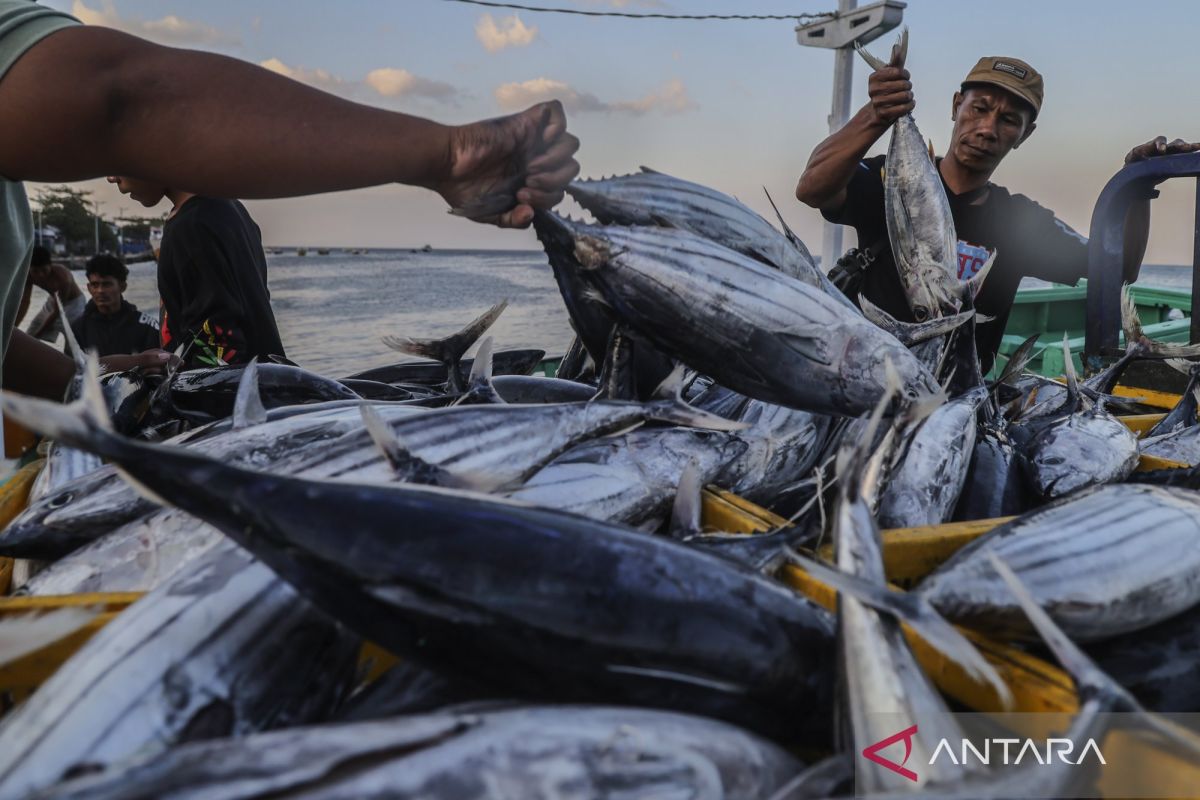
Jakarta (ANTARA) - The Indonesia Ocean Justice Initiative (IOJI), a research institute, is urging the strengthening of bilateral and multilateral cooperation to ensure the protection of Indonesian migrant fishing vessel crews in placing states, flag states and port states.
IOJI researcher Tasya Nur Ramadhani said such cooperation is needed to ensure that protection standards already held by Indonesia, including through the ratification of ILO Convention No. 188 on Work in the Fishing Sector, can be applied across borders.
“Indonesia must strategise this cooperation, both bilaterally and multilaterally,” Tasya said at a discussion on the protection of migrant fishing vessel crews in Jakarta on Tuesday.
She explained that bilateral cooperation could be directed at ensuring that placing states, flag states and port states apply protection standards for Indonesian migrant fishing crews.
In addition, such cooperation must ensure there is no discrimination against migrant crew members based on their status or type of visa.
According to her, a visa status that does not provide recognition as a worker can place migrant fishing crews in a vulnerable position, as they become dependent on their employers and struggle to access protection when violations occur.
“Whatever the form of the visa, the Indonesian government, through bilateral and multilateral cooperation, must be able to ensure that the visas held by migrant fishing crews do not discriminate against them compared with national workers in the placing state,” she said.
Tasya also pushed for a transnational referral mechanism to handle cases of human trafficking involving migrant fishing crews.
Such a mechanism is needed to ensure that victim identification, the provision of assistance and support, law enforcement, and the restoration of rights can be carried out effectively when cases involve more than one country.
IOJI considers the protection of migrant fishing crews to require national and international commitment because the nature of the work spans various jurisdictions, including territorial waters and the high seas.
Indonesia has ratified ILO Convention No. 188 through Presidential Regulation No. 25 of 2026.
ILO Convention No. 188 on Work in the Fishing Sector is an international standard governing the rights of fishing vessel crews, including requirements for work, occupational safety and health, working and living conditions on board, medical examinations, and social security protection.
As a follow-up, the Ministry of Marine Affairs and Fisheries (KKP) issued Ministerial Regulation No. 4 of 2026 on Fishing Vessel Manning Governance.
Through this regulation, the government, among other things, regulates the requirements for fishing vessel crews, BPJS Ketenagakerjaan (employment social security) membership, sea work agreements (PKL), and crew placement through official mechanisms supervised by Fisheries Port Controllers (Syahbandar Perikanan).
The KKP is also building crew capacity through socialisation programmes on crew protection and the prevention of human trafficking, as well as Basic Safety Training Fisheries (BSTF).
Source: jawawa.id (https://jawawa.id/newsitem/ioji-indonesia-must-strengthen-bilateral-cooperation-to-protect-migrant-fishing-vessel-crews-1789466097)
Originally published by Antara (Indonesian) (https://www.antaranews.com/berita/5741908/ioji-ri-perlu-perkuat-kerja-sama-bilateral-untuk-lindungi-akp-migran), translated from Indonesian