
INZS 2026: Bicara Udara Urges Government to Accelerate Implementation of Air Pollution Policies
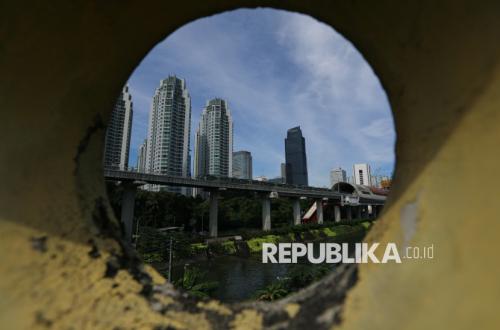
Increased public awareness and societal pressure are considered vital factors in driving the government to take concrete steps to address air pollution. According to Novita Natalia Kusumawardly, one of the founders of Bicara Udara, air quality issues often only receive attention when they are widely highlighted in the public sphere.
This was stated by Novita during a discussion at the Indonesia Net Zero Summit (INZS) 2026, organised by the Foreign Policy Community of Indonesia (FPCI) in Jakarta. She noted that the government maintains many priority agendas, meaning air pollution issues frequently fail to become a primary focus unless they become a subject of public debate.
“In Indonesia, if it does not go viral, there will be no action from the government. The government has a long list of priorities. If it is not made viral, the issue will not rise to priority status,” she said on Saturday (1/8/2026).
According to Novita, a similar situation occurred in 2023 when air quality in Jakarta deteriorated due to a prolonged dry season influenced by the El Niño phenomenon. At that time, air pollution became a national concern after the then-president experienced a cough and convened a limited meeting with several ministries. The government subsequently issued several regulations to tackle air pollution.
However, Novita assessed that these various policies have not been accompanied by adequate implementation. “The regulations have been released, but the implementation has not been running well,” she remarked.
She stated that while the public must contribute to creating a cleaner environment, the public must also continue to voice air pollution concerns to ensure the government consistently executes established policies. Novita noted that the transparency of air quality data in Jakarta has progressed, with citizens now able to access information via the JAKI application and official local government websites.
Nevertheless, she argued that providing data is insufficient without an early warning system to help the public anticipate health risks when air quality worsens. She also highlighted the slow bureaucratic processes in handling environmental issues. As a civil society organisation, Bicara Udara frequently provides technical assistance to the government, yet coordination processes often remain sluggish.
“I see that civil servants are working well. But the question is, is it efficient and fast? That is what we believe needs improvement,” she said.
Novita emphasised that air pollution cannot be resolved by the Jakarta Provincial Government alone, as air pollution is a cross-regional issue. According to her, sources of PM2.5 fine particulate emissions originate from various areas surrounding Jakarta, including Bekasi, Bekasi Regency, Cikarang, Bogor, and Banten.