
Investors Traumatised by Hormuz Strait Chaos Fear Malacca Strait Could Become a Toll Route
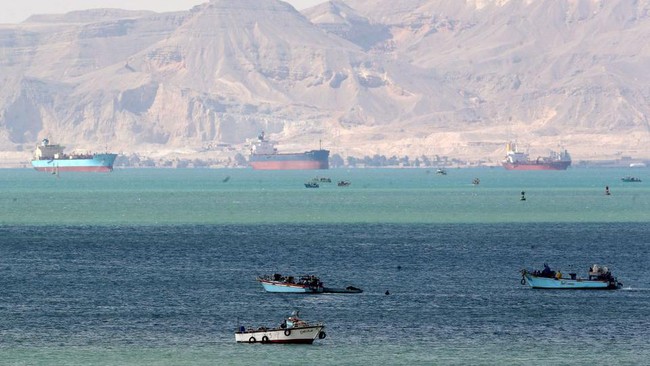
Jakarta, CNBC Indonesia - Iran’s discourse regarding taking a larger role in managing the Strait of Hormuz has triggered new anxieties in the global energy market. A number of industry players are beginning to fear the possibility of levies or tariffs similar to those appearing in the Strait of Malacca, one of the world’s most important energy and trade shipping lanes, which borders Indonesia directly.
According to reports from CNBC International on Tuesday (7/7/2026), these concerns emerged following reports that Iran and Oman, two nations situated on opposite sides of the Strait of Hormuz, have submitted a proposal to the United States (US) to jointly manage the narrow shipping lane, including the collection of administrative fees for passing vessels.
Previously, the US and Iran agreed on a memorandum of understanding last month to ensure ships could sail safely and freely through the Strait of Hormuz for 60 days. Once this 60-day period expires, the management and maritime services in the Strait of Hormuz will be determined by Iran and Oman following discussions with other nations in the Persian Gulf region.
The agreement states that new arrangements will be made “in accordance with applicable international law and the sovereign rights of the coastal states in the Strait of Hormuz.”
The Strait of Hormuz itself is one of the world’s most vital energy routes, as approximately 20% of global oil traffic passes through the region.
Investor Concerns
The idea of implementing a service scheme or levies for ships traversing the Strait of Hormuz has immediately triggered widespread concern, particularly among investors who fear a similar model could be applied to other strategic shipping lanes.
One of the primary concerns is the Strait of Malacca.
Janiv Shah, Vice President of Commodity Markets at Rystad Energy, stated that some investors are beginning to show unease regarding the potential for new shocks to the oil market should tariffs be imposed on the Strait of Malacca.
“I think part of the reason for this concern is that if we see the potential for some kind of tariff gateway in the Strait of Hormuz implemented by Iran, then something similar could be applied elsewhere. And, of course, the most important in terms of volume is the Strait of Malacca,” Shah told CNBC’s Squawk Box Europe programme.
He added that implementing such a mechanism would not be easy.
“How that mechanism would eventually be implemented, unfortunately, I cannot explain further. However, it will likely take a long time because, in terms of traffic volume, the Strait of Malacca is of immense significance,” he said.
According to data from the US Energy Information Administration (EIA), the Strait of Malacca is the primary shipping route in the Asia and Oceania region, accounting for approximately 29% of total global seaborne oil trade in the first half of 2025. About 70% of this flow consists of crude oil, while the remainder comprises refined petroleum products.
Spanning approximately 900 kilometres, the Strait of Malacca is the shortest sea route connecting East Asia with the Middle East and Europe. This route borders Indonesia, Malaysia, Singapore, and Thailand.
Tariff Discourse
These concerns have gained further attention because last April, Finance Minister Purbally Yudhi Sadewa briefly mentioned the possibility of imposing tariffs on ships passing through the Strait of Malacca. However, that proposal was subsequently withdrawn.
The Indonesian coastline forms the entire southern side of the Strait of Malacca, making Indonesia one of the primary coastal nations on the route.
Nevertheless, experts emphasise that implementing a levy system for passing ships would contravene international law, which guarantees freedom of navigation in straits used for international navigation.
The commitment to maintaining freedom of navigation was reaffirmed by President Prabowo Subianto and Singaporean Prime Minister Lawrence Wong following their meeting in Jakarta on Monday. Both leaders stated that the Strait of Malacca must remain open and accessible to all nations in accordance with international law provisions.
Malacca Strait Differs from Hormuz
Jonathan Marston, Director of the Indo-Pacific Programme at the Atlantic Council, assessed that the Strait of Malacca possesses a cooperative mechanism that makes it far more secure than the Strait of Hormuz.
“Institutions are very important,” said Marston.
He explained that the existence of the Malacca Straits Patrol (MSP) ensures the shipping lane remains open for global trade. The MSP is a four-nation cooperation managing the security of the Strait of Malacca, involving Indonesia, Malaysia, Singapore, and Thailand.
“This arrangement benefits all parties as well as the global economy. Without this institution, the Strait of Malacca would be just as vulnerable to unilateral closures as the Strait of Hormuz,” he noted.
Geopolitical Risk
Meanwhile, an analyst from the Center for Strategic and International Studies (CSIS) in Washington assessed that Iran’s move demonstrates that control over strategic shipping lanes can significantly increase a nation’s power and deterrence.
According to them, the risk is even greater in the Asian region due to the presence of two highly strategic shipping lanes: the Strait of Malacca and the Taiwan Strait.
In an analysis published on 1 July, CSIS stated that Iran’s efforts to control and charge fees for ships passing through the Strait of Hormuz have revived fears that other nations might attempt similar actions regarding the Strait of Malacca.
“Iran’s attempt to control and impose tariffs on ship traffic in the Strait of Hormuz has revived concerns that other countries may attempt to do the same to the Strait of Malacca. China’s threat to use force against Taiwan has also placed the Taiwan Strait as one of the most geopolitically sensitive points in the world,” the report concluded.
Source: jawawa.id (https://jawawa.id/newsitem/investors-traumatised-by-hormuz-strait-chaos-fear-malacca-strait-could-become-a-toll-route-1783421585)
Originally published by CNBC Indonesia (https://www.cnbcindonesia.com/news/20260707162217-4-748862/investor-trauma-chaos-selat-hormuz-waswas-selat-malaka-bakal-berbayar), translated from Indonesian