
Investors Dump Japanese Yen En Masse, Flee to Swiss Franc
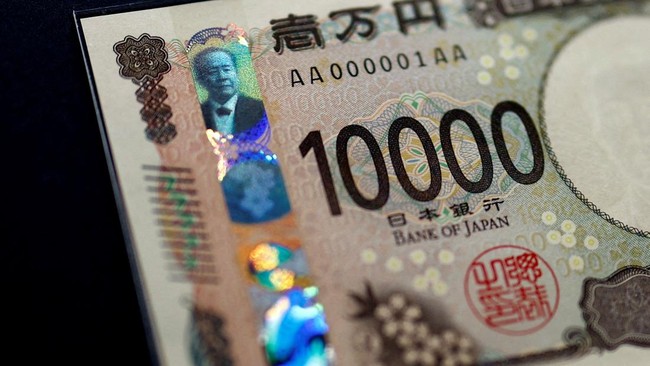
The weakening of the Swiss franc has become an unexpected consequence of the rare joint intervention manoeuvre between the United States and Japan to support the yen. This surprising situation has brought fresh air to various companies and policymakers in Switzerland who for years have struggled against the dominance of their local currency’s strength.
Citing Channel News Asia, Wednesday (19/8/2026), the franc exchange rate is actually still 12% stronger against the euro compared with five years ago, although it has recently begun to weaken slightly. The strength that continues to pressure economic growth and makes the country’s exports more expensive has been driven by Switzerland’s persistent current account surplus, sound public finances, very low inflation, and strong safe-haven inflows.
In global markets, both the yen and the franc are heavily influenced by foreign exchange carry trade manoeuvres. These currencies weaken when investors borrow them due to low interest rate offers, with the funds then immediately sold to buy higher-yielding assets elsewhere, often targeting emerging markets.
The yen has long been the preferred funding currency in the market. However, it is expected to remain volatile and unsettled as traders are now highly wary of the risk of further intervention, which directly triggers the start of capital rotation into the Swiss franc.
Neuberger Berman Senior Portfolio Manager Fredrik Repton highlighted the dynamics of this shift in investor appetite. According to him, the franc’s good performance has prompted investors to hunt for the Alpine nation’s currency.
“Market participants will think about rotating some of their funding positions. If you look at euro-Swiss performance, that is probably more instructive about how the market environment has taken shape,” he explained.
Currently, the franc is around 0.9385, near its weakest level in about a year against the euro. That figure is down about 4% from the 11-year high in March near 0.9, and has plunged almost 7% from the 11-year high against the US dollar last January.
In line with that projection, Dutch bank Rabobank last week also revised upward its 9 to 12-month target for the euro/Swiss franc pair to 0.95 from 0.94 previously. This tactical move reflects strong expectations that the franc will continue to weaken going forward.
ING Global Markets Head Chris Turner revealed that the recent intervention in Japan has driven a massive unwinding of short yen positions. This has succeeded in pushing the number of outstanding positions much closer to franc positions.
“It takes a lot to switch away from the yen as a funding currency, but there is a lot out there that can break people’s habits,” he said.
Other factors making investors think twice about betting against the yen include expectations of Japanese interest rate hikes and speculation that Japan’s giant Government Pension Investment Fund (GPIF) may shift allocations towards domestic investments.
BofA Global G10 FX Strategy Head Adarsh Sinha explained the franc’s appeal as the most logical carry trade alternative to replace the Japanese currency. Swiss interest rates are currently held at 0%, far below Japan’s rate, which is now set at 1%.
“Swiss rates are not only lower than the Japanese yen, but franc volatility is also lower,” he said.
Any franc weakening due to its shifting use to fund carry trades is certain to be welcomed by the Swiss National Bank (SNB). The monetary authority has previously stated firmly that it is ready to intervene if necessary to weaken its currency.
Regarding the alignment of interests between countries in this shift in forex market trends, Turner again concluded that this situation has actually been desired by both the Japanese and Swiss publics.
“The Japanese want a stronger yen, the Swiss want a weaker franc, so it makes sense,” he concluded.
Source: jawawa.id (https://jawawa.id/newsitem/investors-dump-japanese-yen-en-masse-flee-to-swiss-franc-1787140382)
Originally published by CNBC Indonesia (https://www.cnbcindonesia.com/news/20260819150358-4-760641/warga-ramai-ramai-buang-yen-jepang-lari-ke-mata-uang-ini), translated from Indonesian