
Investors Abandon AI Stocks Amid Growing Spending Concerns
Jakarta, CNBC Indonesia – Shares in technology and artificial intelligence (AI) companies, previously the subject of fierce investor competition, are now being abandoned.
Following last week’s heavy sell-off of chip and technology shares, investors are now demanding that the corporate giants pouring vast sums into AI prove that such investment can generate profits.
The AI euphoria that pushed the stock market to all-time highs a month ago is now beginning to fade. The information technology sector was the worst-performing group in the S&P 500 index last week.
The S&P 500 fell 1.6%, whilst the tech-heavy Nasdaq 100 slumped 4.1%. Chipmakers’ shares were among the main drivers of the pressure.
The Philadelphia Stock Exchange Semiconductor Index even tumbled 10% in a single week, its worst decline since April 2025.
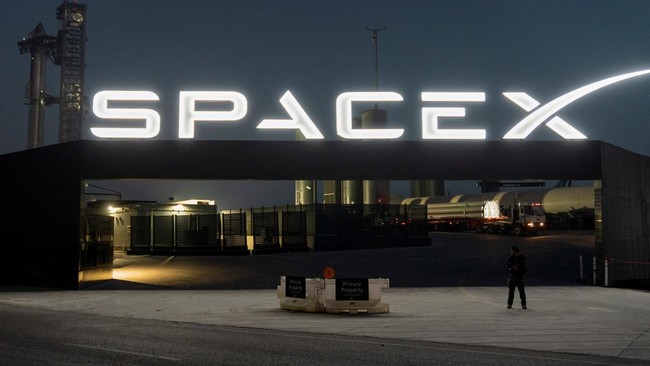
Pressure has also hit SpaceX, one of Elon Musk’s flagship companies. Its shares plunged 15% last week after falling 10% the week before. The decline has left SpaceX shares below their initial public offering (IPO) price and wiped out roughly US$1 trillion in market value from their peak.
“Investors are starting to feel uncomfortable with the amount of money being spent and they are worried about a bubble. Ultimately, we need to see revenue accelerate again,” said Jake Seltz, portfolio manager at Allspring Global Investments, quoted by Yahoo Finance on Monday (20/7/2026).
Investor scepticism is growing over the hundreds of billions of US dollars being funnelled into building AI data centres. As a result, the financial reports of companies with the largest AI expenditures over the next two weeks will be closely watched.
Investors will be looking for evidence that these enormous investments can genuinely deliver higher returns.
Meanwhile, Tesla and Alphabet are scheduled to open the big tech earnings season on Wednesday. After that, Microsoft, Meta Platforms, Apple and Amazon will report their performance the following week.
Together, these six companies account for roughly a quarter of the S&P 500’s market capitalisation on a market-weighted basis. Nvidia, meanwhile, will not release its financial report until next month.
The stakes are high. The index tracking the Magnificent Seven group has now lagged behind the S&P 500 throughout this year. That is a rare state of affairs, as the group of giant technology shares has been the main engine of market gains for roughly the past four years.
Concerns over the scale of AI spending have also battered semiconductor shares, even though the sector has been among the biggest beneficiaries of the surge in AI investment and has contributed significantly to the S&P 500’s 8.9% rise this year.
The greatest attention this week will fall on Alphabet, Google’s parent company. It has long been regarded as one of the winners of the AI race, thanks to the popularity of its Gemini chatbot, its development of proprietary data centre chips, and the expansion of its cloud computing business.
However, growing that business requires enormous expense. Alphabet’s capital expenditure is expected to more than double this year to US$187 billion. Like a number of other technology companies, Alphabet is increasingly relying on debt and equity markets to finance the expansion.
This has begun to unsettle investors. Alphabet shares slumped 6.5% over the past two sessions after the company was reported to be several months behind schedule in delivering Gemini 3.5 Pro, its most powerful flagship AI model.
Although Alphabet shares are still up 11% so far this year, their value has fallen 14% from their peak in May.
Sentiment towards other technology giants is even gloomier. Microsoft has just come through its worst month since 2000, with its shares down 19% so far in 2026.
Meta Platforms shares have also weakened slightly this year, despite a rally in July driven by optimism over the company’s plans to lease out computing capacity.
Amazon, meanwhile, has gained 7.1% this year and Nvidia is up 8.8%. Yet both continue to trail the performance of the Nasdaq 100.
“At a certain point, profits are called into question to such an extent that you cannot justify such high multiples on these shares. There will be greater focus on cloud gross margins, pricing, and how much AI revenue is generated for every dollar of computing,” said Todd Ahlsten, chief investment officer at Parnassus Investments.