
Investor Wins at Administrative Court, Kelingking Beach Glass Lift Sparks Pros and Cons
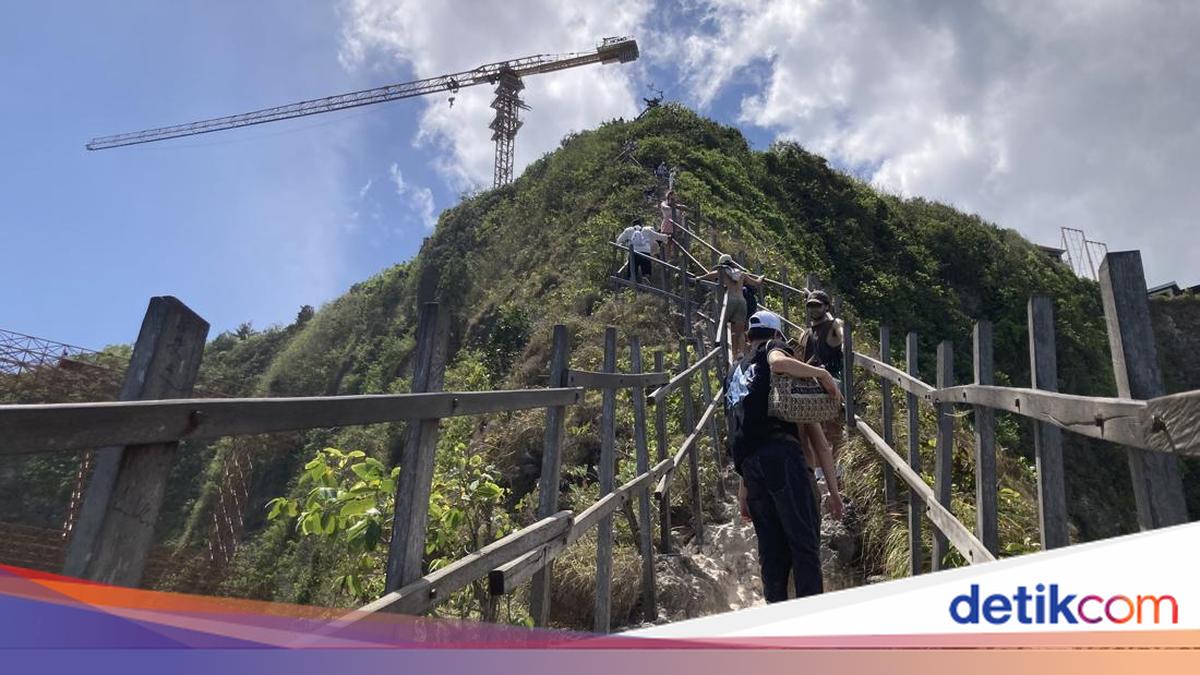
The treacherous path at Kelingking Beach, Nusa Penida, Klungkung, Bali, is one of the reasons tourists support the construction of a glass lift. However, the plan for the facility remains divisive, including over its impact on nature and the scenery.
The controversy over the glass lift has unfolded as the project’s investor won its lawsuit against the Bali Provincial Government at the Denpasar Administrative Court (PTUN). Despite winning at PTUN, the project cannot immediately proceed because the provincial government has confirmed it will file an appeal.
Amid these legal developments, differing views have emerged from foreign tourists who have experienced first-hand the ferocity of the terrain at the iconic destination.
Irwin Khajotia, a tourist from New Zealand, believes modern facilities such as a glass lift could bring positive impacts, provided the local community consents to the construction and the majority of the profits are returned to benefit local residents.
According to Irwin, the biggest challenge at Kelingking Beach lies in the descent down the steep, narrow and high-risk limestone cliff path. The sheer cliff face, which drops directly to the open sea, makes the journey to the beach an extreme physical test.
Nevertheless, the descent to the beach remains manageable as the path is equipped with handrails.
The crucial problem, in his view, arises when visitors have to climb back up the steep cliff.
“I think it would be good to build this lift, as long as the local community receives benefits from the profits obtained,” Irwin told detikBali whilst climbing the cliff stairs at Kelingking Beach on Monday (7/9/2026).
“Going down is no problem; the problem is coming back up,” he added, describing the immense exhaustion after struggling up the steep cliff.
For elderly tourists or visitors with fragile physical conditions, the extremely steep and exhausting terrain is considered dangerous.
Extreme fatigue under the scorching sun is feared to trigger serious health problems, including the risk of heart attacks.
The high-risk nature of the path has led some parties to view an assistive facility such as a glass lift as necessary to safeguard visitors’ health and safety.
The plan to build the glass lift is not only debated from the safety standpoint. Environmental damage and the scenery have also come under scrutiny, as the presence of the structure is deemed potentially to alter the Kelingking Beach cliff area.
Irwin believes the issue could be accommodated to suit the cliff’s condition.
“That could be arranged in such a way that it still appears in harmony with the green cliff. If it damages nature, what’s the difference from the many hotels and resorts that have been built? Why are those allowed?” he said.
On the other hand, several visitors have questioned the presence of a structure considered to spoil the view. One foreign tourist who wished to remain anonymous said the steep path was precisely the reason they paid the entrance fee to Kelingking Beach.
“Why let it be changed? We come here to descend that cliff and enjoy nature,” they said.
Amid these differing tourist perspectives, the controversy over the Kelingking Beach glass lift continues in the legal arena.
The project’s investor previously won its lawsuit against the Bali Provincial Government at the Denpasar PTUN. However, that victory has not opened the way for the project to proceed immediately.
The provincial government has confirmed it will take further legal steps by filing an appeal. Thus, the debate over visitor safety, natural aesthetics, and the legality of the Kelingking Beach glass lift construction continues.
Source: jawawa.id (https://jawawa.id/newsitem/investor-wins-at-administrative-court-kelingking-beach-glass-lift-sparks-pros-and-cons-1788796256)
Originally published by detikBali (https://www.detik.com/bali/bisnis/d-8653010/investor-menang-ptun-lift-kaca-pantai-kelingking-tuai-pro-kontra), translated from Indonesian