
Investor Funds Evaporate as SpaceX Burns Rp288 Trillion on AI Alone
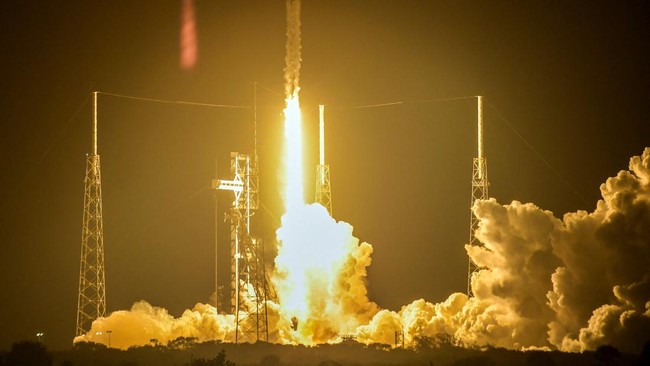
Elon Musk has finally “reached” the Moon – but not in the way he had dreamed. A spent SpaceX rocket is believed to have struck the lunar surface on Wednesday (5/8/2026), after drifting aimlessly in space since January 2025.
The object was the upper stage of a Falcon 9 rocket, which crashed near the Einstein crater at a speed of almost 9,000 kilometres per hour.
But the impact was felt not only on the Moon. A day earlier, SpaceX released its first quarterly financial report since its stock market debut in June, and the results shook equity markets, from chipmakers to telecommunications operators.
Revenue Soars, But Losses Remain
SpaceX’s revenue surged 92% year on year in the second quarter of 2026. Notably, the company’s main money-making engine is no longer just its rocket and satellite business, but rather its artificial intelligence (AI) unit operating on the ground.
The problem is that SpaceX is still posting losses. To build the computing capacity it leases to AI giants such as Anthropic and Google, the company has had to pour in enormous sums.
Citing a report by The Economist, capital expenditure on AI reached nearly US$16 billion, or around Rp288 trillion, in a single quarter alone – more than double the group’s total revenue. That figure is expected to swell further.
Investors fled. SpaceX’s market value, which had already slumped by more than US$1 trillion from its peak, fell further. The pressure was exacerbated by concerns over US$100 billion in shares flooding the market on 6 August, as the lock-up period for early investors, executives and employees came to an end.
Musk’s Sweet Promises: Rp16,000 Trillion in Revenue
To lure new investors, Musk dangled fantastic figures. He said data centre capacity, which stands at around 2 gigawatts (GW) this year, would be “closer to 10GW than 5GW” by the end of 2027.
The SpaceX boss also targeted revenue of US$1 trillion (around Rp18,000 trillion) by 2030, or more than 20 times this year’s projection. He also made grand promises for Starlink, which is now attracting corporate and government customers.
Although some merely rolled their eyes at such “Muskisms”, the impact on the stock market was real.
Nvidia shares jumped on 5 August after Musk pledged that SpaceX’s data centres would rely entirely on the company’s advanced AI chips.
Conversely, shares of US telecommunications operators such as AT&T, Verizon and T-Mobile tumbled. The trigger was a statement by SpaceX President Gwynne Shotwell that new cellular satellites to be launched next year, combined with spectrum purchased from EchoStar, would capture “quite a lot of their customers”.