
Investments Reach Rp 418 Trillion, Indonesia's Manufacturing Sector Claimed to Withstand Global Shocks
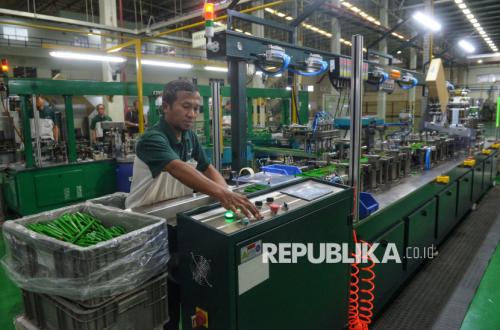
The Ministry of Industry (Kemenperin) reports that investments in the manufacturing sector have reached Rp 418.62 trillion in early 2026. This capital flow demonstrates the resilience of the national industry in facing global economic shocks.
Data from the National Industry Information System (SIINas) as of 23 April 2026 shows that 633 companies are currently building new production facilities. These activities have the potential to absorb 219,684 workers and strengthen the domestic industrial base.
“The performance of Indonesia’s manufacturing sector shows strong results. Its contribution continues to increase, employment absorption grows, investments expand, and it remains the main pillar of the national economy,” said Kemenperin spokesperson Febri Hendri Antoni Arief in Jakarta, quoted on Saturday (25/4/2026).
Febri detailed that industrial expansion is spread across various subsectors. The tobacco processing industry recorded the most constructions with 72 companies, followed by the beverage industry with 67 companies and the food industry with 60 companies. The chemical industry also recorded 49 companies building new facilities.
In terms of value, the basic metals industry was the largest contributor with investments of Rp 218.04 trillion from 24 companies. The chemical industry reached Rp 81.22 trillion and the non-metallic minerals industry Rp 12.10 trillion. This composition reflects the strengthening of upstream sectors as well as the consistency of the national downstreaming direction.
The investment performance aligns with the growth of the non-oil and gas processing industry, which reached 5.30 percent in 2025. This figure surpassed the national economic growth of 5.11 percent, marking the first achievement in the last 14 years.
The manufacturing sector’s contribution to gross domestic product (GDP) also increased from 17.92 percent in the second quarter of 2022 to 19.20 percent in the fourth quarter of 2025. This rise of around 1.28 percentage points further emphasises the role of manufacturing as an economic driver.