
Investment Remains Active, HKI Optimistic Indonesia Will Not Face Recession
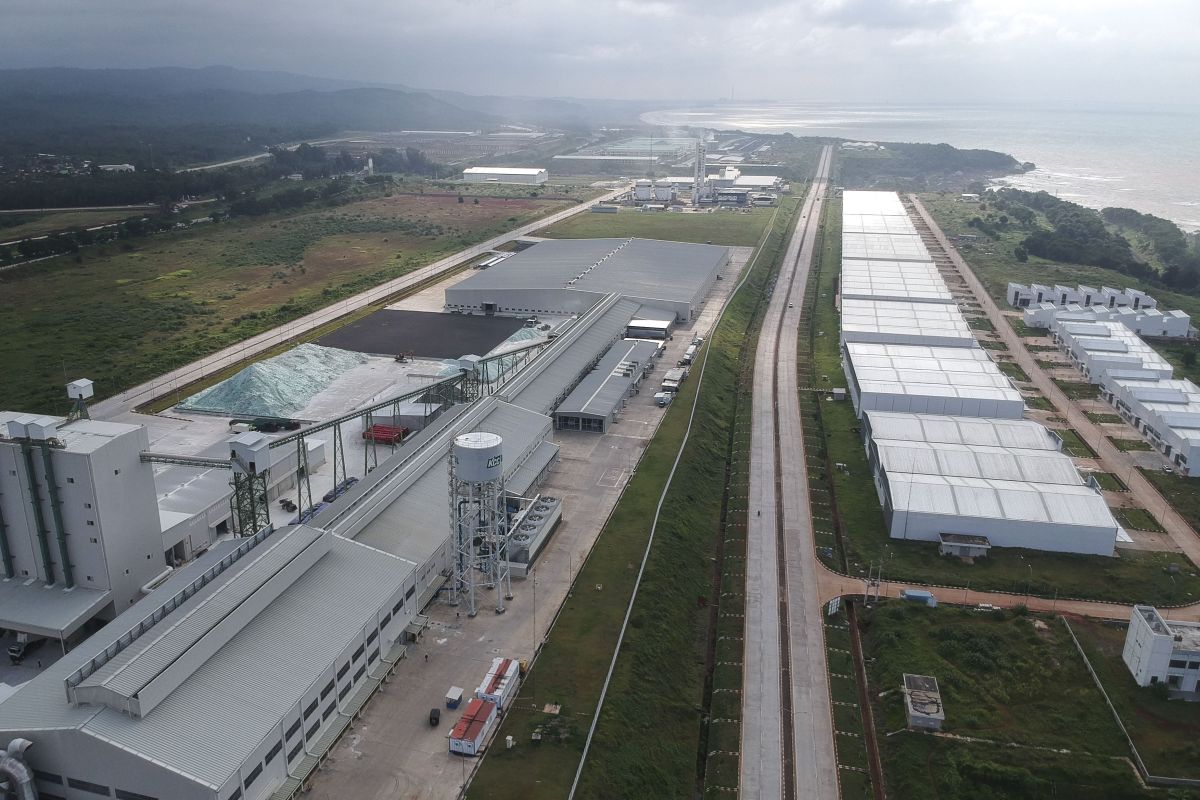
The Indonesian Industrial Estate Association (HKI) is calling on all business actors, investors, and stakeholders to maintain a clear, objective, and optimistic view of the Indonesian economy amidst current global financial market dynamics, characterised by a strengthening US Dollar, a weakening Rupiah, and corrections in the domestic stock market. In recent weeks, the Rupiah has faced significant pressure and the Jakarta Composite Index (JCI) has undergone a notable correction due to a combination of global factors and market sentiment towards emerging markets.
The General Chairman of HKI, Akhmad Ma’ruf Maulana, emphasised that these conditions should be addressed proportionally. He noted that fluctuations in exchange rates and capital markets are part of the economic cycles that occur during periods of global uncertainty. Geopolitical tensions, high global interest rates, energy price volatility, and international capital shifts are pressures affecting many developing nations, not just Indonesia.
“Indonesia has repeatedly faced various global economic challenges, from the Asian financial crisis, the 2008 global crisis, the Covid-19 pandemic, to various global geopolitical upheavals. These experiences demonstrate that national economic resilience should not be measured solely by daily fluctuations in exchange rates or stock indices, but by the ability to maintain real economic activity, investment, production, and job creation,” said Ma’ruf, as quoted from a press release.
HKI assesses that Indonesia’s primary fundamentals as an investment destination remain very strong. Indonesia possesses a large domestic market, a demographic bonus, abundant natural resources, an expanding downstreaming agenda, and an increasingly mature network of industrial estates serving as national manufacturing and logistics hubs. These factors remain the primary attractions for long-term investors who view Indonesia as a strategic production base and market within Southeast Asia.
According to HKI, Indonesia should instead accelerate ongoing structural reforms. The primary focus should not be on panicking over market volatility, but on ensuring that investment can enter and be realised more quickly. Regulatory simplification, accelerated licensing, synchronisation of central and regional policies, certainty in spatial planning, accelerated energy provision, and improved infrastructure quality are far more decisive factors for investor decisions than short-term financial market fluctuations.
“Investors essentially seek three things: certainty, speed, and ease. When these three elements are provided consistently, Indonesia will remain competitive even as the world faces economic and geopolitical pressures,” Ma’ruf continued.
HKI also appreciated the coordinated efforts of the government, Bank Indonesia, and financial authorities to maintain financial system stability and enhance the attractiveness of domestic assets to preserve market confidence. HKI believes that the momentum of the global economic slowdown could actually present an opportunity for Indonesia to strengthen its competitiveness. Many multinational companies are currently reviewing their global supply chains and seeking investment locations that are more efficient, stable, and possess large markets. Indonesia has a significant opportunity to capture this industrial relocation flow if regulatory reforms and investment acceleration are consistently implemented.