
Investment Prospects in Industrial Estates Amid Regulatory Strengthening
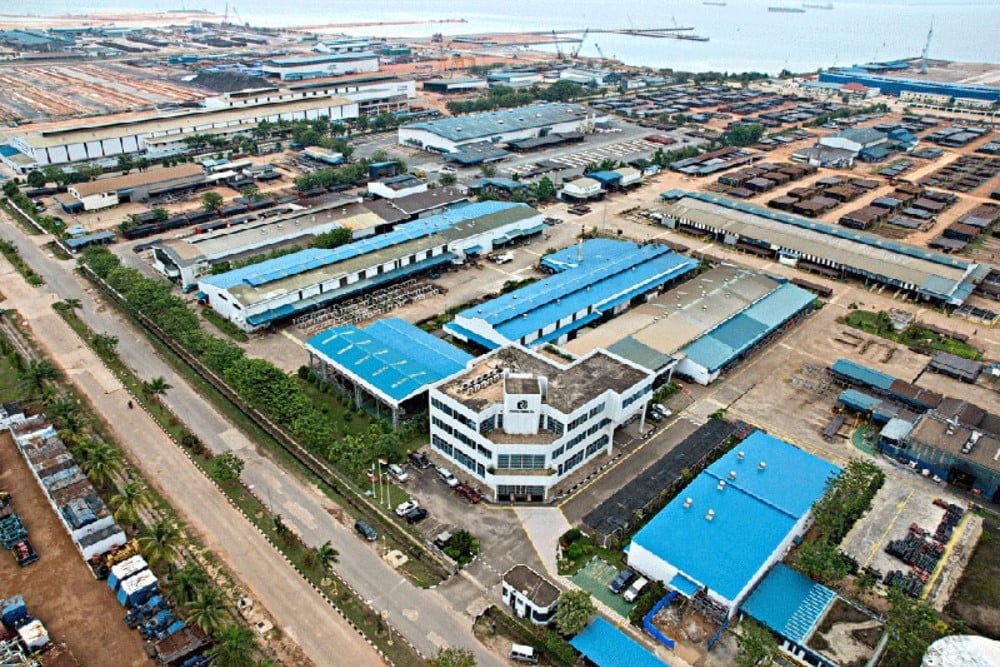
JAKARTA — Investment interest in industrial estates is considered to remain fairly strong in the first half of 2026, even as the manufacturing sector faces a wave of layoffs and the relocation of several factories to Vietnam. However, a domestic economic slowdown and bureaucratic obstacles are seen as potentially eroding Indonesia’s appeal as an investment destination if not promptly addressed.
Property consultancy CBRE Indonesia previously recorded that the occupancy rate of industrial estates in the Greater Jakarta area stood at 91% in the first quarter of 2026, with total industrial land absorption reaching 86 hectares. This performance was supported by the expansion of the manufacturing industry, particularly the automotive sector, which continues to drive demand for industrial land despite growing concerns over the relocation of factories to competing countries like Vietnam.
CBRE Indonesia Head of Research Anton Sitorus said the data is likely to be similar for the first half of 2026. To date, the firm has not observed a decline in land transaction activity within industrial estates. According to him, investor demand remains relatively good because the transactions currently occurring are a continuation of investment processes that have been underway for several months or even years.
“The figures are not out yet, but the general trend remains the same. This means interest in industrial estates is still quite good,” Anton told Bisnis on Tuesday.
He cautioned that future investment prospects are highly dependent on the national economic condition. Various economic indicators, from weakening public purchasing power and pressure on the rupiah exchange rate to investor perceptions of the government’s fiscal management, are concerns for global business players.
“If the economy continues like this, it is feared that investors and companies will also be affected. The problem is, Indonesia is currently under the spotlight over a number of issues. Foreign companies or investors do not view such things favourably,” he said.
Anton explained that an economic slowdown will ultimately affect the need for manufacturing companies to expand production capacity or build new factories. When domestic demand weakens, the need for industrial land also potentially declines.
“If the domestic economy does not grow well, companies will certainly consider what lies ahead. If domestic demand alone declines, the need to produce domestically is also affected,” he stated.
Nevertheless, CBRE Indonesia has not yet seen any investment cancellations or a decline in transaction levels in industrial estates. The transactions still taking place are continuations of processes initiated months or even years ago.
To sustain and increase occupancy in industrial estates, Anton believes the government needs to strengthen the investment climate through simpler and more business-friendly regulations. He argued that the deliberation of the Industrial Estates Bill should be directed at cutting bureaucracy and providing certainty for investors.
“The government must create friendly regulations. At the very least, they should be simple, not complicated, and not involve lengthy bureaucracy. That is the most important thing,” he stressed.
Similarly, Indonesian Industrial Estates Association (HKI) Chairman Akhmad Ma’ruf previously stated that the government needs to accelerate the realisation of investments that have entered through national strategic project and special economic zone schemes. According to him, many investments remain stalled due to bureaucratic obstacles, both at the ministry and regional government levels.
“I see and feel firsthand that many ministries and regional institutions are still hindering investment realisation, whether from Japan, the United States, Germany or China,” he said.
According to Ma’ruf, Indonesia is beginning to lag behind several countries in the region such as Vietnam, Thailand, Malaysia and other ASEAN nations in the competition for manufacturing investment. This situation is triggered by convoluted bureaucracy, overly frequent policy changes, and licensing processes that remain hampered at the regional level.
He added that industrial estates continue to expand, but implementation often faces obstacles from a number of ministries and regional governments. Therefore, the central government is urged to evaluate policies deemed to hinder investment and to strengthen coordination with regional governments.
“Do not delegate all licensing to the regions if regional heads are the ones creating many obstacles. Obstacles at the regional level must be evaluated by the central government,” Ma’ruf requested.
Regulatory consistency, he said, is also an important factor in maintaining investor confidence. Overly frequent policy changes make it difficult for businesses to formulate long-term investment plans.
On Tuesday, the Expertise Body of the House of Representatives submitted the academic draft of the Industrial Estates Bill as a legal umbrella to enhance investment certainty in the manufacturing sector. Head of the House Expertise Body Bayu Dwi Anggono said the bill’s refinement was carried out by accommodating input from House Commission VII, which was then grouped into 12 regulatory clusters. All clusters are directed at creating a more certain investment ecosystem without neglecting the interests of the community and the environment.
One of the main focuses is providing ease and support for investment. The Expertise Body added provisions regarding building use rights for industrial estates categorised as large investments or national strategic projects. Under this scheme, industrial estates can obtain building use rights for up to 30 years, extendable for a maximum of 50 years, as a form of certainty for investors committing long-term capital.
Source: jawawa.id (https://jawawa.id/newsitem/investment-prospects-in-industrial-estates-amid-regulatory-strengthening-1782319826)
Originally published by ekonomi.bisnis.com (https://ekonomi.bisnis.com/read/20260624/257/1982911/prospek-minat-investasi-kawasan-industri-di-tengah-penguatan-regulasi), translated from Indonesian