
Investment of Rp19.07 Trillion Potentially Entering Central Java from CJIBF 2026
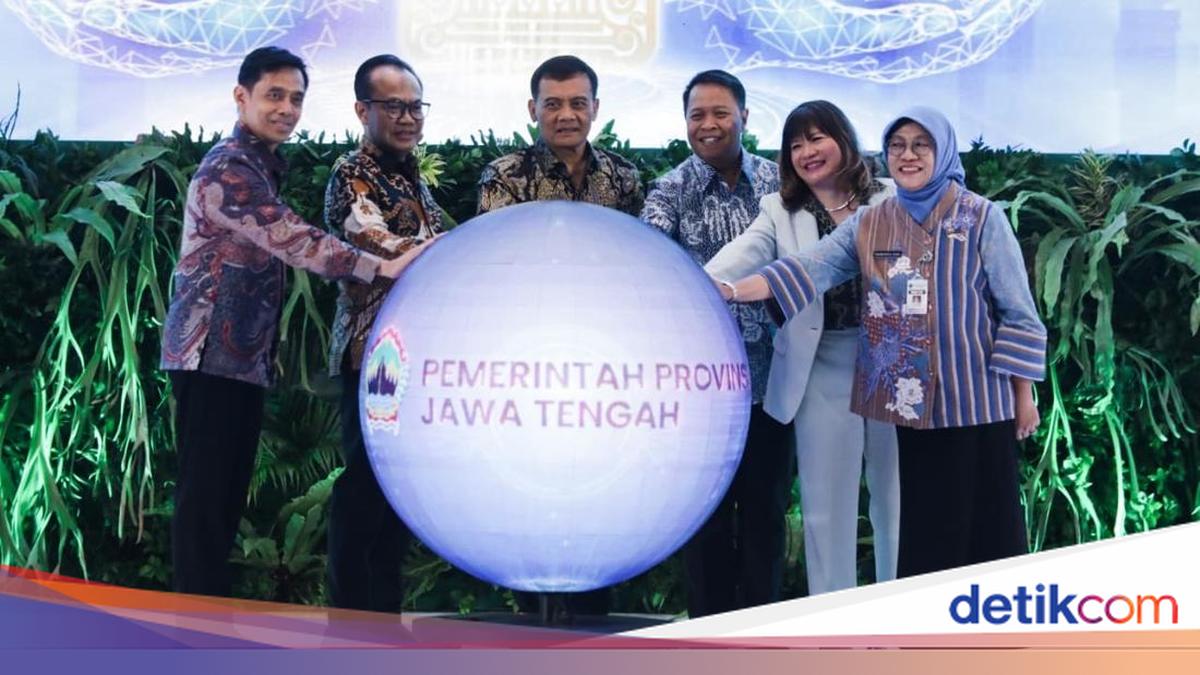
The potential investment could still increase as business actors and prospective investors held direct meetings during the event at Hotel Bidakara Jakarta on Thursday (27/8).
Central Java Governor Ahmad Luthfi said the CJIBF is part of the regional government’s efforts to strengthen the investment ecosystem while encouraging economic growth across various regions.
“Our task is to simplify permits, prepare land, maintain security, and guarantee certainty so that economic and business growth can develop in Central Java,” he said in a written statement on Thursday (27/8/2026).
According to him, each regency and city in Central Java has different potential, so investment strategies need to be tailored to the character and advantages of each region.
Through this approach, the regional government wants to ensure that investment does not only develop in certain economic centres but also creates new growth centres in various areas.
In addition to attracting large investments, the Central Java Provincial Government is also encouraging industrial growth to provide benefits for local business actors.
He said Central Java has around 4.2 million micro-scale MSMEs that need to be supported so they can develop and enter the industrial supply chain.
“What is needed is not only capital and marketing, but how micro businesses can move up a class to become small or medium enterprises,” he said.
Meanwhile, Deputy for Investment Planning at the Ministry of Investment and Downstreaming/BKPM Ichsan Zulkarnaen said Indonesia’s future investment direction will increasingly be directed towards sectors that provide higher added value.
He assessed that Central Java has strong investment appeal because it is supported by industrial estates, special economic zones, and a continuously developing supporting ecosystem.
“Central Java is one of the drivers of investment because it has two special economic zones and seven industrial estates, some of which already have KLIK (Direct Construction Investment Facilitation) facilities,” he said.
Head of the Central Java Investment and One-Stop Integrated Services Office (DPMPTSP), Sakina Rosellasari, said the CJIBF was held in Jakarta to bring Central Java’s various investment opportunities closer to prospective investors who are largely active in the capital.
“The CJIBF event was attended by around 400 participants consisting of the central government, regional governments, industrial estate managers, associations, regional-owned enterprises, state-owned enterprises, banking, as well as prospective investors from within and outside the country,” she said.
CJIBF 2026 is the second edition after previously being held in Semarang in May 2026. This time, the series of events began with one-on-one meetings between business actors and prospective investors.
From these meetings, 74 meetings were recorded involving 36 business actors. The results of these meetings will be followed up through investment assistance.
In addition to business meetings, CJIBF 2026 also produced a number of investment cooperation commitments through the signing of Letters of Intent (LoI) for foreign investment (PMA) and domestic investment (PMDN).
Some of these investment commitments include PT Hyrecmas Garam Nusantara with an investment plan of Rp681.84 billion, PT Hailex Technology Indonesia at Rp175 billion, PT Cipta Kreasi Wisata at Rp200 billion, and PT Fayyad Industri Pangan Halal Terhubung with an investment plan of Rp8.75 trillion.
In addition, there is cooperation in Waste to Energy development through PT Energy International with seven regencies/cities in Central Java, as well as an investment commitment from China’s PT Yosun Tire and Rubber Indonesia worth Rp4 trillion in the Industropolis Batang Special Economic Zone.
Representatives from the British Chamber, Danish Chamber of Commerce, and Consul Asia Ian Betts assessed that Central Java has great potential, particularly in the green investment, ecotourism, and industrial estate sectors.
According to him, the concept of sustainable development is one of the attractions for global investors because it aligns with the needs of future industries.
“I see there is great interest in the green and sustainable sector, as well as ecotourism. This is new and very interesting, so foreign investors may be attracted to these opportunities,” he said.
He also assessed that the presence of industrial estates and special economic zones provides advantages for investors because they offer a more ready business ecosystem, from facilities and incentives to certainty in running a business.
“I am interested in Batang and Kendal because both are connected to special economic zones and industrial estates. For me, such areas are easier to promote to foreign investors,” he said.