
Investment Ministry/BKPM Promotes Downstreaming and Energy Transition, Unlocking Rp2,133 Trillion Investment Opportunities
The increasing global energy transition is opening significant opportunities for the Indonesian economy. In 2025, global energy transition investment reached USD 2.3 trillion, marking an 8 per cent increase compared to 2024. This positive momentum is being driven heavily by the electrification of the transport sector, renewable energy development, and power grid construction.
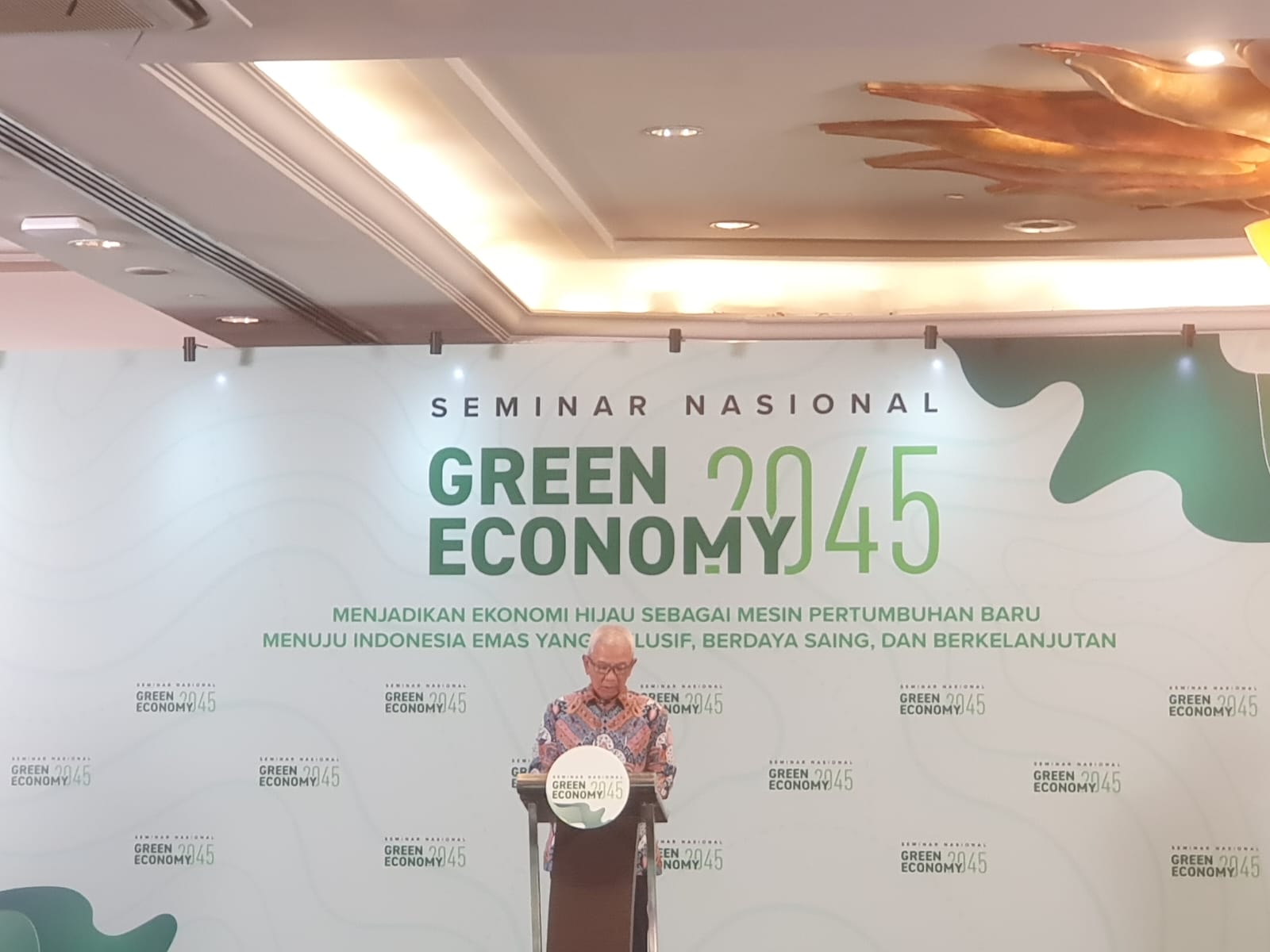
Responding to these global trends, the Secretary of the Ministry of Investment and Downstreaming/BKPM, Rudi Salahuddin, reaffirmed the government’s commitment to mobilising investment and downstreaming to build a green economy ecosystem in Indonesia. He noted that Indonesia is not starting from scratch but is working to build a manufacturing ecosystem, domestic supply chains, and innovations oriented towards sustainable job creation.
“A country that can provide clean energy while simultaneously building an industrial ecosystem will become increasingly competitive in attracting new investment,” said Rudi during the National Seminar on Green Economy 2045 in Jakarta on Tuesday, 29 September 2026.
Investment performance in Indonesia is currently showing a very positive trend. In the first half of 2026, realised investment reached Rp1,010.6 trillion, growing 7.2 per cent year-on-year (YoY). This achievement represents 49.5 per cent of the total 2026 target of Rp2,041.3 trillion. This steady flow of investment has also successfully absorbed approximately 1.4 million workers, a 15 per cent increase.
Economic equality is also becoming evident, with investment outside Java dominating at Rp507.8 trillion, or 50.2 per cent of the total realisation. Specifically for the downstream sector, realised investment reached Rp300.1 trillion, contributing 29.7 per cent of total investment. However, Rudi emphasised that the concept of downstreaming must continue to evolve.
“Downstreaming needs to move further from raw material processing towards materials, components, and low-carbon products that possess global competitiveness,” he explained.
As a concrete step, the Ministry of Investment/BKPM has developed a downstream roadmap mapping 28 strategic commodities across 8 main sectors. This roadmap holds fantastic investment potential, reaching USD 618.1 billion by 2040. This strategic plan is also projected to create more than 3 million new jobs for the community.
Indonesia possesses extraordinary national renewable energy potential, reaching 3,687 Gigawatts (GW), with the largest potential coming from solar energy at 3,294 GW. Unfortunately, the currently utilised capacity is only about 16.3 GW, or less than 0.5 per cent of the total potential.
This fact indicates that there is still massive investment space in the green energy sector. Based on the Electricity Supply Business Plan (RUPTL) for the 2025-2034 period, Indonesia is projected to require an additional electricity capacity of 69.5 GW. Of this total requirement, the largest portion—42.6 GW (61 per cent)—will be met by renewable energy, followed by 10.3 GW (15 per cent) from energy storage systems, and 16.6 GW (24 per cent) from fossil fuels.
“The implementation of this RUPTL opens investment opportunities of approximately Rp2,133.7 trillion, including opportunities of Rp1,341.8 trillion for renewable energy power plants through the Independent Power Producer (IPP) scheme,” stated Rudi.
In addition to the massive investment value, the electricity sector is expected to absorb a massive number of workers, requiring more than 836,000 employees, of which over 760,000 will be in green jobs.
In closing, Rudi reminded that the vision of transforming towards a green economy cannot be achieved alone. It requires synergy and collaboration from all stakeholders. The government is committed to ensuring regulatory certainty, simplifying licensing, and managing spatial planning.
Meanwhile, the private sector, State-Owned Enterprises (SOEs), and financial institutions are expected to participate in strengthening infrastructure, financing, and human resource development.