
Investment Incentives Pushed Towards Labour-Intensive Sectors - Economy Business
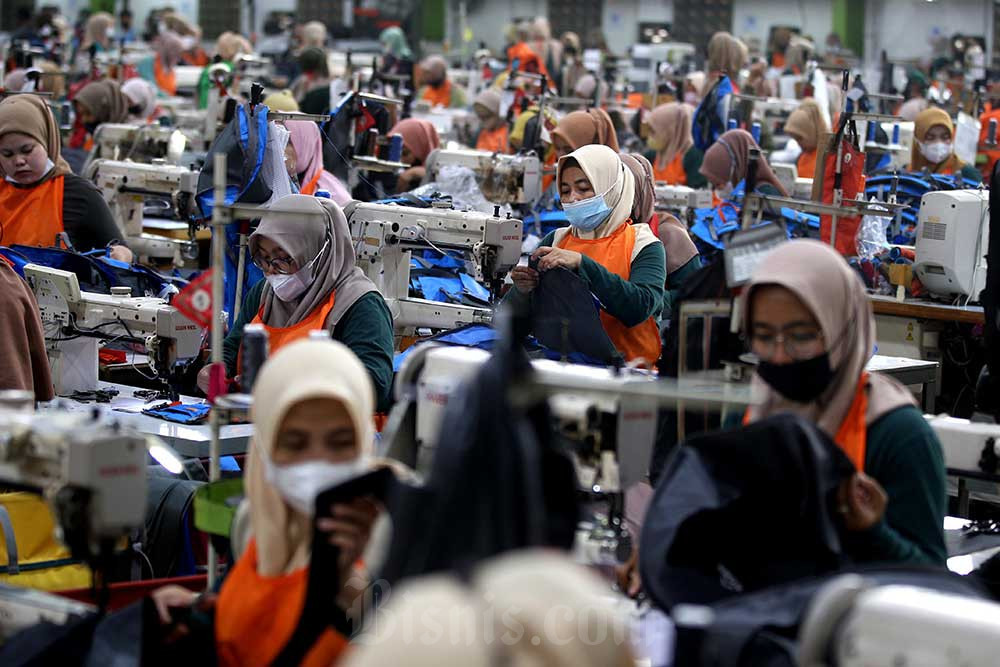
A new direction in investment incentive policy that places job absorption as the primary parameter opens opportunities for the revival of labour-intensive sectors. However, challenges must be addressed regarding worker productivity, industrial competitiveness, and fiscal effectiveness.
The government, through the Ministry of Investment and Downstreaming/BKPM, is beginning to shift the focus of incentives from merely the value of investment to the socio-economic impacts produced, particularly job creation.
Minister of Investment and Downstreaming/Head of BKPM Rosan Roeslani emphasised that in the future, the size of the investment will no longer be the sole benchmark for granting fiscal incentives. Job absorption will become the primary consideration in assessing the eligibility of government support for investment projects.
“Our parameter is not solely that we provide incentives because of a large investment, but we also look at the aspect of job absorption,” said Rosan during a press conference at the BKPM office in Jakarta on Thursday (23/4/2026).
According to him, this approach is reflected in the coconut processing project worth US$100 million in Morowali. The investment value is relatively small compared to mineral downstreaming projects, but it has a high job creation ratio.
Rosan stated that similar projects previously might not have received incentives from the state. Currently, the government is opening the doors wide so that incentives can be disbursed in line with the significant economic impact on society.
From the business world’s perspective, Vice Chairman of the Indonesian Chamber of Commerce and Industry (Kadin) for Labour Affairs Subchan Gatot views the government’s step to make job absorption a parameter for fiscal incentives as the right direction.
According to him, the shift from capital-based growth to job creation-based growth is a highly relevant strategy in the current labour conditions in Indonesia.
“If incentives are directly linked to job creation, then the most responsive sectors are traditional labour-intensive industries, such as textiles and textile products (TPT), footwear, garments, furniture, and food and beverages,” he told Bisnis on Friday (24/4/2026).
In addition, Subchan also outlined the potential of the agroindustry sector and downstreaming based on local resources, such as palm oil, rubber, cocoa, fisheries, and forestry. There are also light export-oriented manufacturing industries, to green labour-intensive economies such as recycling, waste processing, and parts of the renewable energy supply chain.
Nevertheless, he assessed that there are still several crucial challenges to this incentive plan from the business side, one of which is the aspect of productivity and labour costs. According to him, what must be avoided is incentives that encourage the quantity of labour without being balanced by increased productivity.
In addition, there is also the issue of mismatch between workers’ vocational skills and industry needs, or skill mismatch. He mentioned that many industries struggle to find labour that matches their needs, especially with regulatory uncertainty.
“The business world needs a clear, measurable incentive formula that does not change,” Subchan stressed.
In agreement, this policy also receives support from labour unions. President of the Nusantara Confederation of Workers’ Unions (KSPN) Ristadi stated that labour-intensive sectors have long been the backbone of job absorption, especially for low-education groups.
“This sector is then able to become the largest part in absorbing the 7 million unemployed in Indonesia today,” he told Bisnis.
He added that around 11 million workers are still in the semi-unemployed category, while the new workforce increases by about 2 million people every year. In such conditions, labour-intensive sectors are seen as the largest reservoir for absorbing labour.
Ristadi explained that industries like garments have the ability to absorb workers with low-education backgrounds, such as elementary and junior high school graduates who struggle to be absorbed in high-tech sectors.
However, he reminded that incentives are not enough to just encourage the quantity of labour. Quality and production capacity must also be improved through technology adoption and strengthening human resources.
In addition, the sustainability of the industry is seen as highly dependent on domestic market protection. According to him, cheaper imported products have the potential to erode the competitiveness of domestic industries if not controlled.
“If cheaper imported products of the same type as what we produce domestically are not held back, I think the investment will not last long,” he said.
Therefore, Ristadi underlined that the government must ensure that labour-intensive companies can grow. If so, the labour aspect will remain maintained along with ongoing production activities.
Opportunities and Risks
On the other hand, economists view this policy as opening opportunities as well as risks for Indonesia’s economic conditions. Economist from the Center of Reform on Economics (Core) Indonesia Yusuf Rendy Manilet sees classic labour-intensive sectors like textiles, garments, and footwear as sectors that should be at the forefront benefiting from this policy.
These sectors are assessed to have a mature ecosystem and a large labour base, so they will be able to respond quickly to pro-labour incentives. However, growth is seen as possible only if domestic industry players also undertake technological modernisation.
“Without that, they [domestic industries] will still lose to Vietnam and Bangladesh,” he explained to Bisnis.
In addition, the food and beverage sector as well as agro-downstreaming are assessed to have great growth potential because they can absorb labour