
Investment Gap in Bali Widening, Concentrated in Sarbagita Region
The disparity in capital investment between regions in Bali is widening. Investors increasingly prefer to allocate their capital within the Denpasar, Badung, Gianubat, and Tabanan (Sarbagita) areas, with very little investment flowing into regions outside this cluster.
In the second quarter of 2026, Bali achieved realised investment of Rp 23.77 trillion. However, approximately 93% of this investment was concentrated in the Sarbagita region, while investment outside this area accounted for only about 7%.
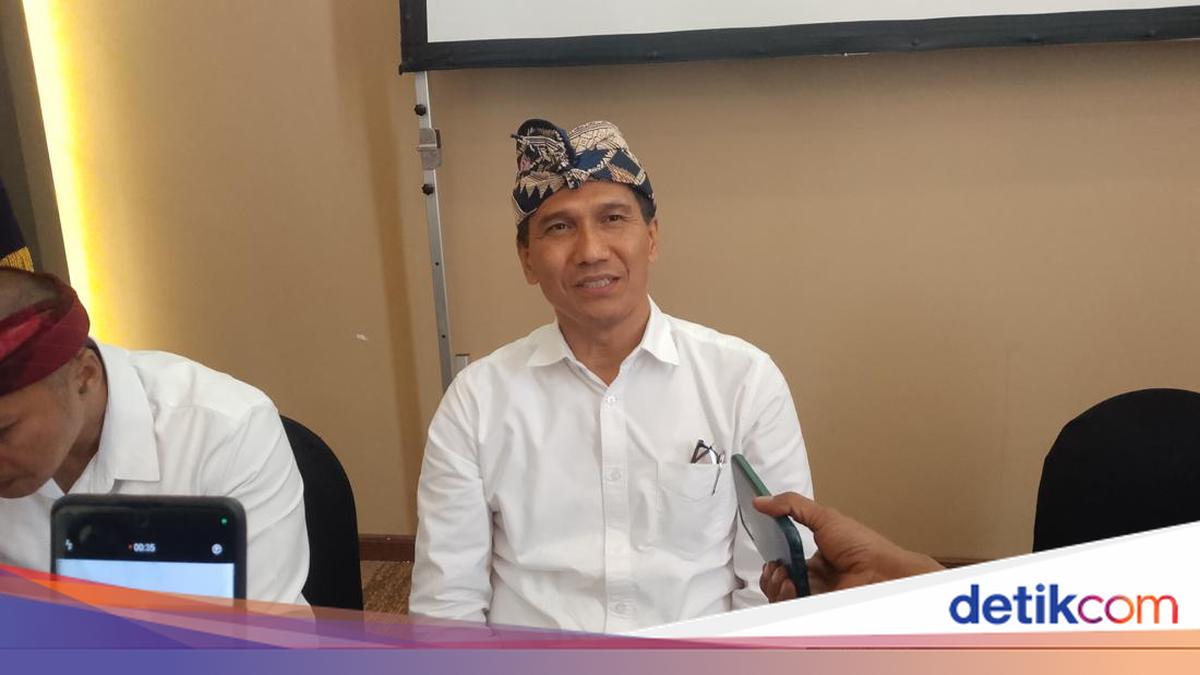
“The distribution of the Rp 23 trillion investment is solely focused on the Sarbagita region. This is a collective challenge for us,” said the Head of the Bali Investment and One-Stop Integrated Services Agency (DPMPTSP), I Ketut Sukra Negara, on Thursday (1/10/2026).
The gap in investment realisation between regions has tended to widen year on year. In 2024, the share of investment in Sarbagita stood at approximately 87%, a figure that increased to around 93% in 2025.
“As the years progress, we see that the gap is not closing, but rather widening,” remarked Sukra Negara.
According to Sukra Negara, investors are actually quite interested in investing outside of Sarbagita. In Jembrana, for instance, the local government can receive up to 50 potential investors in a single month. However, many prospective investors visit the locations but do not proceed with their investment plans. Issues regarding distance and infrastructure are key considerations for these potential investors.
“We have discussed this with the Head of the PTSP; there are many prospects. They just visit. Once they see the location and the potential, there is no further action,” said Sukra Negara. He added that in Jembrana, despite receiving 50 potential investors in a month, many conclude that the location is “too far from Denpasar,” citing insufficient infrastructure as a deterrent.
This situation makes the equal distribution of investment in Bali more complex than simply finding potential investors. While local governments have conducted promotions, the final decision of investors remains heavily influenced by accessibility and infrastructural readiness.
Sukra Negara noted that the concentration of investment in the Sarbagita region is inseparable from its status as Bali’s economic growth centre. Social activities, supporting facilities, infrastructure, and various business needs are more readily available in southern Bali and its surroundings.
This condition presents a challenge for local governments, as investment in Bali is not yet evenly distributed. The government needs to find ways to increase the investment attractiveness of regencies outside Sarbagita. If the current pattern persists, investment growth will continue to concentrate in the areas that have long served as Bali’s economic hubs.
Regional Realisation
The investment inequality is evident in the realisation values of each regency/city. Badung recorded the highest investment realisation up to the second quarter of 2026, at approximately Rp 14 trillion. Following Badung, investment is concentrated in Denpasar, Gianyar, and Tabanan.
Meanwhile, investment realisation in regencies outside Sarbagita is significantly lower. Klungkung is one of the higher-performing areas outside Sarbagita, with approximately Rp 669 billion, driven in part by the presence of Nusa Penida. Karangasem follows with realisation of around Rp 549 billion. Jembrana, however, recorded one of the lowest investment realisations at approximately Rp 139 billion up to the second quarter of 2026. To put this in perspective, the investment value in Badung is roughly 100 times larger than that of Jembrana.
Bali’s Investment Target
Bali aims to attract Rp 47.93 trillion in investment throughout 2026. The achievement of Rp 23.77 trillion in the second quarter of 2026 represents nearly half of the set target. This target was established as part of an effort to drive national economic growth.
The central government aims for Indonesia’s economic growth to reach 8% by 2029, with increased investment being a key instrument to achieve this. According to Sukra Negara, the national investment target through 2029 is Rp 13,000 trillion, meaning regional governments have been assigned specific high targets to contribute to this goal.
However, Sukra Negara believes that investment targets should be adjusted to regional capacity. The target of Rp 47.93 trillion is quite substantial considering Bali’s land area of approximately 5,400 square kilometres and a population of about 4.5 million people.
Beyond Just Numbers
Sukra Negara emphasised that the issue of investment in Bali is not merely about meeting targets. The government must also consider the type of investment entering the province and its regional impact. Besides the inter-regional inequality, Bali’s investment structure is still dominated by the tertiary sector.
The hotel and restaurant sectors are the largest contributors, at approximately Rp 9 trillion up to the second quarter of 2026. This is followed by housing, industrial areas, and offices at around Rp 7 trillion. Consequently, the government faces a dual challenge: achieving investment targets while ensuring that investment does not become further concentrated in specific areas.