
Investment Continues to Grow, Danantara Urged to Expand Impact on Industry and Employment
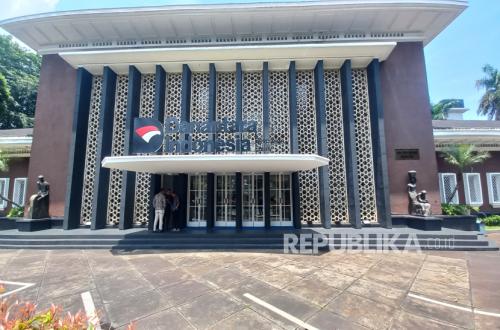
Indonesia’s investment continues to show growth amid a global economic slowdown. Observers believe the role of Danantara Indonesia can be strengthened to ensure investment not only yields financial returns but also expands industrial capacity, opens up employment opportunities, and creates measurable economic impact.
In his State of the Nation address last week, President Prabowo Subianto stated that Indonesia’s investment realisation reached Rp1,931 trillion throughout 2025 and Rp1,010 trillion in the first half of 2026. This achievement came as the global economy is projected to slow to 3.0 percent in 2026, based on IMF projections.
The President also expressed hope that Danantara Indonesia would play a role in restructuring and consolidating state-owned enterprises while supporting the strengthening of national investment in a gradual and measured manner. This role is reflected in 19 downstreaming projects that have held groundbreaking ceremonies as well as the development of a national strategic project to process waste into electricity.
Economist Doni Satria from Universitas Negeri Padang assessed that Danantara holds a strategic position to strengthen national economic activity. However, investment needs to be directed towards projects that are commercially viable, well-governed, and aligned with development needs.
“Danantara can drive better economic activity in Indonesia, including economic growth and job absorption, as long as its investments are well-targeted and carefully managed,” said Doni.
According to Doni, investments managed by Danantara need to consider efficiency and rates of return while also aligning with the direction of economic development. Downstreaming of natural resources can be one option because it has scale and significant return prospects.
However, downstreaming development also needs to be accompanied by strengthening supporting industries so that investment benefits can reach more domestic businesses.
“If there is large investment, the strategy is large investment that also encourages small industries,” he said.
From a business perspective, Feiral Rizky Batubara, Deputy Chairman of the Standing Committee for Renewable Energy Development Planning at the Indonesian Chamber of Commerce and Industry, assessed that Danantara can take on the role of anchor investor to open up long-term collaboration opportunities.
According to Feiral, the size of investment value is not the only measure of success. Investment also needs to create space for national companies to participate through joint ventures, co-investment, provision of goods and services, and domestic supply chains.
Kadin, Feiral said, views the success of Danantara’s investment as ideally measured by financial return as well as the ability to strengthen the capacity, business scale, and competitiveness of Indonesian companies.
Therefore, large-scale investment needs to have linkages with domestic industry so that it creates a multiplier effect for local suppliers, MSMEs, workers, and supporting industries. The involvement of national industry also needs to be considered from the outset through mapping of supply chains and supporting industry needs.
“With this approach, Danantara can become a bridge between large capital and national industrial capacity. So investment does not only produce assets and profits, but also helps create a new economic ecosystem and strengthen the foundation of Indonesian industry in the long term,” said Feiral.
Danantara is currently beginning to carry out its downstreaming agenda through 19 projects that have held groundbreaking ceremonies. These projects cover the mineral, energy, and agriculture sectors with a value of around Rp225 trillion.
Danantara is also developing the clean energy sector through a waste-to-energy pilot project in Denpasar, Bali. The project, with an investment value of Rp3 trillion, is targeted to process 1,500 tonnes of waste per day and operate in the first half of 2028.
This development is part of the national target to build 33 waste-to-energy plants by 2029.
Investment growth is also reflected in national economic data. Investment grew 6.87 percent in the second quarter of 2026, higher than household consumption growth of 5.06 percent.
Meanwhile, the downstreaming sector grew 6.9 percent. Investment realisation in the first half of 2026 reached Rp1,010.6 trillion with direct employment of 1.45 million workers, an increase of 15 percent.
Minister of Investment and Downstreaming/Head of BKPM and CEO of Danantara Rosan Roeslani said investment is one of the pillars of the national economy. However, he stressed that the measure of investment success needs to be seen from its impact on public welfare.
“As the President said, economic and investment growth figures are not the end goal, but how we can create public welfare. Every rupiah of investment must create good, quality jobs while also improving the quality of life of our people,” he said.