
Investment Begins to Become Indonesia's Economic Growth Engine
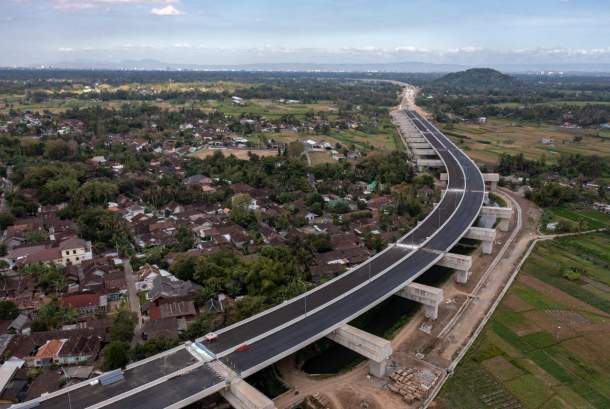
Investment is beginning to take a larger share in supporting Indonesia’s economic growth, even as household consumption remains a primary pillar. This shift in composition was evident in the economic performance of the second quarter of 2026, when investment growth was recorded higher than household consumption.
Statistics Indonesia (BPS) noted that the Indonesian economy grew by 5.29 per cent year-on-year in the second quarter of 2026. In terms of expenditure, household consumption grew by 5.06 per cent, while gross fixed capital formation, which serves as an indicator of investment, grew by 6.99 per cent.
This development aligns with data from the Ministry of Investment and Downstreaming/BKPM, which shows that investment realisation in the second quarter of 2026 reached Rp511.8 trillion, a 7.1 per cent increase compared to the same period the previous year. In the first half of 2026, investment realisation reached Rp1,010.6 trillion, growing by 7.2 per cent and absorbing 1.45 million workers.
Fithra Faisal, an expert from the Government Communication Agency (BAKOM) of Indonesia, stated that this change has been visible from the fourth quarter of 2025 through the first two quarters of 2026. According to him, investment is beginning to play a larger role in the national economic growth structure.
“We have seen a structural change where the focus is moving from consumption towards investment,” Fithra said in a statement on Thursday (24/9).
Fithra noted that community consumption is still growing at around 5 per cent. However, the contribution of investment to growth is becoming stronger, opening space for structural economic changes towards increased production capacity and value addition.
BKPM data shows that investment is also beginning to spread more widely geographically. In the second quarter of 2026, investment realisation outside Java reached Rp256.5 trillion, or 50.1 per cent of total investment, slightly higher than investment in Java, which reached Rp255.3 trillion.
This pattern was also evident in the first half of 2026. Investment outside Java reached Rp507.8 trillion, or 50.2 per cent, while investment in Java stood at Rp502.8 trillion, or 49.8 per cent.
This distribution is vital because investment is not only related to additional capital but also to production capacity and job creation in the regions. The challenge lies in ensuring that incoming investment projects truly provide economic impacts to the communities surrounding the business activities.
Fithra highlighted that there are still regions receiving investment where poverty and unemployment rates have not changed significantly. Therefore, he believes investment needs to be increasingly directed towards the creation of formal jobs and the strengthening of local economic activities.
“This is the principle of justice,” he said.
According to Fithra, investment policy must also work alongside government programmes in education, social protection, health, and food security so that the benefits of economic growth can be felt more widely.
In terms of investment, the downstreaming sector is becoming an increasingly important source of growth. BKPM recorded that downstreaming investment realisation in the first half of 2026 reached Rp300.1 trillion, or 29.7 per cent of total national investment. This investment primarily comes from the development of mineral processing industries such as bauxite, nickel, copper, iron, steel, and silica sand.
Changes in the investment composition are also visible from the influx of capital into various sectors and regions. In addition to basic and mining industries, investment in the first half of 2026 included services, transport, warehousing, telecommunications, as well as housing and industrial estates.
Professor of Economics at the University of Indonesia, Telisa Falianty, appreciated the government’s ability to maintain economic growth amidst ongoing global uncertainty.
“We quite appreciate that the government can maintain this, even at more than 5%,” said Telisa.
However, Telisa assessed that the next challenge is ensuring that growth and investment provide broader benefits for the middle class and small business owners. Field supervision is also required to ensure that business activities are not burdened by illegal levies or licensing obstacles.
This change in the growth structure is a development that needs to be closely monitored heading into the second two years of the Prabowo Subianto and Gibran Rakabuming Raka administration. While consumption remains an important pillar, investment is beginning to contribute more significantly to the formation of economic capacity.
For the national economy, this change is significant because investment can create new production capacity, expand employment, and drive downstreaming.
The next policy challenge is to ensure that investment does not stop at the magnitude of capital investment value, but generates added value and broader economic benefits for the community.
Source: jawawa.id (https://jawawa.id/newsitem/investment-begins-to-become-indonesias-economic-growth-engine-1790261568)
Originally published by republika.id (https://www.republika.id/posts/60518/investasi-mulai-jadi-mesin-pertumbuhan-ekonomi-indonesia), translated from Indonesian