
Investment Becomes Easier, Capital Market Literacy Remains a Challenge
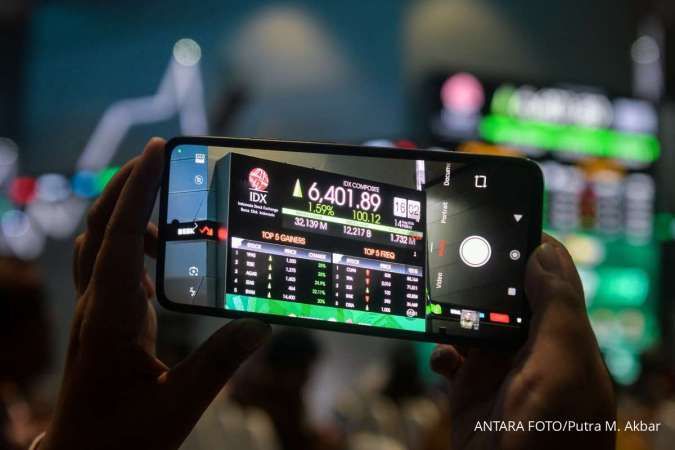
JAKARTA. The ease of investing in Indonesia’s capital market continues to increase along with the digitalisation of financial services. The public can now open accounts, monitor portfolios, and carry out investment transactions using only a smartphone.
This development has helped push the number of capital market investors past 30 million. Based on data from the Indonesian Central Securities Depository (KSEI) as of 7 August 2026, the number of Single Investor Identification (SID) accounts in the capital market reached 30.31 million, growing 49% compared to the 2025 position of 20.35 million SIDs.
This growth illustrates the increasingly low barriers for the public to enter the capital market. However, the increase in the number of investors does not necessarily indicate that the public has adequate investment understanding.
“As of 11 August 2026, the number of capital market investors has reached 30.43 million investors, growing 49.42% year to date, with the majority of investors being young people,” he explained to Kontan on Saturday (15/8/2026).
According to Hasan, the growth in investor numbers is an indicator from the inclusion side, but does not by itself demonstrate an adequate level of literacy or investment understanding.
Therefore, as access to investment products through digital channels becomes easier, OJK considers that public understanding of product characteristics, benefits, risks, and the suitability of investments with objectives and risk profiles needs to be continuously strengthened.
OJK, together with Self-Regulatory Organizations (SROs) and industry players, also continues to expand capital market literacy and education programmes through various channels, including the National Financial Literacy Movement (GENCARKAN) and the Integrated Capital Market Socialisation and Education programme (SEPMT).
The gap between inclusion and literacy is also reflected in the results of the 2026 National Survey of Financial Literacy and Inclusion (SNLIK). Nationally, the financial literacy index rose to 69.57% from 66.64% in 2025. Meanwhile, the financial inclusion index reached 93.61%, up from 92.74%.
Director of the Indonesian Central Securities Depository Samsul Hidayat said that, besides digitalisation, the increasingly simple process of opening securities accounts and the declining minimum initial investment have also made the capital market accessible to a wider public.
“Processes that previously required physical documents and several working days can now be completed in a much shorter time through electronic identity verification,” he said to Kontan on Friday (14/8/2026).
Samsul added that KSEI’s digital infrastructure also plays a role in supporting investor growth. The Single Investor Identification (SID) facility and AKSes allow investors to monitor their securities ownership and portfolios independently.
In addition, eASY.KSEI enables investors to attend general meetings of shareholders (RUPS) online, while CORES.KSEI assists the process of opening investment accounts at various securities companies and mutual fund selling agents.
According to Samsul, this ease of access also brings new challenges. One of them is the gap between financial inclusion and literacy, because the ease of opening accounts is not always followed by understanding of product characteristics and risk profiles.
“The ease of opening accounts is not always followed by adequate understanding of product characteristics and risk profiles, so the literacy and inclusion gap still needs to be a shared concern,” he said.
In addition, investor distribution is still concentrated in certain regions. KSEI data as of 7 August 2026 shows that investors from Java accounted for 64.44% of total capital market SIDs, while Sumatra contributed 19.34%.
On the other hand, changes in investor behaviour are also visible in the way people obtain information. According to him, investors are increasingly utilising digital channels and online communities, no longer relying solely on securities company research.
This condition allows investors to obtain information more quickly, but at the same time increases the need to conduct independent verification. The AKSes KSEI facility can be used by investors to check their securities ownership anytime and from anywhere.
Meanwhile, Director of Development at the Indonesia Stock Exchange Iding Pardi added that digitalisation has reduced barriers to entering the capital market, both in terms of time, cost, and geographical access.
“Now account opening, information delivery, analysis, and transactions can all be done via smartphone, so digitalisation lowers the barrier to entry in terms of time, cost, and geographical access,” he said.
Besides digitalisation, Iding sees that the development of the securities company ecosystem and investment applications has also made capital market services more competitive and user-friendly. The public is also finding it easier to obtain information about issuers, investment products, and market conditions.
However, Iding said the capital market’s challenges have now shifted. If previously the main issue was access, now attention needs to be directed towards knowledge, confidence, and the quality of investor decision-making.
“The biggest barrier now is no longer just access, but knowledge, confidence, and quality of decision-making, including the ability to distinguish investment from speculation and to filter information,” he said.
Therefore, IDX is beginning to shift its focus from growth in investor numbers towards improving investor quality and participation. Iding said future education needs to be more segmented and behaviour-based, with material on risk, diversification, company fundamentals, and investment horizons.
According to him, beginner investors also do not have to immediately become stock pickers or active traders. The capital market needs to provide a variety of instruments so that investors can choose products based on their objectives, time horizon, and risk profile.
Careful Regarding the Presence of Influencers
Amid this ease of access, the phenomenon of financial influencers, or finfluencers, has become a challenge in itself. Hasan said the presence of finfluencers can help the public.
Source: jawawa.id (https://jawawa.id/newsitem/investment-becomes-easier-capital-market-literacy-remains-a-challenge-1786971030)
Originally published by investasi.kontan.co.id (https://investasi.kontan.co.id/news/investasi-makin-mudah-literasi-pasar-modal-jadi-tantangan), translated from Indonesian