
Investment Alone Not Enough, ESG Becomes Key to Future of Nickel Downstreaming
The Indonesian Chamber of Commerce and Industry (Kadin) UK and Ireland Bilateral Committee has assessed that the future success of Indonesia’s nickel downstreaming can no longer be measured merely by the size of investment and production capacity. The national nickel industry is also required to meet environmental, social, and governance (ESG) standards, which are increasingly becoming the main prerequisite for accessing global markets.
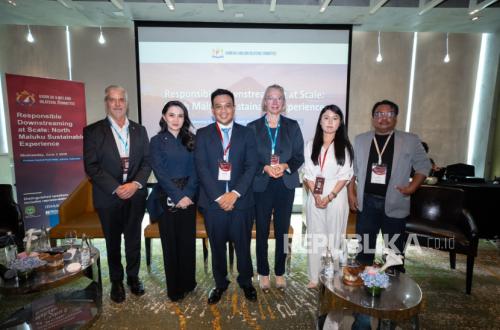
This issue was the focus of the ‘Responsible Downstreaming at Scale: North Maluku Sustainable Experience’ discussion, held as part of the Indonesia Critical Minerals Conference 2026. The forum brought together regional government, industry players, international organisations, and various stakeholders in the critical minerals sector to discuss responsible downstreaming practices amidst the growing need for minerals for the global energy transition.
‘Many participants came with various perspectives and expectations regarding Indonesia’s nickel industry. However, after seeing operations on the ground directly, the environmental investments made, and the openness of various parties in dialogue, we saw an industrial ecosystem operating on a world-class scale that continues to strive to improve its sustainability standards,’ said Ovan Tito, Head of Energy and Mineral Resources at Kadin’s UK and Ireland Bilateral Committee, in Jakarta.
The discussion was part of the North Maluku Sustainability Trip series held at the Indonesia Weda Bay Industrial Park (IWIP) on 1-2 June 2026. The field visit was conducted to see the development of the nickel downstreaming ecosystem and the various efforts made to strengthen responsible downstreaming practices.
Amid rapid industrial expansion, the contribution of downstreaming to the national economy continues to rise. Realised downstreaming investment in the first quarter of 2026 reached approximately Rp147.5 trillion, with the nickel sector contributing around Rp41.5 trillion. The export value of nickel derivative products has also soared almost tenfold, from USD 3.3 billion in 2018 to around USD 34 billion in 2024, demonstrating the increasing added value generated domestically.
‘Going forward, access to global markets will increasingly be determined by producers’ ability to demonstrate verifiable environmental, social, and governance practices. Therefore, it is important for the industry to refer to credible, relevant, and science-based standards so that claims regarding these practices can be objectively measured,’ said Chris Schlekat, Executive Director of NiPERA.
North Maluku has become one of the regions most affected by nickel downstreaming. With a contribution of around 13 to 15 per cent of the world’s nickel supply, the province has become a crucial hub in the global critical mineral supply chain. In the first quarter of 2026, North Maluku’s economy grew by 19.64 per cent, the highest in Indonesia. Processing and mining activities are the main pillars of this growth, with commodities based on iron and steel, nickel, and inorganic chemicals accounting for 96.65 per cent of total regional exports.
Governor of North Maluku, Sherly Tjoanda, stated that the success of downstreaming cannot be seen merely from economic growth or incoming investment. According to her, the industry’s benefits must also be felt by the community through improved human resource quality and expanded economic opportunities. ‘We are therefore strengthening community education and skills so that more North Maluku residents can take on greater roles in the industry. We are also encouraging the development of vocational education and polytechnics relevant to the industrial sector’s needs,’ she said.
Sherly aims for North Maluku by 2030 to not only have larger industrial estates but also a society with better access to education, health services, infrastructure, and economic opportunities. Scrutiny of Indonesia’s ESG practices also comes from global industry players. Glencore’s Co-Head of Responsible Sourcing, Ilse Schoeters, said the Indonesian nickel industry is developing much faster than many other producing countries.
‘The Indonesian nickel industry is developing at an extraordinary speed. In less than a decade, industrial estates and complex value chains have grown very rapidly. We see that some companies have shown progress in integrating ESG into their operations, while some others are still in the process of building the necessary systems,’ she said.
According to IRMA Community Outreach Coordinator Andre Barahamin, transparency and independent audits will be important factors in building market confidence in Indonesia’s nickel industry. He noted that global recognition of responsible mining practices relies heavily on companies’ willingness to undergo open and independent evaluation processes. These audits can help companies map areas for improvement while strengthening the trust of communities, investors, and global markets.
With continuously evolving market demands, the success of Indonesia’s nickel downstreaming is no longer determined solely by the amount of incoming investment. The industry’s ability to demonstrate measurable and verifiable sustainability performance is becoming an increasingly decisive factor in competitiveness in the global market.
Source: jawawa.id (https://jawawa.id/newsitem/investment-alone-not-enough-esg-becomes-key-to-future-of-nickel-downstreaming-1780617066)
Originally published by Republika (https://esgnow.republika.co.id/berita/tg4qq5522/investasi-saja-tak-cukup-esg-jadi-kunci-masa-depan-hilirisasi-nikel), translated from Indonesian