
Investigation into Bekasi Timur Train Accident: KNKT Tests Signalling System
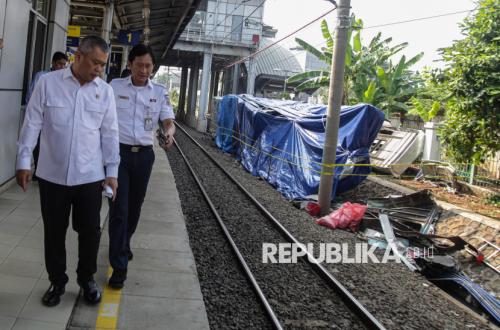
The National Transportation Safety Committee (KNKT) has carried out simulations of the railway signalling system as part of the investigation following the incident involving the collision between an electric rail train (KRL) and the KA Argo Bromo Anggrek at Bekasi Timur Station. The Ministry of Transportation fully supports the investigation and simulation process conducted by KNKT.
Transport Minister Dudy Purwagandhi stated that the KNKT’s signalling simulation was conducted to understand possible technical causes, particularly related to the function and response of the signalling system during the incident.
“The simulation results will serve as important material in identifying the factors causing the accident as well as potential system weaknesses,” said Dudy at Bekasi Timur Station, West Java, on Wednesday (29/4/2026).
Dudy conveyed that KNKT has emphasised that the investigation process is conducted thoroughly, objectively, and based on field data. For this reason, added Dudy, the Ministry of Transportation is also committed to following up on the investigation results to improve operational railway safety.
“We reiterate that safety aspects are the top priority,” Dudy stressed.
Previously, Dudy had provided updates on the handling and train services following the accident at Bekasi Timur Station area. As of midday, 106 passengers were victims, with 91 injured and 15 deceased. Of the 91 injured passengers, 38 have been allowed to go home.
Meanwhile, information from PT Kereta Api Indonesia indicates that the restoration of train operations on the downstream line was opened on Tuesday (28/4/2026) in the early hours. Then, on Wednesday early morning (29/4/2026), the upstream line was cleared of debris. Midday, Dudy also rode a KRL from Bekasi Timur Station to Cikarang Station as part of the trial reopening of the line previously affected by the accident.