
Introducing the MRF-500: Jakarta's firefighting robot capable of detecting toxic gases at fire scenes
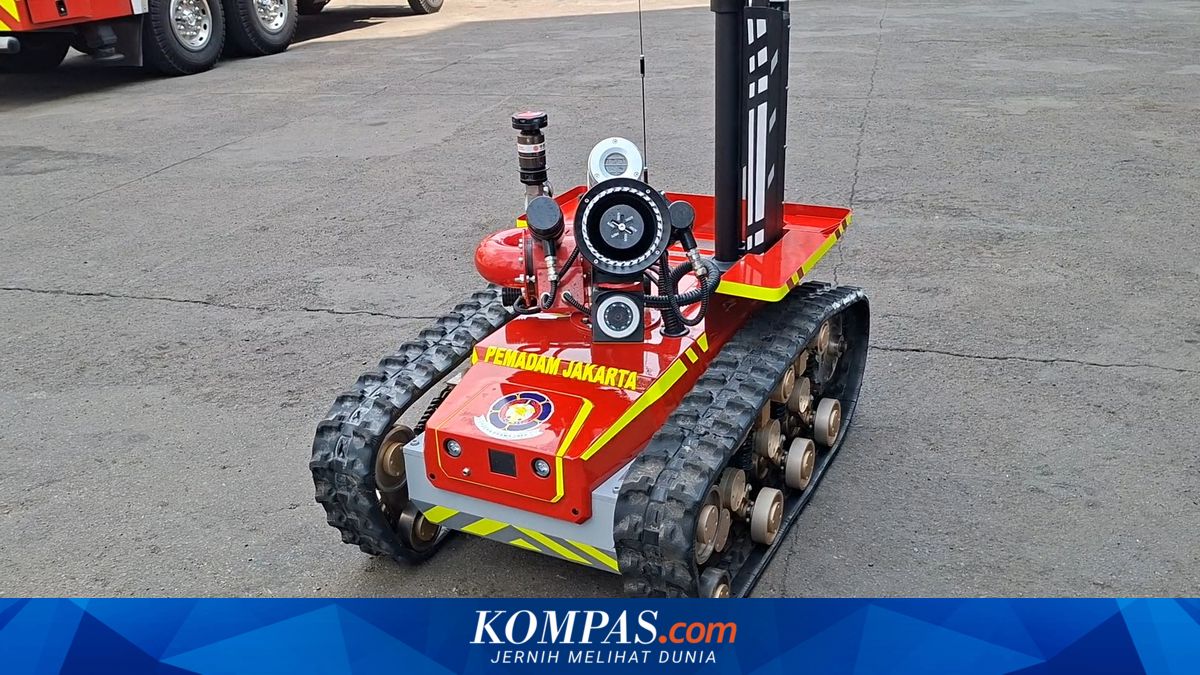
Jakarta, Kompas.com - The MRF-50 firefighting robot operated by Jakarta’s Fire and Rescue Service (Gulkarmat) does more than just spray water. The advanced robot, imported from China in late 2025, also plays a crucial role in detecting toxic smoke and chemicals at high-risk fire sites. Tohirudin, a rescue officer from West Jakarta Gulkarmat sub office, said the air detection capability is why the MRF-500 is deployed first before human personnel enter dangerous areas. ‘We usually deploy it first when we arrive, as it has sensors to check conditions. Using its camera, we can see what’s inside, and check the air sensors to see if it’s safe or not,’ Tohirudin told Kompas.com at the West Jakarta Gulkarmat sub office on Thursday (28 May 2026). Tohirud cited its use during the Miami warehouse fire in Kalideres on Monday (11 May 2026) and a plastic factory fire in Kapuk, Cengkareng, on Monday (18 May 2026). ‘Both incidents were extremely hazardous. When the robot was deployed at Miami and Kapuk, it detected toxic air for responders, with CO₂ levels reaching 250 percent— which is highly dangerous,’ Tohirud explained. Following the data from the robot’s sensors, on-scene commanders immediately tightened safety protocols to prevent casualties among personnel. ‘The commander then ordered strict protocols, including the use of breathing apparatus to prevent injuries, as even a short exposure would cause severe breathing difficulties,’ he added. In addition to air sensors, the MRF-500’s tank-like caterpillar tracks enables it to navigate through debris. ‘It’s also useful at the outset to assess conditions inside, locate fire sources, so we know the situation before entering,’ Tohirud said. The MRF-500 is operated via remote control from a safe distance of approximately 300 metres. With an additional signal antenna, this range can extend up to one kilometre. ‘For hazardous situations like potential explosions, operators remain safe due to remote operation. The unit can also directly extinguish fires, making it suitable for frontline use,’ he concluded.
Source: jawawa.id (https://jawawa.id/newsitem/introducing-the-mrf-500-jakartas-firefighting-robot-capable-of-detecting-toxic-gases-at-fire-scenes-1779960242)
Originally published by Kompas (https://megapolitan.kompas.com/read/2026/05/28/12134731/mengenal-mrf-500-robot-damkar-dki-yang-mampu-deteksi-gas-beracun-di?utm_source=ABC&utm_medium=rss), translated from Indonesian