
Interpreting the 2026 Economic Census
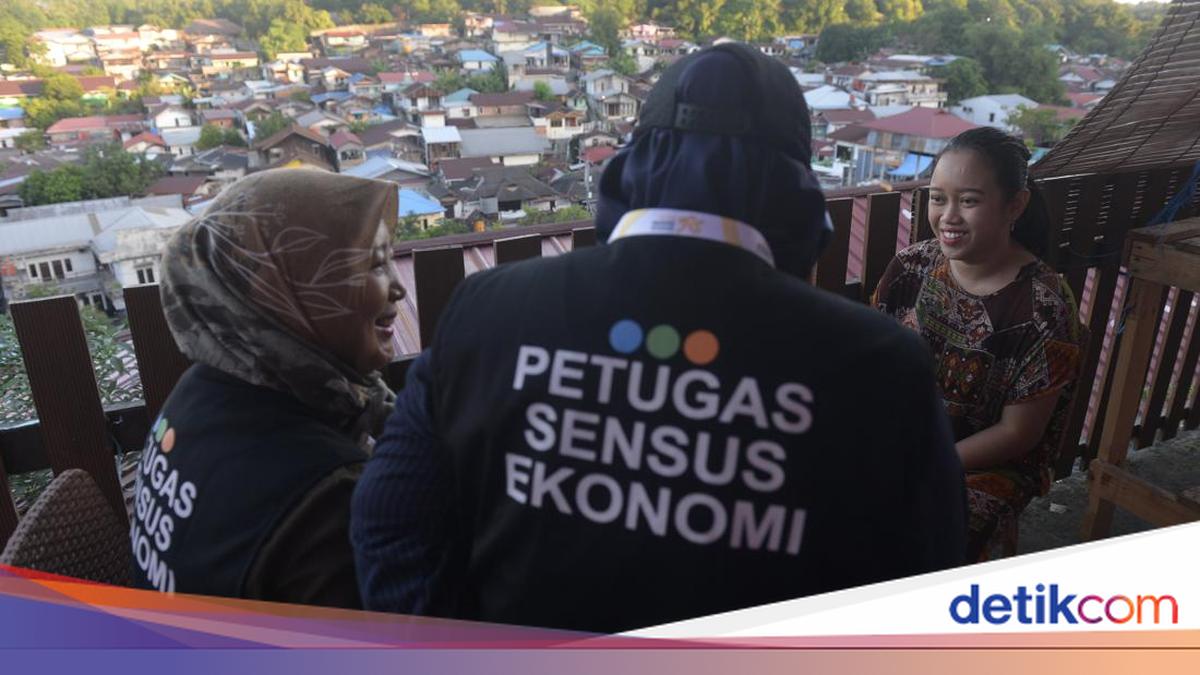
The 2026 Economic Census (SE 2026) has been under way across the country since 15 June and will run until 31 August 2026. SE 2026 is an important endeavour to capture a complete picture of the Indonesian economy. It is not only large businesses that receive attention, but also micro, small and medium enterprises, as well as various other forms of economic activity that grow within communities.
That picture forms the basis for drafting economic development policy for years to come. For this reason, the quality of a census is not merely a matter of statistical technicality, but concerns the quality of the direction of the nation’s development.
Public attention is often drawn to the numerical output that is published. Yet the quality of a census is built from the moment data collection begins. The critical challenges usually faced are minimising coverage errors and content errors. Coverage errors occur when business units that should have been recorded are missed, or vice versa. Content errors, meanwhile, occur when the information obtained from respondents does not match actual conditions. The higher the level of coverage and content errors, the lower the quality of the resulting data.
This is where the role of census officers becomes urgent. They are not merely recorders of information, but the face of the state present directly among the people. Professionalism, thoroughness, skilful communication and integrity are the main assets ensuring that the data and information collected truly reflect actual conditions.
On the other hand, the success of SE 2026 depends on the public’s willingness to participate. Honesty in providing information is a contribution that may seem simple but has a great impact. Every respondent’s answer becomes part of the picture of the national economy. When the information provided is incomplete or does not match actual conditions, the quality of the data is affected. The impact does not stop at the statistical exercise, but continues on to state policy interventions that miss their target.
A Relationship of Trust
The relationship between census officers and respondents is essentially a relationship built on trust. The public has the right to be assured that the data provided will be kept confidential and used only for statistical purposes in accordance with prevailing regulations. Conversely, census officers also have the right to receive good cooperation so that the data collection process runs smoothly. It is this trust that will give rise to participation as the main foundation for quality data.
In practice, the challenges of field data collection are never simple. These include high population mobility, the growth of various digital-based business models, respondents’ limited availability, and lingering public misunderstanding that SE 2026 is directly linked to social assistance and tax collection.
The success of SE 2026 cannot be borne by the organisers alone. Collective awareness is needed that statistical data is a public good. Its benefits are felt not only by the government, but also by the business community, academics and the wider public who need information as a compass for decision-making.
Jean-Jacques Rousseau, in his concept of the social contract, stated that society surrenders part of its rights to the state so that the state can create order, security and prosperity. As part of that social contract, citizens have an obligation to provide the information the state requires, including through census data collection. Herein lies the relevance of SE 2026 as a manifestation of the social contract in realising the purposes of the state as set out in the constitution.
Beyond the Law
Law Number 16 of 1997 on Statistics does indeed regulate the rights and obligations of census organisers and respondents, complete with sanctions for violations. However, as citizens, our paradigm must not stop merely at the letter of the law and compliance driven by sanctions.
Immanuel Kant’s deontological ethics teaches that an action is judged moral not on the basis of its consequences, but because it is carried out as a moral duty that becomes a universal law.
From the perspective of Kant’s categorical imperative, respondents’ obligation to provide correct data is a moral act that does not depend on personal gain. People provide data honestly because honesty is a universal obligation.
This becomes relevant when respondent compliance is placed alongside Max Weber’s view of social action. Weber noted that a person’s actions are not always based on considerations of profit and loss or the threat of sanctions, but are also driven by values (value-rational action). People who participate in SE 2026 because they regard it as a moral obligation and a form of devotion to the state demonstrate value-oriented action. Compliance arises because the individual believes that providing correct information is an act consistent with the values of responsibility, honesty and concern for the public interest in realising the common good (bonum commune).
Kant’s categorical imperative also emphasises respect for human dignity. In the context of SE 2026, census officers have an obligation to treat respondents as subjects with rights and dignity, not merely as sources of statistical information. This is demonstrated through a professional attitude, respect for privacy, and protection of the confidentiality of the data collected. Data collection carried out ethically reflects Kant’s principle that human beings must not be treated merely as instruments for achieving the interests of the state, but as individuals with intrinsic worth.
On the other side, the state, through the Badan Pusat Statistik (Statistics Indonesia), also fulfils its moral obligation to manage and use census data responsibly. The data collected must not be used beyond statistical purposes or misused for particular interests. Thus, the relationship between the state and society in the implementation of SE 2026 is built on mutual trust, honesty and respect for the rights of every individual.
Ultimately, the success of SE 2026 is measured not only by the number of areas successfully enumerated or by a high response rate, but also by the quality of the information successfully gathered. That quality is born of collaboration between two equally important parties: census officers working professionally and members of the public providing information honestly and completely.
SE 2026 reminds us that statistics are not merely a collection of numbers. Framed neatly within them are stories of business actors, economic dynamics, hopes for prosperity and the future direction of development. Therefore, when census officers carry out their duties responsibly and the public opens itself to participation, both are in truth taking part in building the foundation of state policy that is more accurate, more just and more attuned to the real needs of the nation.