
Interport Launches Maiden Voyage of Interport Sandikala VII
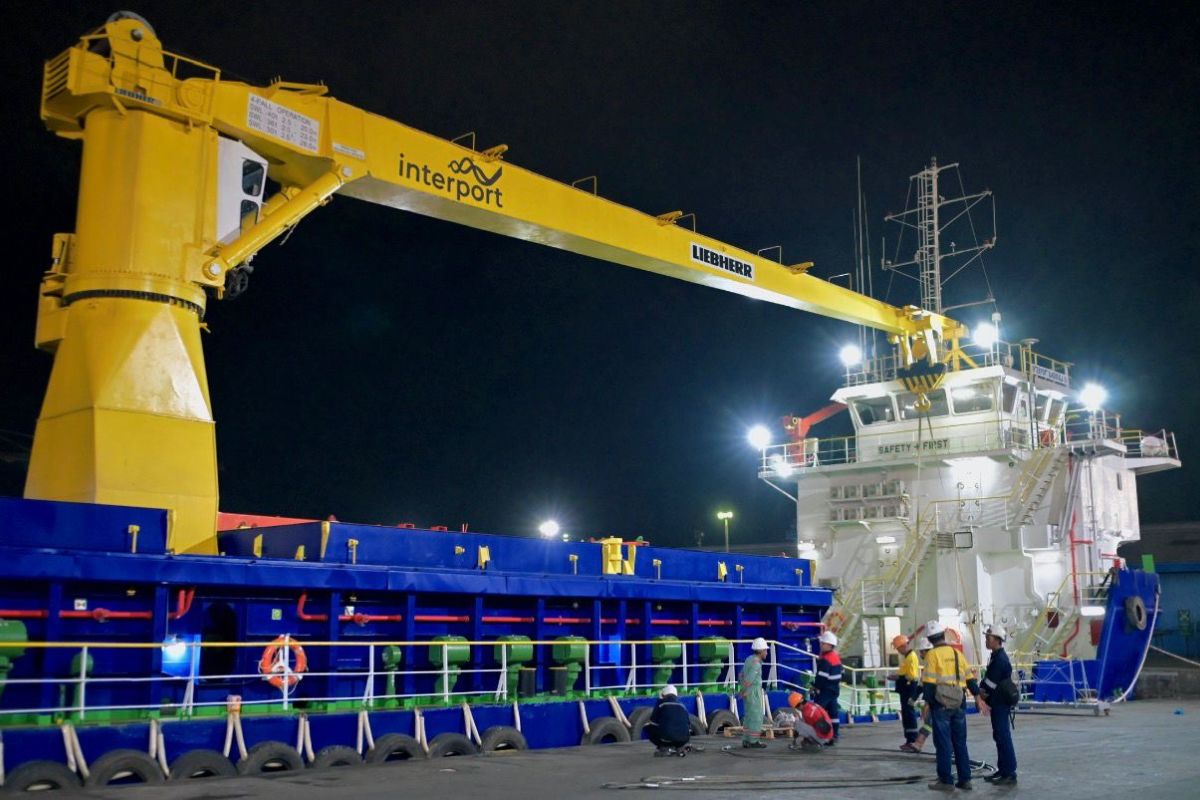
Interport has officially announced the maiden voyage of its newest vessel, the Interport Sandikala VII, as part of an effort to strengthen Indonesia’s maritime connectivity and provide flexible, safe, and efficient logistics services for every industrial sector. “The maiden voyage of the Interport Sandikala VII is a proud moment for us. This vessel is here to answer operational needs in hard-to-reach areas, particularly for the mining industry which requires more flexible and reliable logistics solutions,” said Interport Director Dirandra Syandana (INDIS) Yusuf Indrawarman in a statement in Jakarta on Saturday. Flying the Indonesian flag, the vessel has already embarked on its maiden voyage from Tanjung Perak Port in Surabaya, East Java, to Balikpapan, East Kalimantan, with an estimated travel time of four days. The Interport Sandikala VII is the first multipurpose (Container and General Cargo) vessel owned by INDIS. Yusuf stated that the presence of this fleet is a strategic logistics solution to address the challenges of cargo distribution in the archipelago’s waters, which have diverse characteristics. With a capacity of 1,400 DWT (Deadweight Tonnage), the vessel offers optimal cargo space flexibility. It is designed to carry loads of up to 107 TEUs if utilised 100 percent for containers, or capable of transporting loads of up to 1,200 tonnes if utilised 100 percent for breakbulk cargo. Furthermore, the Interport Sandikala VII is specially designed to reach areas that are difficult for conventional cargo ships to access. The vessel has a Length Overall (LOA) of 67.2 metres. With a relatively shallow water draft of just 3.2 metres, it is highly ideal and safe for sailing in inland areas with limited river width and water depth. Yusuf said the combination of large carrying capacity, compact vessel dimensions, and self-sustaining loading and unloading capabilities makes the Interport Sandikala VII a reliable and competitive logistics solution for various industrial sectors. “This vessel is considered highly relevant for meeting the supply chain needs of companies in the mining, oil and gas, construction sectors, as well as other strategic projects, particularly those located in upstream areas or regions with limited port infrastructure,” he said.