
Internship and vocational programmes can strengthen long-term consumption: Economist
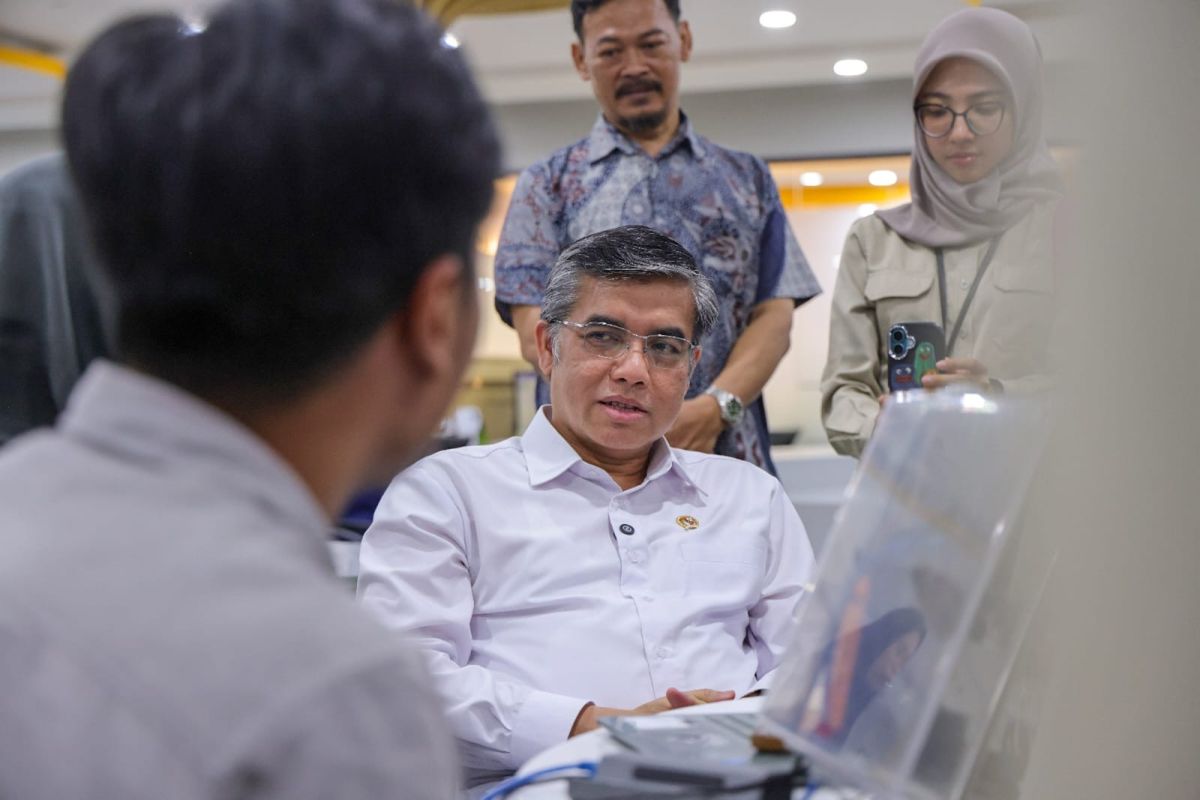
Executive Director of the Center of Reform on Economics (CORE) Indonesia, Mohammad Faisal, has assessed that internship and vocational training programmes have the potential to strengthen household consumption in the long term through improved job access and income. The internship and vocational programmes are part of the economic stimulus package rolled out by the government for the second half of 2026. “When the stimulus is withdrawn, they will have already secured better jobs and higher incomes than before. That is actually what is expected from the internship and vocational programmes,” Faisal said when contacted in Jakarta on Friday. Faisal also reminded that the effectiveness of internship and vocational programmes cannot rely solely on training or skills education. In this regard, the government needs to continuously ensure participants gain access to the job market through distribution mechanisms and mentorship that connect programme graduates with employers. On the other hand, the economic stimulus package for the second half of this year also includes short-term assistance in the form of food aid. In general, Faisal assessed that the stimulus has the potential to boost aggregate consumption and help maintain public consumption for a limited time, although the impact tends not to last long as it will end once the aid programme is discontinued. He also highlighted the condition of the middle class, which is still facing pressure on purchasing power. According to him, spending by this group tends to weaken, and some middle-class citizens have even experienced a downgrade in economic class due to declining purchasing power. “This means the stimulus provided can indeed be said to encourage consumption, but in terms of significance and distribution, there are still many notes,” Faisal said. He added that household consumption in the second half of the year is still overshadowed by a number of challenges, ranging from potential inflationary increases due to higher global energy prices to the weakening of the rupiah exchange rate. These conditions risk suppressing consumption realisation, especially among the middle-class group. Nevertheless, according to him, aggregate consumption still has the potential to grow, which will be largely supported by the upper-income group. Overall, Faisal estimates that household consumption growth in the second half of 2026 will not stray far from the 5 percent range. In fact, without the stimulus, consumption growth could potentially fall below that level. “If the stimulus distribution implementation is ineffective, and considering its magnitude is only Rp26 trillion, it may not compensate for the real cost increases occurring due to inflation,” Faisal said. For information, the government is rolling out an economic stimulus package for the second half of 2026 with a total prepared budget of Rp26.34 trillion. The breakdown includes transport incentives for the school holiday and Christmas and New Year (Nataru) periods of around Rp2.04 trillion, internship and vocational programmes of around Rp6.26 trillion, and food aid amounting to Rp18.04 trillion. Transport incentives during the school holiday period include a 30 percent discount on train tickets from 20 June to 5 July 2026, a 30 percent discount on basic ship fares from 20 June to 15 August 2026, and an exemption from ASDP port service fees from 20 June to 5 July 2026. In addition, the government is providing a 100 percent Government-Borne Value Added Tax (PPN DTP) incentive for domestic economy class flight tickets. Meanwhile, for the Nataru period, the government is providing a 30 percent discount on train tickets from 22 December 2026 to 4 January 2027, a 30 percent discount on basic ship fares from 17 December 2026 to 10 January 2027, and an exemption from ASDP port service fees from 22 December 2026 to 10 January 2027. The 100 percent PPN DTP incentive is also being reapplied for economy class flight tickets. In the employment sector, the government is continuing the national internship programme (MagangHub) and vocational training for vocational school graduates and victims of layoffs. In the social protection sector, the government is distributing food aid for three months to 33.24 million recipients. The government is also continuing the programme to stabilise food supply and prices through a rice subsidy of Rp2,000 per kilogram with a quota of 250,000 tonnes.