
Internet in Indonesia Set to Get Faster, Ministry Prepares Spectrum Auction Strategy
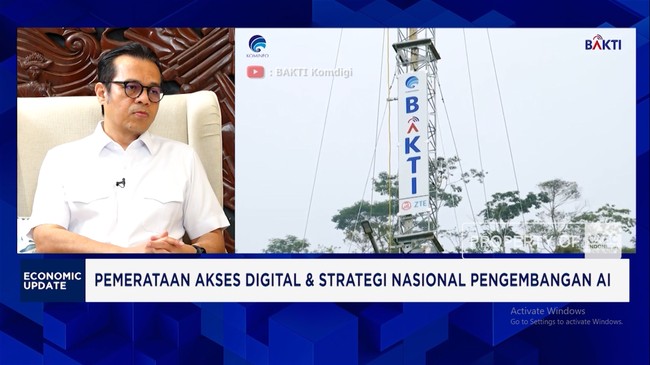
The Ministry of Communication and Digital Affairs (Komdigi) has developed a long-term strategy called ‘Connected, Growing, and Protected’ to accelerate digital infrastructure development across the country. Deputy Minister Nezar Patria stated that the strategy focuses on strengthening connectivity as the foundation for national digital transformation. To enhance this connectivity, Komdigi is preparing to auction the 700MHz and 2.6GHz spectrum bands.
‘The 700MHz spectrum will be used to expand coverage, while the 2.6GHz spectrum will be auctioned to strengthen our broadband services and provide better speeds for users,’ Nezar said during the CNBC Indonesia Economic Update 2026 on Monday (22/6/2026).
These strategic steps are expected to improve the quality of internet and data networks across Indonesia. Komdigi continues to collaborate with industry stakeholders, particularly in telecommunications, to enhance service quality. Nezar emphasised that national internet speed must be increased evenly, and the ministry has established policy requirements for operators participating in the spectrum auction. One key requirement is that winning operators must commit to building quality internet networks in the 3T (frontier, outermost, and least developed) regions and eastern Indonesia.
‘If an operator wins in Java, they must also build in Papua. If they win in another area, they must build in Sumatra. This creates an obligation and shared responsibility to accelerate access and improve service quality for all Indonesians,’ he explained. Currently, 4G BTS coverage has reached 97% of populated areas in Indonesia, while fibre optic network coverage has reached 60% of the archipelago. Komdigi is also strengthening satellite services to reach remote 3T areas.
‘All of this is to ensure connectivity reaches far-flung areas and can cover regions with intense economic activity, where we aim to improve the quality of existing services,’ he added. Additionally, 5G network development continues through collaboration with operators. With 5G penetration currently at only around 10-11% of total networks, support from the three dynamic telecommunications operators is expected to significantly boost 5G deployment in the near future.