
International Students Design Green Economy Concept for Barelang
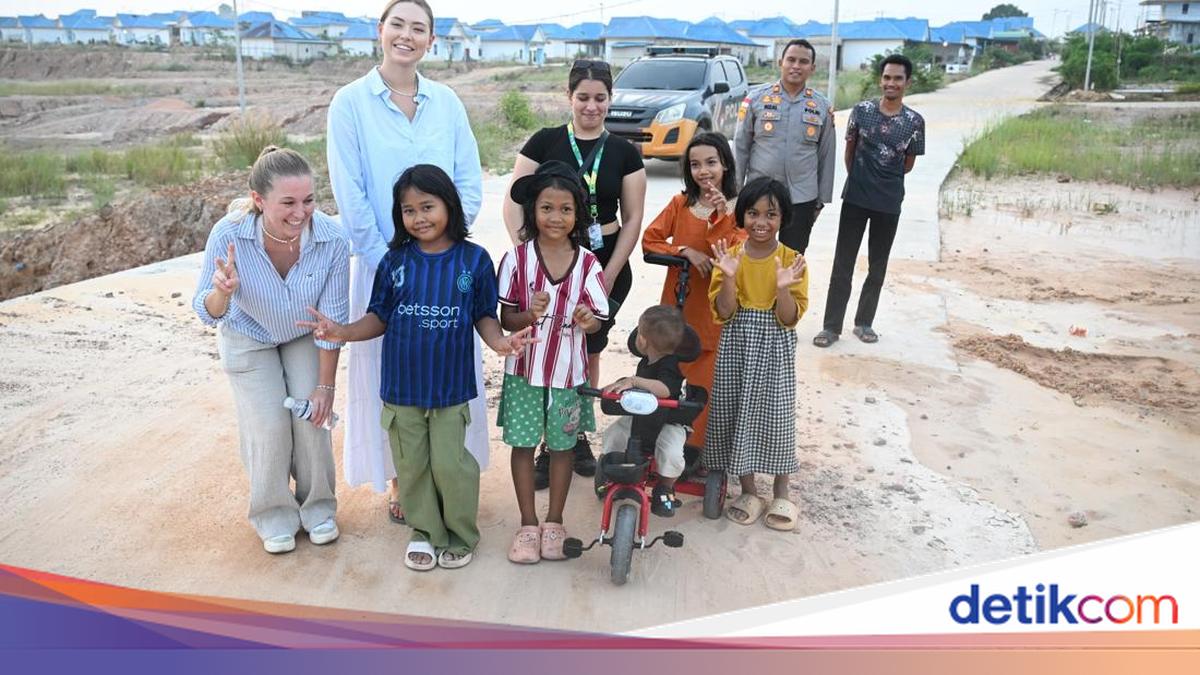
Students from Indonesia and the Technical University of Munich (TUM), Germany, are collaborating to study the potential of the Barelang Transmigration Area through the 2026 Summer Course. Over a period of 10 days, they are conducting field studies in Batam, Rempang, and Galang (Barelang) to design a concept for more sustainable, green regional development.
This activity does not merely bring together students from various disciplines but also connects academic theory with field realities. Participants are exploring the economic, environmental, infrastructural, and social potential of the Barelang Transmigration Area as part of the development of an integrated economic zone.
Nirwan Ahmad Helmi, Secretary General of the Directorate General of Economic Development and Community Empowerment of the Ministry of Transmigration, stated that Barelang was chosen as a learning space due to its character, which allows for the integration of agriculture, fisheries, community enterprises, and economic access to Batam. Regional development must involve both transmigrants and local communities, while also respecting the Malay cultural community.
“The Summer Course participants will learn and work together. Barelang offers an environment for integrated regional development, which is our developmental direction—an integrated transmigration economic zone that combines agriculture and fisheries with extensive access to the Batim centre,” Nirwan said in a written statement.
“Fisheries and marine activities are the primary economic drivers, supported by small business services. The development of fisheries, marine sectors, and cultural tourism must respect the coastal Malay communities and involve both transmigrants and local residents,” he added.
Bondan Djati Utami, Director of Transmigration Community Empowerment at the Ministry of Transmigration, added that students will undergo a series of observations, discussions, and knowledge-sharing activities in Barelang until 10 October. The activities are directed towards seeing how the regional ecosystem can be developed based on existing potential.
“Their concern is focused on how to develop the existing ecosystem here—what the development of the Barelang area should look like,” said Bondan.
According to him, students are also receiving information regarding the development of Barelang and Batam City to serve as comparative material for formulating ideas. The learning results will be presented after they continue their activities in Semarang.
“The output will be shared with us. They will present their results in Semarang on the 13th,” she explained.
Meanwhile, Robi Suherman Ponglabba, Director of Transmigration Area Development at the Ministry of Transmigration, explained that the Ministry is supporting the Summer Course through the preparation of regional infrastructure, including the Mess Patriot, which serves as the students’ accommodation in Barelang.
“My role here is the preparation of infrastructure, such as the Mess Patriot, as well as external infrastructure like roads, drainage, and parks,” revealed Robi.
Sandra, a participant from TUM, noted that Barelang possesses significant untapped potential. After seeing the area firsthand, she became interested in exploring how the local community utilises opportunities arising from regional development.
“We want to discover many things about this area to gain inspiration, to find ideas, and to communicate with the people living here—asking them what they think and what they want,” said Sandra.
According to Sandra, the diverse backgrounds of the participants are a strength in formulating ideas. Participants come from fields such as geography and environmental technology, while the local community possesses knowledge regarding the region’s conditions and needs. The intersection of these two perspectives is expected to produce ideas better suited to the character of Barelang.
Another participant, Leonard, also observed that there is vast room for the development of Barelang. He noted that the experience of being directly in the area provides a different perspective compared to studying it solely through information or photographs.
“I think there are many opportunities to be realised. There is much open space that still needs to be built and planned,” said Leonard.
He hopes that the activity will not only provide new experiences for participants but also produce ideas that can assist in regional development.
During the programme, Summer Course participants can also build upon the knowledge gained from the work of the Patriot Expedition Team previously stationed in Barelang. Four teams from the Bandung Institute of Technology (ITB), Bogor Agricultural University (IPB), University of Indonesia (UI), and Sepuluh Nopember Institute of Technology (ITS) are working on complementary fields. These include seaweed business development, urban agriculture, strengthening local commodity value chains, and technical feasibility studies and integrated surveys of Tanjung Banon.
The Ministry of Transmigration hopes this collaboration will produce ideas that provide practical benefits to the community and serve as input for designing a greener Barelang.
The 2026 Summer Course is part of a new approach to transmigration development that opens space for science, innovation, and international collaboration. The goal is to collectively develop local potential into a sustainable economic zone that benefits the community.