
International Media Spotlight Jatiwaringin Landfill Fire
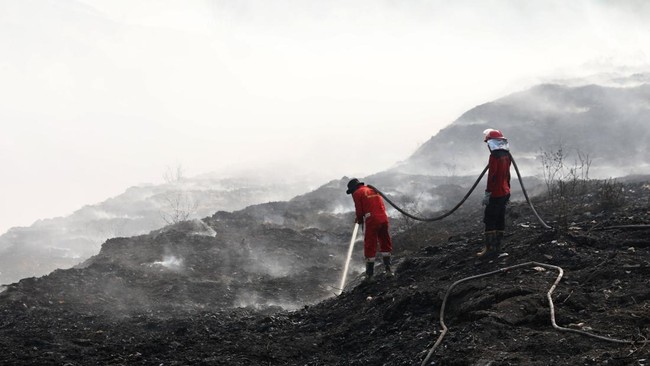
A massive fire at the Jatiwaringin Final Disposal Site (TPA) on the outskirts of Jakarta has drawn the attention of international media, which is highlighting the environmental impact and health threats caused by the disaster. In a report titled ‘A mountain of rubbish in Indonesia has been on fire for more than a week’, the BBC reported that the flames have burned more than 15 hectares of the landfill area for over a week, blanketing surrounding residential areas with thick, toxic smoke. The BBC reported that hundreds of residents were forced to evacuate to temporary shelters due to the deteriorating air quality around the site. One of them was Sarmanah (45), a local resident who said she was forced to leave her home with her family because of the thick smoke from the fire. ‘The smoke was so thick we couldn’t see anyone. It stung our noses, made us cough, gave us runny noses, and made it difficult to breathe. We were forced to leave our homes because we couldn’t take it anymore,’ she said. International media outlet Al Jazeera also highlighted the fire via an Instagram post. In its report, Al Jazeera noted the landfill fire had entered its third day when the report was published. Helicopters were deployed to conduct water bombing from the air, while firefighters worked to extinguish hotspots still smouldering beneath the piles of waste. Smoke from the fire also impacted the surrounding community, triggering evacuations and raising health concerns among residents. According to Indonesian authorities, at least 234 residents have undergone health checks due to smoke exposure, with 72 of them diagnosed with acute respiratory infections (ISPA). The Director of Emergency Operations Control Coordination at the National Disaster Management Agency (BNPB), Djohan Darmawan, explained that the extinguishing process was difficult because the fire was not burning on the surface but smouldering inside the waste piles. Environmental activists assessed that this fire reflects a larger waste management crisis in Indonesia. An activist from the Indonesian Forum for the Environment (Walhi), Wahyu Eka Styawan, called the incident an ‘ecological disaster due to systemic negligence’. According to him, the accumulation of methane gas from decomposing organic waste, coupled with the still widespread practice of open dumping, has turned many landfills in Indonesia into ‘time bombs’. ‘This is a time bomb from a waste management problem that has been ignored for years without fundamental improvement,’ Wahyu told the BBC. He added that the Jatiwaringin landfill can only accommodate around 2,700 tonnes of waste per day, or about 59% of Tangerang Regency’s total daily waste production. This raises questions about where the remaining waste is disposed of. According to Walhi, the excess waste eventually piles up in open dumping sites around the landfill, forming mountains of rubbish located very close to residential areas. Besides causing pungent odours, fly infestations, and landslide risks, this condition also causes methane gas to become trapped beneath the waste piles. Wahyu said a small spark during hot weather is enough to trigger a major fire. Meanwhile, the Ministry of Environment stated it will investigate the cause of the Jatiwaringin landfill fire after the extinguishing process is complete. Deputy for Environmental Law Enforcement Rizal Irawan also revealed that the government will evaluate around 390 landfills across Indonesia in early August 2026. He noted that the Jatiwaringin landfill had previously been subject to administrative sanctions in 2025 due to poor waste management and had been asked to implement a controlled landfill system to reduce methane gas accumulation and fire risk.