
International Day of Sign Languages 23 September: Its History
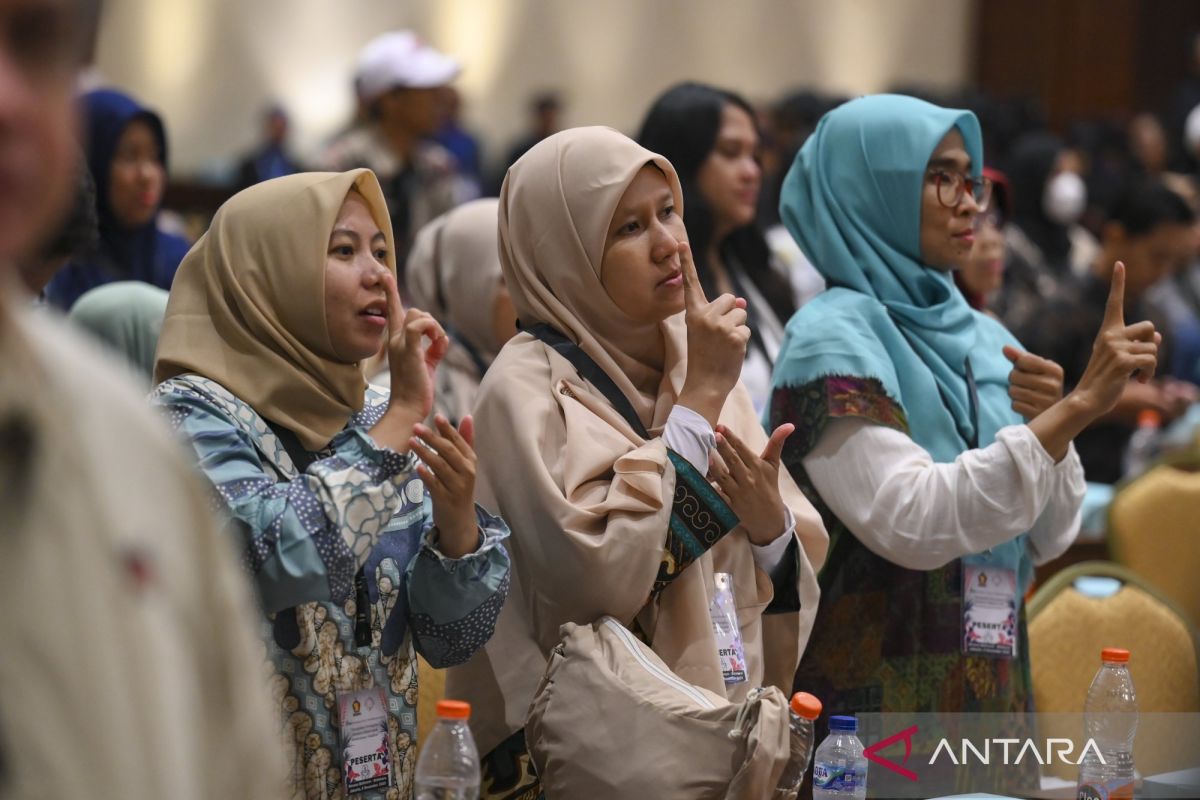
Language is a vital component of human life, used for communication, accessing information, pursuing education, and daily social interaction. For the Deaf community, sign language serves as a primary means to meet communication needs and support the fulfilment of their fundamental rights.
Every 2lang 23 September is commemorated as the International Day of Sign Languages. This observance was established by the United Nations (UN) to raise awareness regarding the importance of sign language in upholding the human rights of Deaf people.
In 2026, the International Day of Sign Languages carries the theme “Declaring Deaf People’s Human Rights”. This theme calls for the realisation of the rights of the Deaf community across various aspects of life, including full access to national sign languages.
The History of International Day of Sign Languages
- Originating from the establishment of the WFD
23 September was chosen because it coincides with the founding of the World Federation of the Deaf (WFD) on 23 September 1951. This organisation is a key international body advocating for the rights of the Deaf community and the preservation of Deaf language and culture. In 2026, the WFD will celebrate its 75th anniversary, providing significant momentum for this year’s commemorations.
- Established by the UN
The UN General Assembly established 23 September as the International Day of Sign Languages through Resolution A/RES/72/161, adopted by consensus on 19 December 2017. The resolution was sponsored by Antigua and Barbuda and supported by 97 UN member states. The International Day of Sign Languages was first observed on 23 September 2018 as part of the International Week of the Deaf, which has been held since 1958.
The Objectives of International Day of Sign Languages
- Increasing awareness of sign language
The observance aims to enhance public understanding of the importance of sign language and its role in the lives of the Deaf community. The UN emphasises that sign language is a natural language with its own unique linguistic structure; therefore, it should not merely be viewed as hand gestures used to replace spoken language.
- Supporting the fulfilment of Deaf rights
Access to sign language is closely linked to the fulfilment of the rights of the Deaf community, including the right to education, information, public services, and participation in social life. UN resolutions also emphasise the importance of early access to sign language and sign language services, including quality education.
- Protecting Deaf identity and culture
Sign language is an integral part of the identity and culture of the Deaf community. The UN recognises the importance of preserving sign language as part of the world’s linguistic and cultural diversity. The use of sign language in education is a crucial aspect of providing equal learning opportunities for Deaf students.
In Indonesia, the Ministry of Primary and Secondary Education (Kemendikdasmen) conducted training in Quranic Sign Language for educators in July 2026 as part of efforts to strengthen more inclusive educational services for students with hearing disabilities.
Sign Language in Indonesia
Indonesia possesses the Indonesian Sign Language System (SIBI), developed to support communication and learning for the Deaf community. The Ministry also provides the SIBI Dictionary, which includes vocabulary alongside images and descriptions of sign formation.
In addition to SIBI, Indonesian Sign Language (BISINDO) is also used by the Deaf community in various regions. The use of national sign languages is a vital component in expanding communication access and education tailored to the needs of the Deaf community. Efforts to expand access to sign language-based education continue, with the Ministry organising educator training in 2026 to strengthen competencies in providing inclusive learning for students with hearing impairments.
Global Sign Language Data
The UN notes that there are more than 70 million Deaf people worldwide, collectively using over 300 different sign languages. More than 80 per cent of this population lives in developing countries. This data demonstrates the vast diversity of sign languages; they are not universal, as every country or community may possess sign languages with different vocabularies and structures.
In 2026, the commemoration of the International Day of Sign Languages also coincides with the 20th anniversary of the adoption of the Convention on the Rights of Persons with Disabilities (CRPD) and the 75th anniversary of the WFD. Thus, the International Day of Sign Languages is not only a moment to recognise sign language but also to increase awareness regarding communication access, education, information, and the rights of the Deaf community, while encouraging the creation of a more inclusive environment for sign language users.
Source: jawawa.id (https://jawawa.id/newsitem/international-day-of-sign-languages-23-september-its-history-1789977838)
Originally published by Antara (Indonesian) (https://www.antaranews.com/berita/5750872/hari-bahasa-isyarat-internasional-23-september-ini-sejarahnya), translated from Indonesian