
International Academics Highlight the Future of Communication in the AI Era
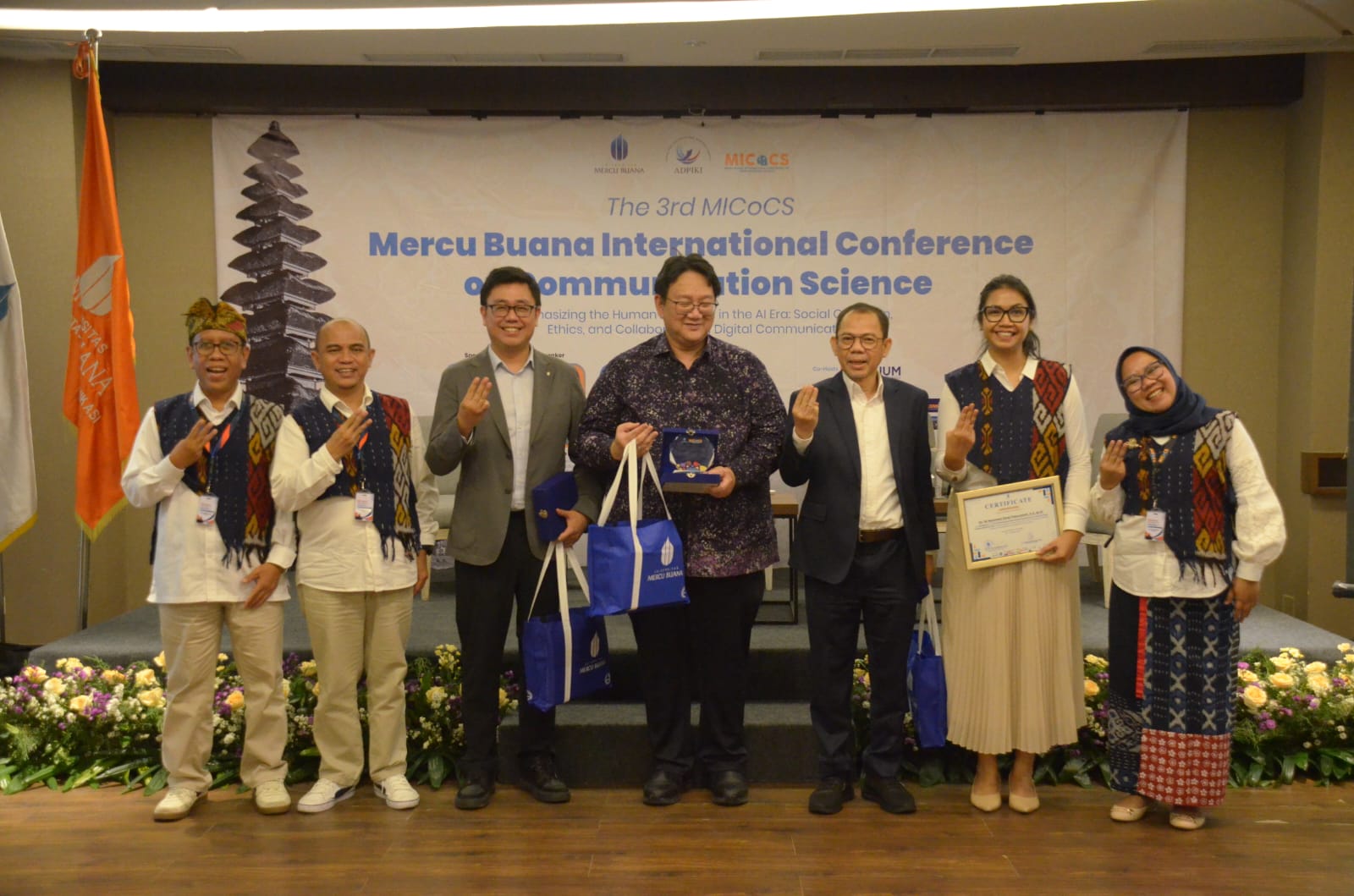
The development of Artificial Intelligence (AI) is not merely presenting technological innovations but is fundamentally changing the way humans communicate, consume information, and build trust. This was the central focus of the 3rd Mercu Buana International Conference on Communication Science (MICoCS) held by Mercu Buana University in Bali. The international conference brought together academics from Indonesia, Malaysia, Pakistan, and China to discuss the future of communication science in the AI era.
Ayesha Ashfaq from the University of the Punjab, Pakistan, highlighted how AI algorithms have altered public news consumption patterns. She noted that AI-based recommendation systems now play a significant role in determining the information users receive via social media and digital platforms. Ashfaq warned that this condition creates new challenges, including filter bubbles, echo chambers, and an increased risk of misinformation spread. She argued that virality is no longer the primary measure of an information’s credibility, making algorithmic transparency and AI literacy crucial foundations for maintaining public trust in digital information.
Meanwhile, Gerald Goh Guan Gan from Multimedia University, Malaysia, assessed that the digital divide in the AI era extends beyond mere access to the internet or technological devices. He pointed out that the gap now involves more complex issues, such as algorithmic bias, which can further marginalise certain groups. From China, Liu Hao of the Zhejiang Business Technology Institute presented research findings showing that authentic experiences shared by content creators are far more effective than formal promotions in building audience engagement for tourism destinations.
Ahmad Mulyana, Dean of the Faculty of Communication Sciences at Mercu Buana University, introduced the ‘Mulyana Model’. This conceptual model explains the transformation of the meaning industry in the digital age through the perspective of mediamorphosis. He elaborated that the digital economy is now characterised by the rise of the attention economy, the creator economy, data monetisation, and platform capitalism. The conference concluded that the success of future communication does not rely solely on technological sophistication, but on authenticity, algorithmic transparency, emotional connection with audiences, and the strengthening of digital literacy.