
Interior Minister Urges Regional Heads to Anticipate Impacts of Inflation and Global Crisis
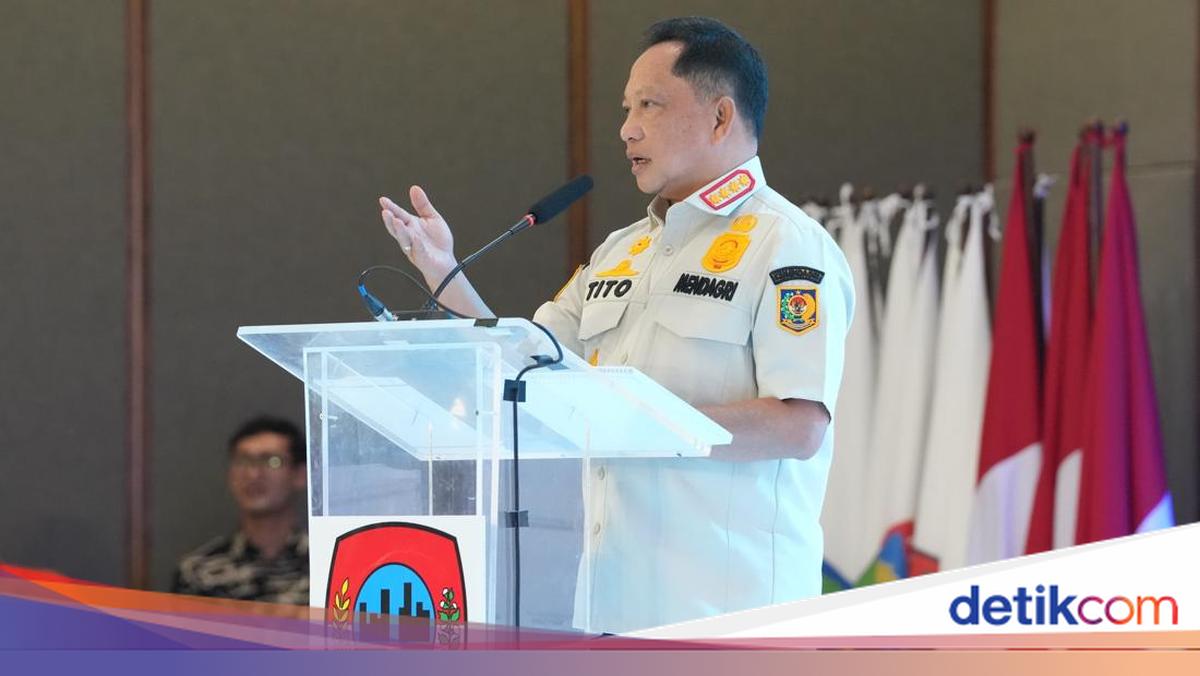
Interior Minister (Mendagri) Muhammad Tito Karnavian has urged all regional heads to increase their readiness in facing the potential for inflation as well as the impacts of the global crisis. According to him, these two issues have the potential to affect the economic conditions of the public, particularly low-income groups.
Tito emphasised that the issue of living costs is currently the main concern of the public. He expressed this while serving as the keynote speaker at the Working Meeting of the Regional Commissariat (Komwil) I of the All-Indonesia City Government Association (APEKSI) in Banda Aceh City, Aceh, today.
“More than 60 percent of our society is concerned about living costs, especially food. This cannot be delayed,” said Tito in a written statement on Monday (20/4/2026).
He assessed that inflation is no longer just a macro issue, but a concrete problem felt directly by the public in their daily lives. Increases in food, energy, and logistics prices can quickly trigger social pressures. He even warned of the potential for extreme impacts if inflation is not controlled.
“If it explodes, the cost is high. It could lead to riots and damage to public facilities. Building takes a long time, destroying takes a moment,” he stated.
Tito also highlighted the global dynamics that are still full of challenges, from the Russia-Ukraine conflict to tensions in the Middle East involving several major countries. According to him, these developments also affect global energy prices, impacting various sectors.
He explained that rising oil prices can trigger a chain reaction on transportation costs, distribution, and commodity prices. Therefore, the active role of regional governments is key in maintaining price stability in the regions.
“Don’t autopilot. Don’t wait until the problem explodes,” he said.
He asked the Regional Inflation Control Team (TPID) to continue strengthening its performance, including through intensive coordination with the Central Statistics Agency (BPS) to monitor price movements in real-time. Tito emphasised that inflation control can be focused on two main aspects: ensuring supply adequacy and smooth distribution.
As an example, the spike in chilli prices that occurred in several regions of Aceh. According to him, this condition is not only influenced by production factors but also suboptimal distribution.
Furthermore, Tito assessed that regions with a strong food production base tend to be more resilient in facing economic pressures. Meanwhile, urban areas that rely on external supplies need to strengthen their food security strategies.
Reflecting on the experience of the COVID-19 pandemic, he conveyed that strengthening local food resilience is a strategic step.
“Various initiatives such as urban farming, hydroponics, and utilising narrow land in urban areas are seen as adaptive solutions as well as opportunities for community empowerment,” he concluded.