
Interior Minister Discusses E-Voting Proposal for Elections: Fast, but Hacking Fears Linger
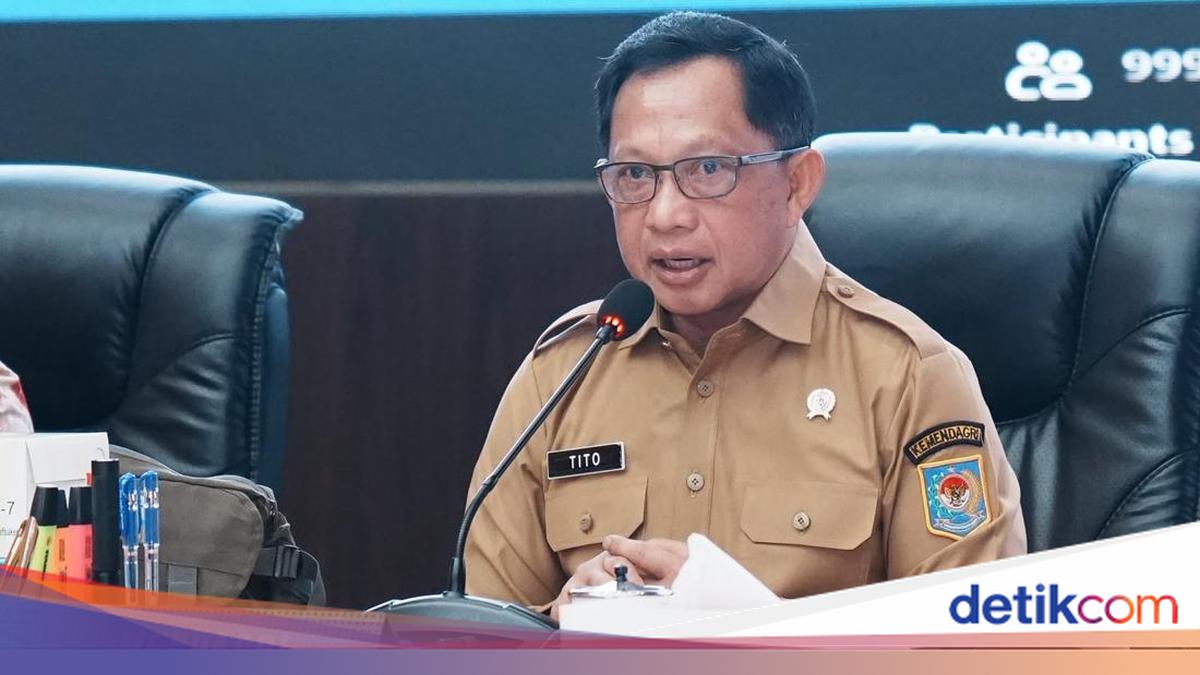
Minister of Home Affairs (Mendagri) Tito Karnavian said there is a proposal to introduce electronic voting, or e-voting, in elections. According to Tito, the proposal will be discussed by the government together with the DPR and electoral administration bodies.
“Yes, there is, there is a proposal for e-voting. But that must be discussed by the government, the DPR, the KPU, Bawaslu, DKPP, and the political parties — whether they agree or not with the idea of e-voting,” Tito said after a working meeting with Commission II of the DPR at the DPR building in Senayan, Central Jakarta, on Tuesday (15/9/2026).
Tito said there is a plan to conduct a comparative study in India, a country he said has implemented e-voting. He said e-voting has also been carried out in Indonesia on a small scale.
“That’s fine, there is also a plan, a proposal, for a comparative study, for example in India. India is also a large country with a big population, but it also carries out e-voting,” he said.
“Moreover, e-voting has actually already been implemented in Indonesia at some village level, but on a small scale,” he continued.
He said the KPU had previously outlined the advantages of e-voting. One of them is that vote counting is faster and costs are lower.
“The KPU has also conveyed this before, as far as I know, and there are pros and cons. Among other things, they said the strengths of e-voting are that it is fast and the costs are certainly lower. Because it is fast, people can vote without having to go to a polling station, for example, using an online system,” he explained.
However, Tito highlighted the security risks in implementing e-voting. One of them is the possibility of the system being hacked.
“But its weakness, which is feared, among other things, is hacking. Then the system could be breached — the e-voting system could be disrupted, for example. Meanwhile, with manual voting, the tally can be witnessed by many people, with the votes counted stage by stage,” he stated.
Tito said the potential for fraud also needs attention. In his view, the manual voting system allows the counting process to be observed and carried out incrementally.
“With e-voting, the result comes immediately, without going through tiered counting. So there may be a moral hazard weakness, for instance — fears of fraud, for example. But we have to learn. From whatever we want to do, we should look at the practices in countries that have implemented it,” he said.
Tito said the implementation of e-voting for elections remains only a proposal. He said the government needs to study the practices of countries that have already adopted the system.
“There are also countries that do not do it — modern countries, developed nations, some of which do not use e-voting. What are their reasons? So, that is roughly the situation. This is still only at the proposal stage. In essence, it is only a new idea. We want to learn first,” he said.