
Interior Minister: Awarding Local Governments to Create a Competitive Climate
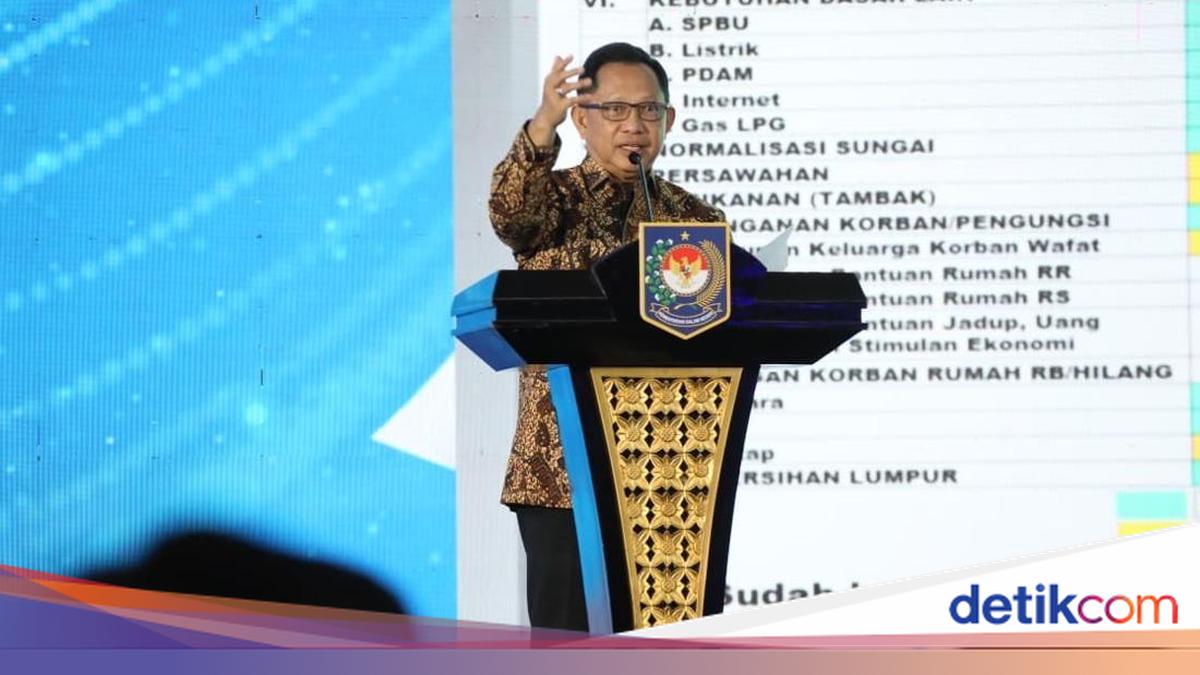
Interior Minister (Mendagri) Muhammad Tito Karnavian has emphasised that granting awards to local governments (Pemda) is one of the effective methods to create a healthy competitive climate among regions. This scheme is considered capable of spurring the performance of regional heads to be more optimal in serving the public.
“So, granting awards is one method to create a competitive climate so that regions can spur their performance more optimally,” said Tito in a written statement on Sunday (26/4/2026).
Tito explained that with 552 regions consisting of 38 provinces, 98 cities, and 416 regencies, Indonesia has high complexity in local governance. Therefore, an approach is needed that is not only based on supervision but also on giving appreciation.
“I believe that we also need the Ministry of Home Affairs to provide carrots or award rewards to colleagues who are considered good,” he clarified.
Furthermore, he stressed that granting awards is not merely ceremonial, but also to balance the flow of public information, which has so far tended to be filled with negative news related to local governments. According to him, there are still many regional heads who work well but have not been exposed.
“There are many good regional heads, many regional heads who struggle, go to the field to meet the community, enter the hinterlands to meet their underprivileged communities, creatively make breakthroughs and innovations in various fields,” he asserted.
He added that publicising award recipients is part of the government’s communication strategy to strengthen public trust and encourage healthy competition among regions. Such positive narratives are expected to depict performance based on data and measurable indicators.
On that occasion, Tito also announced a fiscal incentive policy for high-performing regions with a total budget of around Rp 1 trillion. These funds will be directly channelled to regional coffers as additional Regional Revenue and Expenditure Budgets (APBD).
“So what is received by the gentlemen and ladies (Pemda) is not for personal use. But it enters the additional APBD, which we will transfer later to the RKUD account (i.e., the general regional account of each region),” he stated.
He emphasised that the assessment process is carried out objectively based on data from the Central Statistics Agency (BPS), and involves a judging team from the government and media. The main indicators used include inflation control, unemployment reduction, poverty alleviation, stunting reduction, and regional financing innovations.
“This is 4 categories where the data is already available at BPS, such as declining stunting, declining poverty, controlled inflation, all of it is already at BPS,” he concluded.
To maintain fair competition, the government also implements a regional-based assessment system by dividing regions into six areas. This step is taken so that regions with relatively equal fiscal capacity can compete more proportionally.