
Interior Minister Asks Regional Heads to Protect Residents from Volcanic Ash
The Ministry of Home Affairs is urging regional heads to implement measures to protect communities from exposure to volcanic ash following the eruption of Mount Anak Krakatau. Minister of Home Affairs Tito Karnavian has asked regional heads to distribute masks to residents, particularly in areas affected by volcanic ash, as a form of protection against ash exposure.
Meanwhile, residents have been advised to use masks and eye protection when leaving their homes, especially during ashfall or when the concentration of volcanic ash rises.
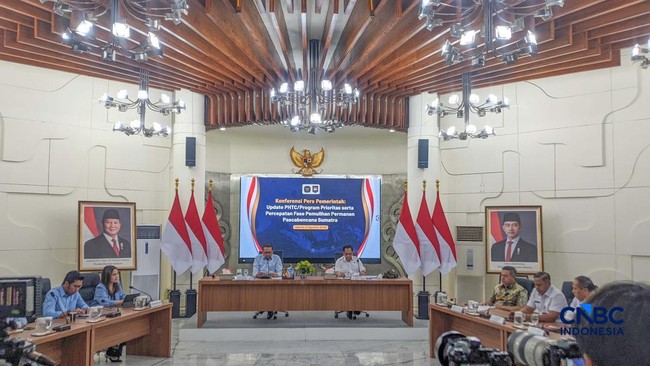
“We want to avoid public panic; we must not let people panic. The Minister of Health has also conveyed that protection includes maintaining health, protecting the respiratory system, making every effort to use masks, and also protecting the eyes,” Tito said at a press conference on Sustaining Government Services and Education in Affected Areas Following the Mount Anak Krakatau Eruption, on Sunday (6 September 2026).
In addition, residents should reduce outdoor activities when ash distribution increases and cover water and food sources to prevent contamination. Tito also urged the public not to approach Mount Anak Krakatau within a 3 km radius of the active crater, in accordance with applicable safety recommendations and provisions.
Finally, he called for round-the-clock monitoring to be activated and for ensuring that residents receive and follow official information from the Centre for Volcanology and Geological Hazard Mitigation (PVMBG), the Meteorology, Climatology and Geophysics Agency (BMKG), and the Regional Disaster Management Agency (BPBD).
“We continue to carry out 24-hour monitoring and to follow official information, especially from BMKG, then BPBD and other official authorities,” Tito added.
He added that the Ministry of Home Affairs will coordinate and monitor with affected regional governments to ensure that the response is carried out swiftly, in an integrated manner, and in line with conditions on the ground.
Regional governments are also being pushed to conduct rapid and accurate data collection and mapping of affected areas and populations, ensure the continuity of basic services and the readiness of health facilities, logistics and other supporting infrastructure, intensify coordination with BPBD and related agencies, and refer to official information from PVMBG/BMKG.
The ministry is ensuring that preparedness and mitigation measures are carried out proportionally, in line with developments in volcanic activity and the level of risk in each area. Regional governments are then to report developments, obstacles and support needs regularly to the central government as the basis for accelerating the response and providing the necessary support.
“The situation remains highly situational and very much depends on the circumstances of each area. Once again, we continue to monitor and use official sources of information, and each regional government consistently responds based on those official sources of information,” Tito concluded.