
Interfaith Communities Unite to Save the Earth
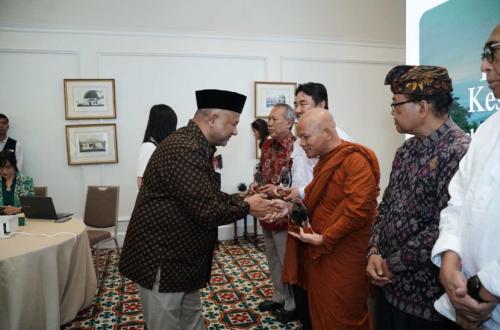
Representatives from six religious communities in Indonesia signed a Memorandum of Understanding and a Charter for the Establishment of the Interfaith Climate Action Joint Secretariat at The Hermitage Hotel, Jakarta, on Monday (27/7/2026). The forum, initiated by the Amanah Daya Nusantara Foundation (AYANA), was formed to strengthen coordination, collaboration, and joint action in facing the impacts of the climate crisis.
AYANA Executive Director Rizal Algamar stated that climate change is no longer a distant issue for society. Its impacts are already being felt in various aspects of life, from floods, changing seasons, and declining harvests to rising living costs and uncertain household incomes. Because of this, Rizal said the main challenge is not merely disseminating more information about climate change, but building public understanding so that communities can lead real action in their own environments.
“Our challenge is not just delivering more information. Our challenge is making climate action understood, trusted, owned, and led by the community,” Rizal said. He emphasised that protecting the earth is not an external agenda, but part of the values long taught in every religious tradition. The Joint Secretariat, he said, was formed not to take over the role of religious organisations, but to provide a space for sharing knowledge, strengthening partnerships, and consolidating a joint movement.
“The community also needs to know what support they should receive. In essence, through the integration of theology, ecology, and economy, we hope communities will be better able to communicate the climate actions they plan themselves in their respective communities so that their voices are heard more clearly,” he said. The idea for the forum was born from a series of focus group discussions held by AYANA with six religious communities from March to April 2026. The discussions, involving more than 200 participants, included representatives from the Indonesian Ulema Council (MUI), Nahdlatul Ulama (NU), Muhammadiyah, the Communion of Churches in Indonesia (PGI), the Indonesian Bishops’ Conference (KWI), Parisada Hindu Dharma Indonesia (PHDI), the Indonesian Buddhist Association (WALUBI), and the Supreme Council for Confucian Religion in Indonesia (MATAKIN).
The discussions identified various good practices already carried out by interfaith communities, ranging from the development of eco-friendly places of worship, waste management, and ecosystem restoration to eco-theology education and green philanthropy. However, these various initiatives were considered to still be running independently and not yet connected in a systematic collaborative network.
Chairman of the Da’wah Institute of the Nahdlatul Ulama Executive Board (PBNU), KH Abdullah Syamsul Arifin, assessed that interfaith cooperation in protecting the environment has a strong foundation in religious teachings. “We view that working together across faiths from all communities of humanity to protect the earth bestowed by God for the benefit of mankind is a call of faith that we can contextualise in humanitarian life,” he said.