
Inter-Island Connectivity Increasingly Strategic, Maritime Transport Safety Must Be Strengthened
Maritime transport safety has become a key concern in safeguarding national connectivity, particularly amid the high mobility of passengers and vehicles between islands.
Every shipping accident should serve as a moment to strengthen the safety system comprehensively, rather than merely searching for a cause based on the age of the vessel.
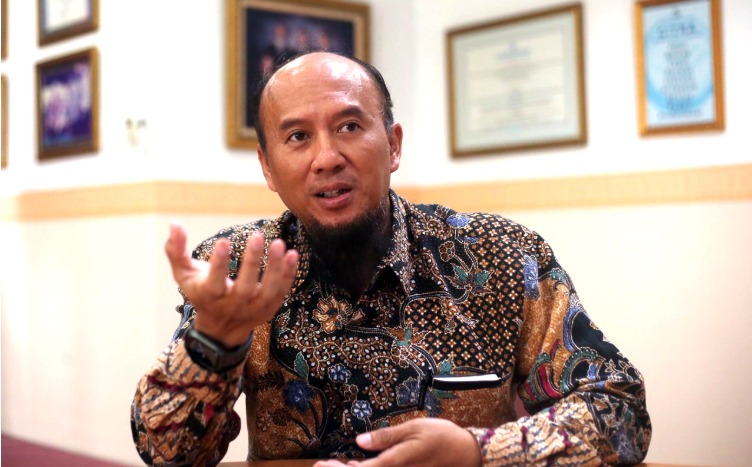
Rakhmatika Ardianto, Vice Chair of the Maritime Transport Forum of the Indonesian Transport Society (MTI), urged all parties not to rush to conclude that the accident involving KMP Virgo Transport 8 was caused by the ship’s age. According to him, the cause of the accident must be determined through a thorough examination and the findings of the National Transportation Safety Committee (KNKT), which is still gathering data related to the incident.
“Let us not allow the term ‘old ship’ to become an instant answer every time an accident occurs. The year of construction is indeed important information, but it is not a conclusion about the cause. We must give the KNKT room to examine the facts, not pre-empt it with assumptions,” said Rakhmatika on Tuesday (15/9/2026).
He expressed his concern and condolences to the victims and affected families. According to him, the handling of victims must be the priority, whilst safety evaluations should be carried out objectively so as to produce proper improvements for the national maritime transport system.
Rakhmatika explained that in the shipping industry there is no simple concept of a ship’s technical lifespan; rather, there is the concept of economic life. This is because various ship components can be repaired, renewed or replaced as long as they meet technical and safety requirements.
“A ship is different from a human being. Plates, engines, pipes and its various systems can be repaired or replaced. Even though its calendar age keeps increasing, the technical condition of its components can be restored through maintenance and renewal,” he explained.
According to him, the classification system also requires a ship’s condition to be inspected periodically. These inspections cover, among other things, potential corrosion, cracking, deformation and structural fatigue. Findings requiring repair must be followed up in accordance with the requirements and deadlines so that the ship continues to meet classification rules.
“This means that component renewal must be accompanied by an inspection of the ship’s overall condition,” he asserted.
On the other hand, economic life relates to cost considerations in keeping a ship operational. As age increases, the need for repairs, component replacement, equipment renewal and potential downtime may rise.
“At a certain point, shipowners need to assess whether maintaining the ship is still economical, or whether fleet replacement is more appropriate,” he said.
Rakhmatika also judged that a ship’s age cannot be the sole measure of safety. He cited several ships, decades old, that are still used for transport services in various countries.
In Norway, for example, the M/F Oisang, built in 1950, still serves the Risor–Oysang crossing. The ship is around 76 years old in 2026. In Hong Kong, eight Star Ferry vessels serving regular routes have an average age of around 63 years.
Further examples are found in the United States through the MV Tustumena, built in 1964 or around 62 years old, which is one of the ocean-class certified passenger and vehicle ferries. Meanwhile, the M/F Venosund in Denmark was built in 1931, and the PS Trilium in Canada was built in 1910.
“These examples show that old age does not automatically end a ship’s service. What needs to be examined is how the ship has been maintained and inspected periodically,” said Rakhmatika.
Regarding the Virgo Transport 8, he said the vessel was previously known as the Ferry Kurushima, serving the Kokura–Matsuyama route in Japan. The ship previously operated in waters with a sea depth of around 40–50 metres before moving to Indonesia.
“And this corresponds to the depths found in the Java Sea,” he said.
In terms of construction, Rakhmatika noted that the vessel uses high-tensile steel (HTS), a high-strength steel used in ship construction.
He also noted that the Virgo Transport 8 held classification from ClassNK in Japan, a member of the International Association of Classification Societies (IACS). After operating in Indonesia, oversight is conducted by the government, in this case the Directorate General of Sea Transportation, and the classification society, namely Biro Klasifikasi Indonesia.
For this reason, he believes any evaluation of the accident must examine the entire maritime transport safety chain. According to him, there are at least four stakeholders with important roles: the regulator, shipping operators, port facilitators, and consumers or service users.
From the regulator’s side, the government plays a role in drawing up rules and conducting oversight, including crew certification. Meanwhile, operators are responsible for the readiness of the ship, crew, loading and vessel operation in line with safety provisions, including SOLAS.
Port managers also have a responsibility to ensure that facilities as well as the control of vehicles and goods before boarding function properly. Port sterilisation is an important part, because disorder can create discrepancies between actual conditions and the ship’s manifest.
“Meanwhile, service users, including cargo owners and transport operators, must convey loading information accurately and comply with safety regulations,” he stressed.
In the context of accident prevention, particular attention must also be directed at over dimension over loading (ODOL) vehicles, especially with regard to actual weight, dimensions and the arrangement of vehicles on board.
Rakhmatika explained that load control concerns at least three aspects. First, the load must match the ship’s buoyancy capacity. Excessive load can increase the ship’s draught, thereby reducing its reserve buoyancy.
Second, the ship has load limits on the deck and on certain structural parts. Vehicle weight, axle load and the distribution of load through the wheels must match the structural capacity.
“Local loads exceeding the limit can damage the plating or supporting structures, even if the ship’s total weight capacity has not been exceeded,” he continued.
Third, the arrangement of cargo must maintain the ship’s stability. Cargo stacked too high can raise the ship’s centre of gravity and reduce stability. Under certain conditions, the ship’s ability to return upright when listing can be significantly diminished.
“Although ro-ro ships actually have better stability than passenger vessels because they have a longer stability lever,” he said.
To strengthen accident prevention, Rakhmatika encouraged the optimisation of vehicle weighing facilities available at ports. According to him, weighing results should not merely serve as administrative data, but must be used in deciding vehicle acceptance, deck placement, compliance with structural load limits and ship stability calculations.