
Intelligence Analyst: 'Polri for the People' Is Not Just a Slogan, It Must Be a Compass
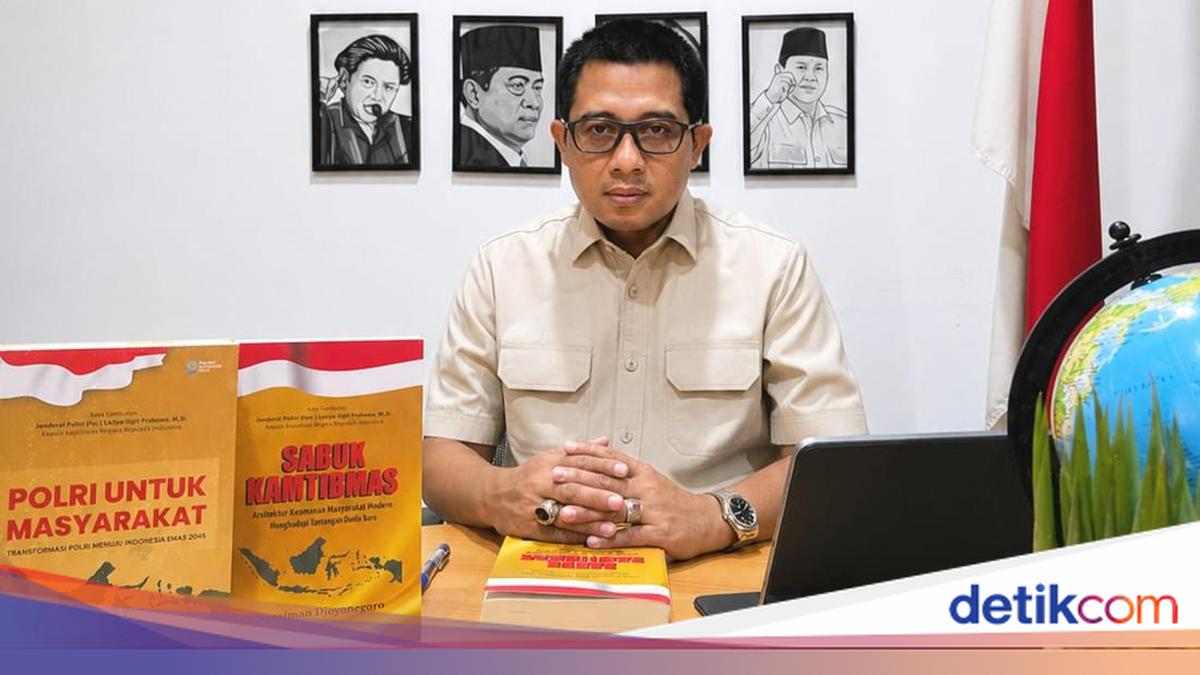
Intelligence analyst Ngasimann Djoyonegoro hopes that ‘Polri for the People’ is not merely a decorative slogan for the 80th Bhayangkara Day. He stated that the theme must serve as a compass for the future direction of the Indonesian National Police (Polri) policies.
“The people think simply. They need police who are easy to contact, arrive quickly when there is a problem, are solution-oriented, transparent, and fair,” said Ngasiman, affectionately known as Simon, in a written statement on Wednesday (1/7/2026).
Ngasiman believes that public trust in Polri will grow automatically alongside the consistent performance of the Bhayangkara Corps in the field. He also noted several Polri programmes that represent concrete forms of service bringing the police closer to the community.
“If field performance is consistently good, public trust will flow naturally. We can see this transformation through the Polri Presisi programme, electronic traffic tickets (ETLE), the digitalisation of various vehicle-related administration, and breakthroughs such as Polri RW and Bhabinkamtibmas, which allow police to engage informally with residents to resolve village issues,” he explained.
He assessed that Polri has shifted its institutional paradigm to become more humanistic and service-oriented. At 80 years of age, he added, Polri has proven its role is not merely law enforcement, but a part of Indonesia’s historical ups and downs.
“This 80-year milestone is authentic proof that Polri is part of the Republic’s DNA. From the era of taking up arms for independence, the reformation era, social conflicts, counter-terrorism, to the current era of rapid cyber warfare, Polri is constantly forced to adapt,” said Simon.
Simon also responded to the results of the Kompas Research and Development Survey released in late June 2026 regarding Public Satisfaction with Polri. He believes the satisfaction rate of 82.4 per cent should be interpreted as Polri’s most valuable social investment, rather than just an achievement.
“The 82.4 per cent public satisfaction figure is a strategic asset of immense value. It cannot be bought with a budget. But remember, this level of trust is not the finish line,” said Simon.
“Trust is built with sweat and integrity over many years, but it can be destroyed in seconds. Therefore, every officer in the field must realise that they are the face of Polri in the eyes of the public,” he added.
Flexibility and the ‘Kamtibmas Belt’
Simon then highlighted Polri’s involvement in Central Government programmes, namely the Free Nutritious Meal (MBG) and Food Security through corn commodities. In his view, this demonstrates Polri’s flexibility.
“When the police go down to the fields to accompany farmers and secure food supplies, they are actually strengthening the national safety belt. A well-fed populace and a conducive social situation are the most basic foundations for economic stability and development; guarding food leads to security,” Simon explained.
On the other hand, Simon believes that Polri’s future challenges will be far more complex due to advancements in information and technology, particularly in the era of Artificial Intelligence (AI) and the threat of hybrid crimes that no longer recognise territorial boundaries.
“In the future, criminals will not need to break into houses; they will use AI, cyber tools, robotics, and data manipulation. Therefore, the future Polri must be data and analytics-based. However, no matter how advanced the technology, the human factor remains number one. Machines do not have empathy, conscience, or wisdom. Those are qualities only possessed by humans,” said Simon.
“The police of the future can no longer work alone. Future security is a matter of mutual cooperation. Polri must embrace the government, universities, businesses, communities, media, and citizens. This multi-stakeholder collaboration is what is called the ‘Kamtibmas Belt’ (Security and Public Order Belt). If all these elements are synergistic, we will have a highly adaptive security immune system,” said Simon, who is currently authoring a book titled ‘Sabuk Kamtibmas’ (The Kamtibmas Belt) as a gift for Polri’s anniversary.