
Intellectual Forum Urges Government to Stop Frequent Curriculum Changes
The Interdisciplinary Intellectual Forum (FIAD) believes that Indonesia’s educational curriculum should not be subject to continuous replacement by the central government. Instead, the focus should be on strengthening the evaluation of its implementation.
The forum, which comprises intellectuals from various academic disciplines and professions, conducts critical studies on various national issues driven by shared concerns and social responsibility.
In their recent meeting held at the Gedung Indonesia Menggugat in Bandung last weekend, these intellectuals argued that what is currently required is more guidance and evaluation for educational policies. “What needs to be strengthened is the evaluation of implementation: whether educational goals are truly translated into the learning process, the impact on students, and the support required by teachers and schools,” stated a FIAD press release received by journalists on Monday (28/9).
“FIAD encourages needs assessment, mentoring, monitoring, and impact evaluation as essential components in improving educational policy,” the statement continued.
The meeting was attended by a diverse group, including academics, teachers, labourers, and farmers. The forum noted that education should not be understood merely as the transmission of knowledge in mathematics, science, language, or technical skills. Education must also foster the ability to think, make decisions, live together fairly, and build civilisation.
“Participants assessed that children need space to ask questions, explore, build imagination, understand problems, and consider various possibilities before making decisions. Education cannot be entirely confined to the school environment, as human development occurs through families and communities,” they said.
Within this framework, critical thinking skills must go hand-in-hand with civility. Students are expected not only to reason effectively but also to respect others, communicate well, understand their environment, and act responsibly. Consequently, the curriculum should allow schools to develop learning based on local contexts, including regional biodiversity and character.
Since the 1998 Reformation, the national curriculum has changed several times, leading to the anecdote: ‘new president or new minister, new curriculum’. Since 1998, the national curricula have included the Competency-Based Curriculum (2004), the School-Based Curriculum (2006), the 2013 Curriculum (K-13), and the Merdeka Curriculum (2022).
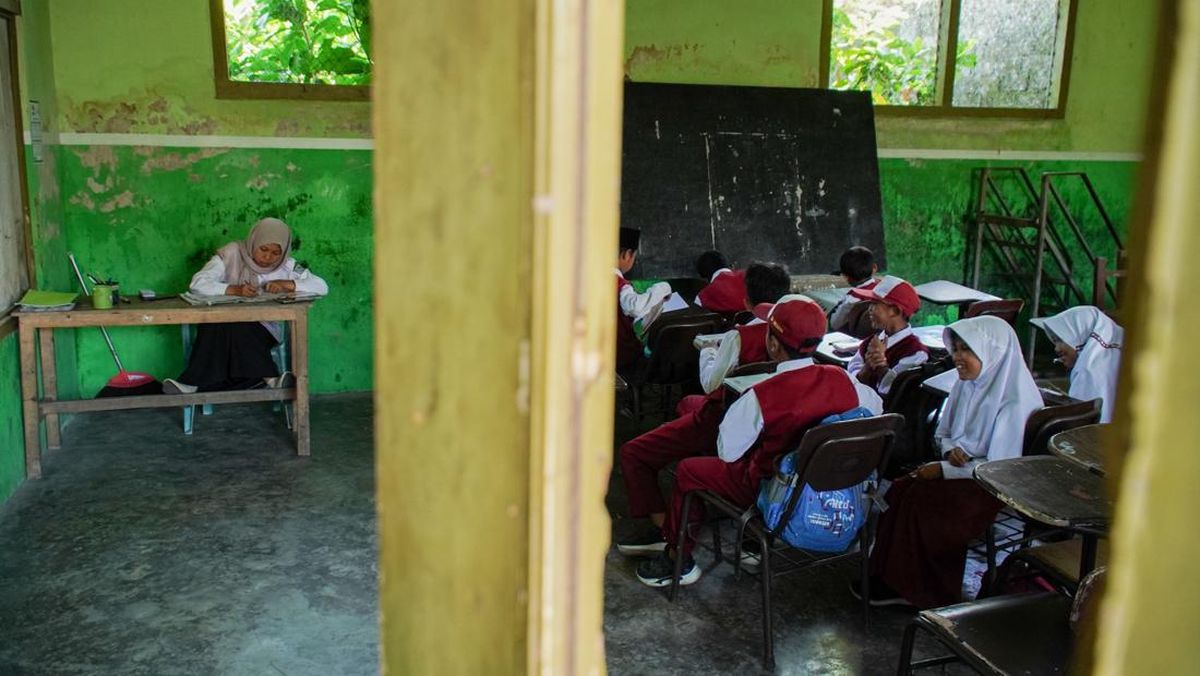
The FIAD meeting also highlighted the disparity in educational facilities and support between urban and rural areas. “Schools in urban areas with infrastructure and technological support can provide acceleration opportunities for students with specific interests and abilities,” the press release noted.
As a result, one emerging idea is ‘contextual autonomy’—providing space for schools and regions to adapt learning to local needs and potential while maintaining national educational standards.
FIAD is an interdisciplinary forum led by several academics, including Professor Sulistyowati Irianto from the University of Indonesia Faculty of Law and Professor Premana W. Premadi from the ITB Faculty of Mathematics and Natural Sciences, who read their manifesto at Taman Ismail Marzuki, Jakarta, on 13 August 2026.
The forum also urged for professional autonomy for teachers and the promotion of critical thinking among students. “One prominent issue, besides the classic problem of teacher welfare, is professional autonomy. Teachers need sufficient space to develop learning and adapt it to student needs,” the statement read. “Thus, teachers should not merely be positioned as policy implementers or material deliverers, but as educators, facilitators of critical thinking, and character builders.”
Furthermore, the forum encouraged education to foster a ‘radar for student exploitation’. The readiness of students for the workforce should not be measured solely by their ability to secure jobs. Participants argued that students must understand labour rights, recruitment processes, employment contracts, the risks of exploitation, human trafficking, and forced labour.
“In this way, education does not only produce a workforce ready for the market, but also individuals capable of understanding and protecting their rights when entering the world of work,” they concluded, in a discussion that also involved M. Isnnur from YLBHI and legal expert Asfinawati from STHI Jentera.