
Integration of Digital Agreements Becomes Key to Operational Efficiency for Enterprise Companies
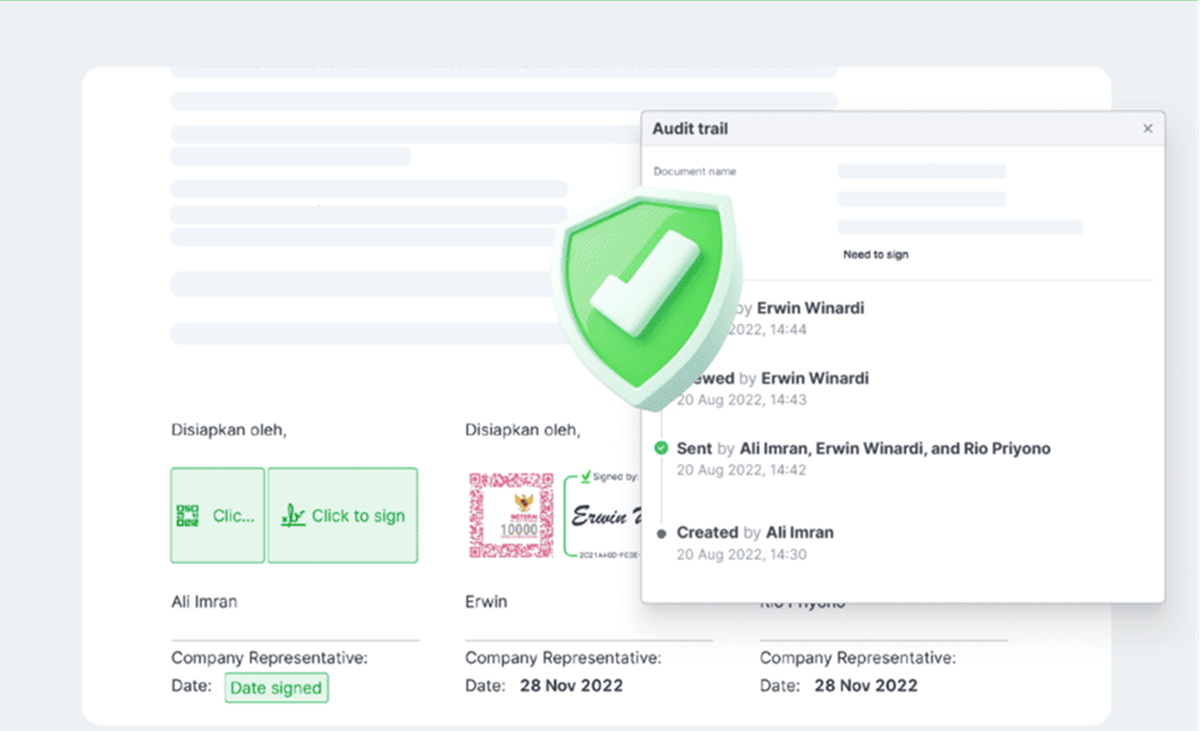
As companies in Indonesia expand their business lines and subsidiaries, the volume of routine, recurring documents and agreements is also increasing. Documents such as purchase orders, vendor contracts, and internal approval files frequently face operational delays due to manual processes scattered across emails, spreadsheets, or separate platforms.
To overcome these hurdles, the need for an ecosystem that is interconnected between Enterprise Resource Discretionary Planning (ERP), HRIS, and financial systems has become crucial. Digital signature processes are now required to function as an integrated part of a company’s core business systems, rather than merely being a standalone additional application.
Responding to this need, Mekari Sign has introduced a digital agreement workflow that unifies standardisation, preparation, execution, and large-scale document integration. This system is supported by four main capabilities: Document Templates for format standardisation, Bulk Upload for uploading large numbers of files simultaneously, Bulk Signing for mass signing processes, and Open API.
Through Open API, companies can embed digital signature features and e-Meterai directly into the internal systems they are currently using. This step eliminates manual stages such as printing, exporting, or re-uploading documents separately.
“As companies grow, the complexity of their agreement processes also increases. Large companies no longer simply want to replace wet signatures. They need every stage of the agreement, from preparation to execution, to work as part of the systems they already use to run their business,” said Suwandi Soh, Chief Executive Officer (CEO) of Mekari.
“The true advantage is not in the speed of the signature, but in the elimination of the need to work outside the system to achieve it. Through APIs, all of Mekari Sign’s capabilities, from digital signatures to e-Meterai, can be directly connected to the systems already operated by the company,” he continued.
Utilising this digital workflow brings significant time savings. A subsidiary of a State-Owned Enterprise (SOE) with projects spread across various regions in Indonesia successfully reduced the document transfer and validation process from 3–7 days to just 1 day for approximately 3,000 documents per month. A similar impact was experienced by an F&B business group with over 500 employees, where employment contract renewals that usually took up to two weeks are now completed in minutes via Bulk Signing.
“Our clients do not sign documents one by one. They manage hundreds or even thousands of recurring agreements every month, across various teams, each having its own approval stage,” said Nishabella, Head of Business Operations at Mekari Sign.
Alongside efficiency, security and legal compliance remain top priorities for the enterprise segment. The provision of electronic signatures certified by the PSrE (Electronic Certificate Provider) by the Ministry of Communication and Digital (Komdigi), official PERURI e-Meterai, and ISO 27001 certification are mandatory standards.
As a form of strengthening personal data protection, the parent company has also completed the ISO/IEC 27701 Privacy Information Management System (PIMS) certification audit with zero non-conformities. This achievement aligns with the implementation of the Personal Data Protection Law (UU PDP No. 27 of 2022) in Indonesia.
Source: jawawa.id (https://jawawa.id/newsitem/integration-of-digital-agreements-becomes-key-to-operational-efficiency-for-enterprise-companies-1788479473)
Originally published by Media Indonesia (https://mediaindonesia.com/teknologi/929585/integrasi-perjanjian-digital-jadi-kunci-efisiensi-operasional-perusahaan-enterprise), translated from Indonesian