
Integrating 279 Services, Jember’s Public Service Mall Makes Access Easier
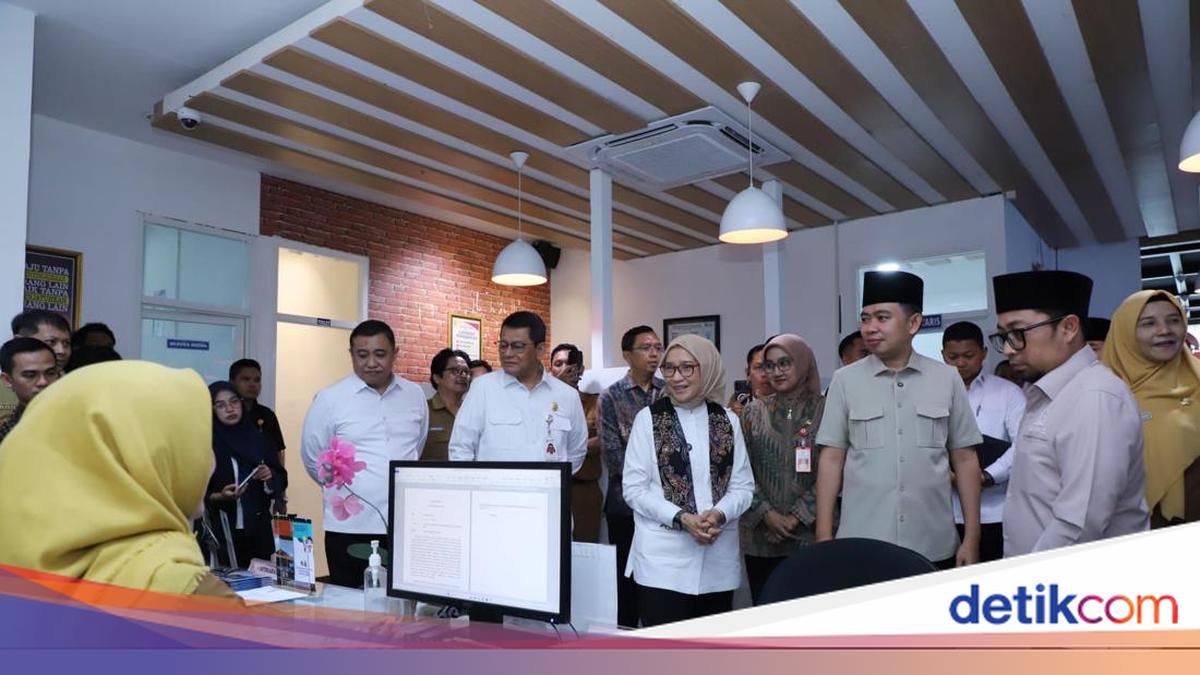
Public services need to be oriented towards people’s needs, prioritising ease of access, integrity and innovation. Jember Regency’s Public Service Mall (MPP) is one example of this approach, integrating 279 types of service from 17 institutions in one location so residents can access a range of government services more easily and efficiently.
Minister for Administrative and Bureaucratic Reform Rini Widyantini praised the Jember Regency Government’s efforts to integrate these services. She stressed that public services should prioritise convenience for the public, following a citizen-centric principle.
“In principle, all the services we provide are citizen-centric: the question is how people can access every service the government must provide more easily,” Rini said in a written statement on Monday (26 October 2026).
She made the remarks during a visit to the Jember Regency Public Service Mall on Monday (26 October), accompanied by Muhammad Khozin, a member of Commission II of the House of Representatives (DPR), and Jember Regent Muhammad Fawait.
The Jember Regency MPP currently serves around 100–300 visitors a day. The most frequently used services include civil registration and population administration, licensing and non-licensing services, and services provided by the Social Security Administrative Agency (BPJS).
Bringing a range of services together in one place is expected to simplify bureaucracy and make public services easier to access.
The benefits of integrating services at the Jember MPP have also been felt by local resident Zainal Rifin. He said he had been helped when arranging the addition of a family member to his Family Card (KK).
The document process took about 15 minutes. He also praised staff for providing good, helpful service throughout the process.
Haryanto shared a similar experience. He visited with his daughter to arrange amendments to her electronic identity card and birth certificate, and praised staff for giving clear, friendly guidance.
Haryanto said the mobile outreach service, known as Monalisa, had also made it easier for residents to access civil registration and population administration services.
Rini Rahayati, Efi Fawzatun Nikmah and Rita likewise said they benefited when arranging documents required for travel to Singapore. They praised the clarity of the information provided and the transparency of service fees.
They hoped the existing quality of service would be maintained and improved, including by providing a larger service area to make visits more comfortable.
To extend access, the Jember Regency Government has also developed mini Public Service Malls in three sub-districts—Mayang, Jombang and Tanggul—which have been operating since May 2026.
The initiative is intended to bring services closer to residents, so they do not always have to travel to the main service centre to meet certain administrative needs.
Further development of the mini MPPs is planned, with services to be extended to additional sub-districts, including Kalisat. The expansion is expected to make access to public services more evenly available, particularly for people living far from the centre of government.
Alongside in-person services and the mini MPPs, the Jember Regency Government is adopting an omnichannel approach through online services, self-service kiosks and mobile outreach, particularly for vulnerable groups.
Rini also emphasised that digital services should be accompanied by support for people with limited digital literacy. This would allow technology to be used while ensuring that public services remain easy to access, widely available and inclusive.
“Through service integration, stronger integrity and the expansion of innovation to the sub-district level, the Jember Regency Public Service Mall is expected to continue improving public service governance and making it more responsive to people’s needs,” she concluded.